

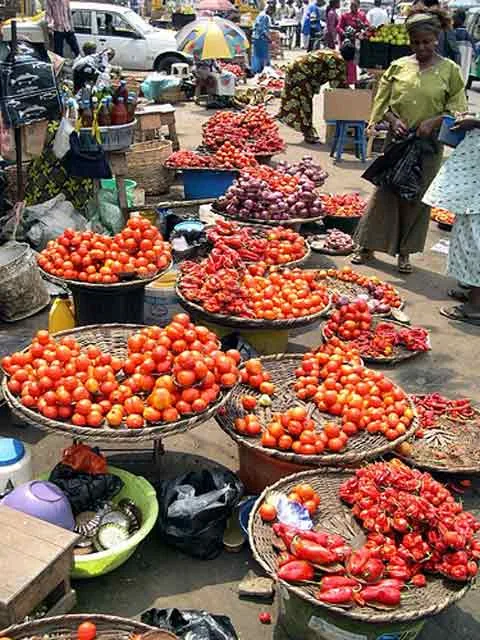
The cost of fresh tomatoes in Nigeria has risen so sharply that street food vendors are now using rotten ones to make a living. A standard wooden basket of fresh tomatoes that once sold for N35,000 now costs over N160,000.
This drastic price increase has forced vendors to turn to 'esa' or 'reject' tomatoes, which are sold at a much lower price. They're sold at less than one-fifth of the price of fresh produce. These damaged fruits are then boiled down with plenty of pepper and spices to hide their sour taste.
"If I buy the fresh ones, I won't be able to sell a plate of rice for a price my customers can afford. I'd have to sell a plate of rice for N3,000 just to break even. Who'll pay that? My customers are students and bus drivers," said Mrs. Sherifat Omo, a food vendor.
In local markets, the sorting sections have become frantic battlegrounds. Vendors crowd around traders to bid on crates of squashed, fermenting tomatoes. These rejects cost less than one-fifth of the price of fresh produce.
Yet, the use of rotten tomatoes poses a significant health risk to consumers. It's a fact that public health experts are warning about. The practice could lead to severe food poisoning. It could also cause chronic kidney damage, and even liver cancer. Mr. Matthew Adedeji, a laboratory technician, said: "Wholesome-looking parts of a rotten tomato can still contain dangerous microscopic toxins. Rotten tomatoes are breeding grounds for Aspergillus molds, which produce deadly aflatoxins."
The economic crisis in Nigeria, fueled by currency devaluation and the removal of fuel subsidies, has pushed food inflation upward. For small-scale food vendors who feed millions of working-class Nigerians daily, buying wholesome ingredients means financial ruin. They can't afford to buy fresh produce, so they're forced to make desperate choices.
As the situation continues, customers who work manual jobs or earn minimum wage can't afford to pay high prices for lunch. If a vendor uses fresh ingredients, a plate of food would cost more than an average laborer earns in a day. Vendors feel they're trapped in a corner by a harsh economy. They're forced to choose between the immediate death of their business or the slow poisoning of their customers.
Mrs. Ruth Daudu, a food vendor, said: "My sister, we're not wicked, and we don't want people to fall sick. This country is turning honest people into monsters just to survive. If I buy fresh tomatoes today, a single plate of food will cost N4,500. Who'll buy it from me in this neighborhood? Nobody, that's who."
The vendors' desperate measures are a symptom of a larger problem
- Nigeria's struggling economy and its impact on the most vulnerable citizens. The country is grappling with inflation and food scarcity. The health and well-being of its people hang in the balance. The situation is critical, and it's not going to improve soon.
Key Facts
- A standard wooden basket of fresh tomatoes now costs over N160,000, up from N35,000.
- 'Esa' or 'reject' tomatoes are sold at a much lower price, less than one-fifth of the cost of fresh produce.
- The use of rotten tomatoes poses a significant health risk to consumers, including severe food poisoning, chronic kidney damage, and liver cancer.
- Public health experts are warning of a 'ticking healthcare time bomb' as street food becomes increasingly toxic.
- The economic crisis in Nigeria has pushed food inflation upward, forcing vendors to make desperate choices to survive.