

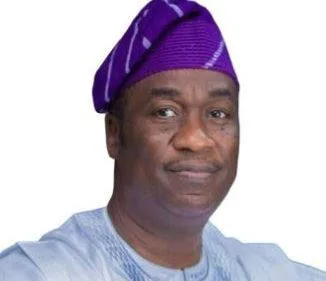
Lagos, the most populous city in Africa, is on a road to nowhere, literally. Lagos State Deputy Governor Dr. Obafemi Hamzat has revealed that the state has spent over N700 billion on road rehabilitation over the past 15 years.
Dr. Hamzat made this disclosure on Monday during an interview with a radio station in Lagos, noting that the state's rapidly growing population had continued to place enormous pressure on existing infrastructure.
This has resulted in an unprecedented increase in road congestion and accidents. According to the Federal Road Safety Corps, Lagos recorded over 3,000 accidents in 2024, with many of them caused by bad roads.
The Lagos State Public Works Corporation has expanded its maintenance operations to ensure wider coverage across the state. But the cost of rehabilitating roads has risen substantially. As such, the state requires more resources to keep pace with its infrastructure demands.
The proposed Fourth Mainland Bridge, which has been on the government's agenda for years, is another contentious issue. Dr. Hamzat said substantial financial resources are needed for its development, adding that road construction in Lagos must be integrated with drainage and flood-control measures.
He cited the example of New York, a city that has successfully controlled its waterways. 'When we do roads in Lagos, we are not just moving vehicles; we are moving water. For example, in New York, there is a lot of water just as we have it in Lagos, but they were able to control it. Lagos must not sink. We must look into our drainage to ensure that there is no overflow,' he said.
Dr. Hamzat dismissed the perception that government development efforts are concentrated in areas such as Lekki and Ajah. He noted that the administration has deliberately spread projects across the state, with each local government receiving attention.
However, the resources available to the government remain inadequate compared with the scale of infrastructure needs across Lagos. Dr. Hamzat stressed that this is a challenge that successive administrations have faced.
'There is no local government that we haven’t touched. However, the resources available to the government remain inadequate compared with the scale of infrastructure needs across Lagos,' he said.
Lagos needs to develop an effective mortgage system to give ordinary residents a realistic opportunity to own homes. Dr. Hamzat said this is crucial in addressing the state's housing deficit.
The challenge facing Lagos today is different from what obtained during the administration of the late Governor Lateef Jakande, who successfully delivered affordable housing for residents. As such, a sustainable housing solution must go beyond constructing buildings to developing financing mechanisms that make home ownership more accessible to residents.
The deputy governor, who is the APC governorship candidate in the 2027 election, pledged to leverage his experience in government to advance development across the state. Greater attention will be given to healthcare, infrastructure, housing, education, and other sectors that directly affect residents.