

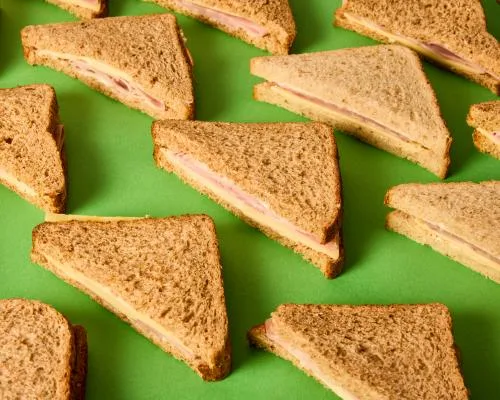
You're about to bite into a supermarket ham and cheese sandwich, but have you ever stopped to think about what's really in it? A recent test of these sandwiches from various supermarkets is a real eye-opener. The results show that almost all of them contain additives, and very few provide any information about the welfare of the animals that produced the meat. They're made with a lot of extras, and you don't know much about the animals.
The tester, a wholefood chef, was looking for sandwiches that not only tasted good but also came from animals that were treated well. However, they found that many of the sandwiches were made with reformed ham, which is bulked out with phosphates and water. This means that instead of getting a nice piece of ham, you're often eating a mixture of ham, water, and additives. It's a surprise to find out what's in your food.
One of the biggest problems with these sandwiches is the lack of transparency about where the meat comes from. Some products claim to use British pork, but this doesn't necessarily mean that the pigs were treated well or that the meat is of high quality. The tester found that even some of the more expensive options lacked any real information about animal welfare. They didn't provide enough details, and that's a concern.
So, which supermarkets did the best in the test? The winner was the M&S honey-roast ham & cheddar cheese sandwich, which cost £3.25 at Ocado. This sandwich had the fewest additives and was the only one with clear welfare standards. It contained palm oil, but at least you know what you're getting. You can't deny that it's a better option.
The best bargain was the Aldi Specially Selected Ayrshire cured ham hock with farmhouse cheddar, which cost £2.79 at Aldi. This sandwich was meaty and relatively good value, but it contained additives and lacked any information about animal welfare. It's a good price, but you don't know much about the animals. You won't find many details about the meat.
Other supermarkets didn't fare so well in the test. The Waitrose oak-smoked ham & cheddar cheese sandwich contained seven additives and no welfare certification. The Morrisons the Best ham hock & farmhouse cheddar sandwich had a nice, handmade feel, but it contained five additives and no animal welfare details. They're not the best options, and you should be aware of that.
The worst offender was the Unearthed Spanish serrano ham & cheese rosca, which contained multiple additives and a scant amount of ham. This sandwich was cook-at-home and cost a whopping £4.50 at Waitrose or £5.50 at Tesco. The tester described it as 'elaborately awful and all but inedible'. It's not a good choice, and you shouldn't buy it.
The tester described the Unearthed Spanish serrano ham & cheese rosca as 'elaborately awful and all but inedible'. This cook-at-home sandwich contained multiple additives and a scant amount of ham, making it a costly and unappetizing option. You won't enjoy eating it, and it's not worth the money.
The results of this test are a real wake-up call for anyone who regularly buys supermarket ham and cheese sandwiches. While some options are better than others, it's clear that most of them are made with additives and lack transparency about animal welfare. If you care about what you're eating, it might be time to start making your own sandwiches at home. You can't rely on supermarkets to give you the best options.
The M&S honey-roast ham & cheddar cheese sandwich was the winner, with the fewest additives and clear welfare standards. The Aldi Specially Selected Ayrshire cured ham hock with farmhouse cheddar was the best bargain, costing £2.79 at Aldi. Almost all of the sandwiches contained additives, and very few provided any information about animal welfare. The Unearthed Spanish serrano ham & cheese rosca was the worst offender, containing multiple additives and a scant amount of ham. These are the key facts, and you should know them.
This test isn't just about the food itself, but also about the impact it has on the animals and the environment. If you're concerned about animal welfare, you might want to start looking for sandwiches that are made with higher welfare standards. You don't want to support companies that don't care about animals. You should think about the environment too, and how your food choices affect it.
As consumers, we have the power to demand better from supermarkets. By choosing to buy sandwiches that are made with higher welfare standards and fewer additives, we can create a market for more sustainable and ethical food options. So next time you're at the supermarket, take a closer look at the ingredients and think about what you're really eating. You won't regret it, and you'll be making a difference. You'll be eating better, and you'll be helping animals and the environment.