

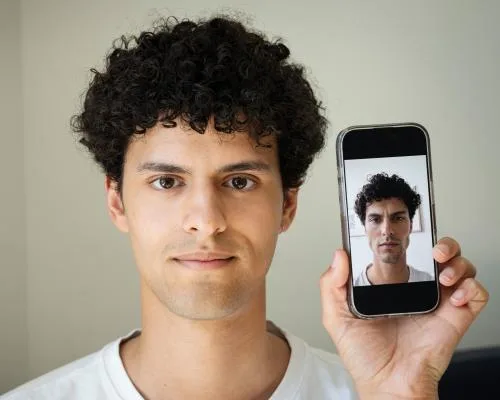
The rise of 'AI face' is causing concern among plastic surgeons, with many patients arriving at their offices with unrealistic expectations of what surgery can achieve. Dr. Nora Nugent, a cosmetic surgeon from Tunbridge Wells and president of the British Association of Aesthetic Plastic Surgeons, has seen this trend firsthand. She notes that clients are coming in with photos of themselves beautified by AI, expecting surgeons to replicate the results. It's not just about looking good - these patients often have high hopes that surgery can fix all their flaws.
And it's not just the patients who are being influenced by AI-generated images. Dr. Alex Karidis, a surgeon based in west London, says AI chatbots are often used to generate ideal faces, with features like flawless skin, sharply sculpted cheekbones, and near-perfect symmetry. However, these standards are often unattainable with surgery, as Karidis explains that surgery doesn't work on that microscopic detailed level. The psychological impact of these images can be significant, with Nugent commenting that once you see an image, it's wired into you.
You can't just forget it - it's there, influencing your expectations.
But what happens when patients bring these AI-generated images to surgeons? Dr. Julian de Silva, a Harley Street cosmetic surgeon, notes that AI can generate hyper-symmetry with ease, but this is often impossible to replicate in real life. For example, if one of your eyes is slightly higher than the other, AI can alter this in seconds. However, rearranging pixels isn't the same as rearranging anatomy.
De Silva adds that when AI edits a client's photo, it frequently defaults to widely accepted beauty ideals, such as a V-shaped jawline for women and broader jawlines for men. These ideals aren't always realistic, and they can't always be achieved with surgery.
To better understand the phenomenon, an AI agent was asked to recommend cosmetic procedures and generate images for Karidis to review. The results were striking, with the AI suggesting a range of procedures, including rhinoplasty, septoplasty, and blepharoplasty. However, when Karidis reviewed the images, he noted that the procedures suggested were often unnecessary or unrealistic. For instance, when the AI suggested 'hunter eyes and a more masculine face,' it recommended chin implants, buccal fat removal, and facial stubble grafts, among other procedures. Karidis estimated that the work would cost over £100,000.
He also said it might not look like the AI-generated image, even after all that work.
Karidis said, 'It looks like it's given you someone else's eyes.' He notes that the chin implant is unnecessary and that the buccal fat removal would have significant side effects later in life. If one were to theoretically do everything it suggests, it would easily be £100,000-plus, and it still probably wouldn't look anything like the AI-generated image. You'd also be exposed to potential significant side effects and recovery. It's a lot to consider, and it's not a decision to be taken lightly.
So, what's driving this trend, and what does it mean for the future of cosmetic surgery? As AI technology continues to advance, it's likely that we'll see more patients arriving at surgeons' offices with unrealistic expectations. Surgeons are keen to emphasize that cosmetic surgery outcomes are far from guaranteed, and patients need to understand the limitations of what can be achieved. As Nugent says, 'The patient has to understand that there is human variation in how they heal, how they age, and what can be done.' It's a sobering reminder that, despite the promise of AI, there's no substitute for realistic expectations and a deep understanding of the complexities of human anatomy. You can't just rely on AI - you need to understand the human body.
- Plastic surgeons are seeing a surge in patients with AI-generated images of themselves.
- These images often feature flawless skin, sharply sculpted cheekbones, and near-perfect symmetry.
- AI can generate hyper-symmetry with ease, but this is often impossible to replicate in real life.
- Cosmetic surgery outcomes are far from guaranteed, and patients need to understand the limitations of what can be achieved.
- The cost of procedures suggested by AI can be significant, with estimates ranging from £25,000 to over £100,000.
The implications of this trend are significant, and it's essential for patients to approach cosmetic surgery with a clear understanding of what's possible. As the use of AI in cosmetic surgery continues to grow, it's crucial that surgeons and patients work together to ensure that expectations are realistic and that the limitations of surgery are understood. By doing so, we can promote a more informed and responsible approach to cosmetic surgery, one that prioritizes the well-being and safety of patients above all else. We don't want patients to have unrealistic expectations - we want them to know what they're getting into.
And what about the role of social media in this trend? Dr. de Silva notes that clinicians are increasingly sharing surgery results on social media, which can create unrealistic expectations among patients. He suspects that some of these results may be AI-generated, which would further exacerbate the problem. It's a concern that highlights the need for greater transparency and accountability in the cosmetic surgery industry, particularly when it comes to the use of AI-generated images. We don't want patients to be misled - we want them to have all the facts.
Yet, despite the challenges posed by the rise of 'AI face,' there's also an opportunity for surgeons and patients to work together to create a more informed and nuanced understanding of cosmetic surgery. By acknowledging the limitations of surgery and the potential pitfalls of AI-generated images, we can promote a more responsible and realistic approach to cosmetic procedures. It's a conversation that's long overdue, and one that will require the active participation of surgeons, patients, and the wider public. We all need to be on the same page - we all need to understand the risks and benefits.
In the end, the rise of 'AI face' is a reminder that, despite the promise of technology, there's no substitute for human judgment and expertise. As we navigate the complexities of cosmetic surgery, it's essential that we prioritize the well-being and safety of patients above all else. By doing so, we can ensure that the benefits of cosmetic surgery are realized, while minimizing the risks and uncertainties associated with this trend. We can't just rely on AI - we need human expertise to guide us.