

The single sharpest fact in one or two punchy sentences. Who did what, where, when, and why it matters. Not a summary of everything — the one thing that makes someone stop scrolling. A reader who only reads this paragraph must understand what happened.
NAFCO is preparing for the next phase of the National Food Reserve Programme, designed to purchase surplus grains for storage and future use, reducing post-harvest losses, and protecting the livelihoods of local farmers.
The programme's initial rollout was hampered by inadequate funding and a shortage of suitable storage facilities, leaving many rice and maize farmers unable to sell their produce during periods of bumper harvests.
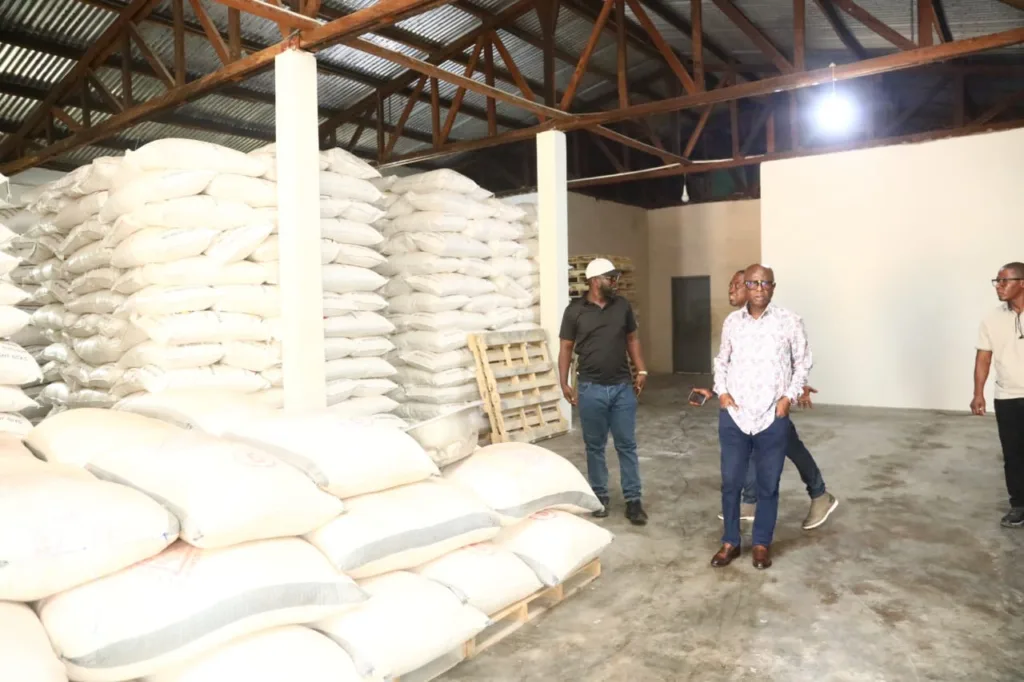
To address the challenge, NAFCO Chief Executive Officer, George Abradu-Otoo, has embarked on a nationwide tour to engage with state institutions to expand the country's storage infrastructure. During a two-day working visit to the Volta, Oti, and Greater Accra regions, Mr. Abradu-Otoo inspected a dilapidated 15,000-metric-ton warehouse in Tema owned by the Ministry of Food and Agriculture (MoFA).
Discussions are ongoing between NAFCO and the Ministry regarding the rehabilitation of the facility to support rice aggregation within the Shai Hills–Asutuare enclave. At Juapong, the CEO inspected a warehouse at the defunct Volta Star Textiles Limited. Rehabilitation works have already begun following discussions between NAFCO and the Ministry of Trade, Industry, and Agribusiness.
In Hohoe, Mr. Abradu-Otoo assessed the condition of a 1,000-metric-ton warehouse constructed under the One District, One Warehouse initiative. He directed that weeds be cleared, minor repairs undertaken, and access routes improved to enable the facility to become operational immediately.
The NAFCO team also visited a 1,000-metric-ton warehouse in Pai-Katanga, Oti Region, with Regional Minister John Gyapong. The facility requires vegetation clearance and minor repairs before it can be put to use.
As part of the tour, the NAFCO delegation visited several senior high schools, including OLA Girls SHS in Ho, Worawora SHS, Kpando Technical Institute, and EP Senior High School in Hohoe. While school authorities reported that food supplies were adequate, they highlighted inadequate storage space as a major challenge in preserving food commodities.
The Regional Ministers for Volta and Oti, James Gunu and John Gyapong, commended NAFCO's efforts to strengthen food security while protecting farmers' incomes. The latest tour follows similar visits undertaken earlier this year to the Eastern, Ashanti, Northern, Upper East, Upper West, and Bono regions as NAFCO continues its nationwide drive to expand Ghana's food storage capacity.
Key Facts
• NAFCO is inspecting and rehabilitating warehouses in the Volta, Oti, and Greater Accra regions. • A total of 15,000 metric tons of grains can be stored in the Tema warehouse after rehabilitation. • NAFCO is working with the Ministry of Food and Agriculture to expand the country's storage infrastructure. • The One District, One Warehouse initiative has constructed a 1,000-metric-ton warehouse in Hohoe. • NAFCO has visited several senior high schools to assess their storage needs and offer support.
The National Food Reserve Programme aims to reduce post-harvest losses and protect the livelihoods of local farmers by purchasing surplus grains for storage and future use. The programme's initial rollout was hampered by inadequate funding and a shortage of suitable storage facilities.
NAFCO Chief Executive Officer, George Abradu-Otoo, has been touring the country to engage with state institutions and expand the country's storage infrastructure. During his visit to the Volta and Oti regions, Mr. Abradu-Otoo inspected several warehouses, identifying areas that need rehabilitation.
The programme's success will depend on the successful implementation of its plans, including the rehabilitation of warehouses and the distribution of food stocks to those in need. If implemented effectively, the programme could provide a significant boost to Ghana's food security and support the livelihoods of local farmers.
NAFCO is working with various stakeholders, including the Ministry of Food and Agriculture and the Ministry of Trade, Industry, and Agribusiness, to expand the country's storage infrastructure. The company is also seeking to establish partnerships with private sector players to enhance the efficiency of the National Food Reserve Programme.
In Ghana, post-harvest losses are a significant challenge facing the agricultural sector. The country loses an estimated Ghc 2.5 billion (approximately USD 360 million) in potential revenue each year due to the rotting of perishable crops.
The NAFCO CEO's efforts to expand the country's storage infrastructure are expected to alleviate some of the pressure on farmers and prevent the loss of valuable crops. By providing adequate storage facilities, NAFCO aims to support farmers in preserving their produce and increasing their profits.
NAFCO's Role in Ghana's Food Security
NAFCO's efforts to expand the country's storage infrastructure are critical in ensuring the success of the National Food Reserve Programme. The company's role in storing grains and other food commodities is essential in preventing post-harvest losses and supporting the livelihoods of local farmers.
The current state of Ghana's food storage infrastructure is a major concern. Many warehouses are in a state of disrepair, with some having been abandoned for years. The situation is even more dire in rural areas where farmers often lack access to modern storage facilities.
The rehabilitation of these warehouses is a vital step in supporting the National Food Reserve Programme. NAFCO's efforts to inspect and rehabilitate warehouses in the Volta, Oti, and Greater Accra regions will go a long way in ensuring the programme's success.
The Way Forward
NAFCO's success in expanding Ghana's storage infrastructure will depend on the effective implementation of its plans. The company must work closely with state institutions and private sector players to ensure that the warehouses are rehabilitated and operationalized quickly.
In addition, NAFCO must prioritize the provision of adequate storage facilities to support farmers in preserving their produce. This can be achieved by establishing partnerships with private sector players and investing in modern storage infrastructure.
The success of the National Food Reserve Programme will have a direct impact on Ghana's food security. The programme's ability to reduce post-harvest losses and protect the livelihoods of local farmers will determine the country's ability to feed its growing population.
In conclusion, NAFCO's efforts to expand Ghana's storage infrastructure are critical in ensuring the success of the National Food Reserve Programme. The company's role in storing grains and other food commodities is essential in preventing post-harvest losses and supporting the livelihoods of local farmers.