

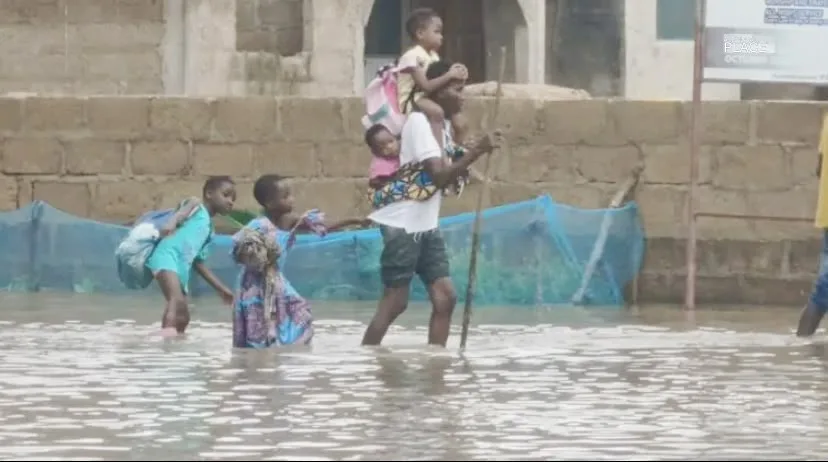
"Usually when the water goes down, everybody thinks everything is gone, but it doesn't end there. People's homes become contaminated. Sewage, chemicals, germs and rubbish mix with floodwater. Later, we begin seeing cholera, typhoid and skin infections appearing in communities."
- Judith Williams, Public Health Researcher at Ensign Global University.
According to Judith Williams, Public Health Researcher at Ensign Global University, the health impacts of flooding extend far beyond the physical destruction caused by rising waters. When floodwaters contaminate household water sources, families are exposed to waterborne diseases, even after communities appear to have recovered. Residents may unknowingly prepare food with contaminated water or allow children to play in polluted environments, increasing the likelihood of disease outbreaks.
Beyond infectious diseases, Williams explained that flooding disrupts care for people living with chronic illnesses such as hypertension and diabetes. When people are displaced, they often lose their medications, cannot access health facilities, or afford transportation to seek treatment. The stress alone can significantly increase blood pressure, making existing conditions much worse.
Damage to roads and temporary displacement also prevent patients from refilling prescriptions or attending scheduled medical appointments, interrupting essential treatment. Climate Change and Health Advocate, Nana Adwoa Eshun Abroka, highlighted the overlooked consequence of flooding on mental health. Survivors who lose homes, businesses, vehicles, and years of investment are often left battling anxiety, trauma, and emotional distress with little support.
The discussion also highlighted the pressure floods place on Ghana's healthcare system. Many survivors delay seeking medical care because they have lost their financial resources or cannot physically reach health facilities due to damaged roads and inaccessible communities. Although the National Health Insurance Scheme helps cover treatment costs, transportation expenses and other indirect costs continue to prevent many affected residents from accessing care.
The experts called for greater investment in psychosocial support as part of disaster response. They emphasized that emergency interventions often prioritize food, shelter, and relief supplies while overlooking the emotional and psychological recovery of survivors. "We don't pay enough attention to psychological support. People lose their homes, food, money, and livelihoods. Communities must also support affected families because recovery is not only physical but mental," Williams noted.
As climate change continues to intensify rainfall across the country, the experts warned that protecting lives requires addressing not only the floods themselves but also the silent public health crisis they leave behind.
Key Facts
- Floods in Ghana leave behind contaminated water, disrupted healthcare, worsening chronic illnesses, damaged livelihoods, and hidden mental health challenges.
- Public Health Researcher at Ensign Global University, Judith Williams, warns that the health impacts of flooding extend far beyond the physical destruction caused by rising waters.
- Climate Change and Health Advocate, Nana Adwoa Eshun Abroka, highlights the overlooked consequence of flooding on mental health.
- Many survivors delay seeking medical care due to financial constraints or inability to access health facilities.
- The National Health Insurance Scheme helps cover treatment costs, but transportation expenses and indirect costs still hinder access to care.
- Experts call for greater investment in psychosocial support as part of disaster response.
The Experts Urge Action
Ghana's flood response must evolve beyond emergency rescue operations to include stronger disease surveillance, improved public health preparedness, mental health services, and uninterrupted access to healthcare for vulnerable populations. As climate change intensifies rainfall across the country, addressing the silent public health crisis left behind by floods is crucial for protecting lives.