

‘The stronger story for Ghana is not that youth are mentioned in policy; it is that Ghana can measure whether young people have skills, assets, jobs, voice and resilience.’
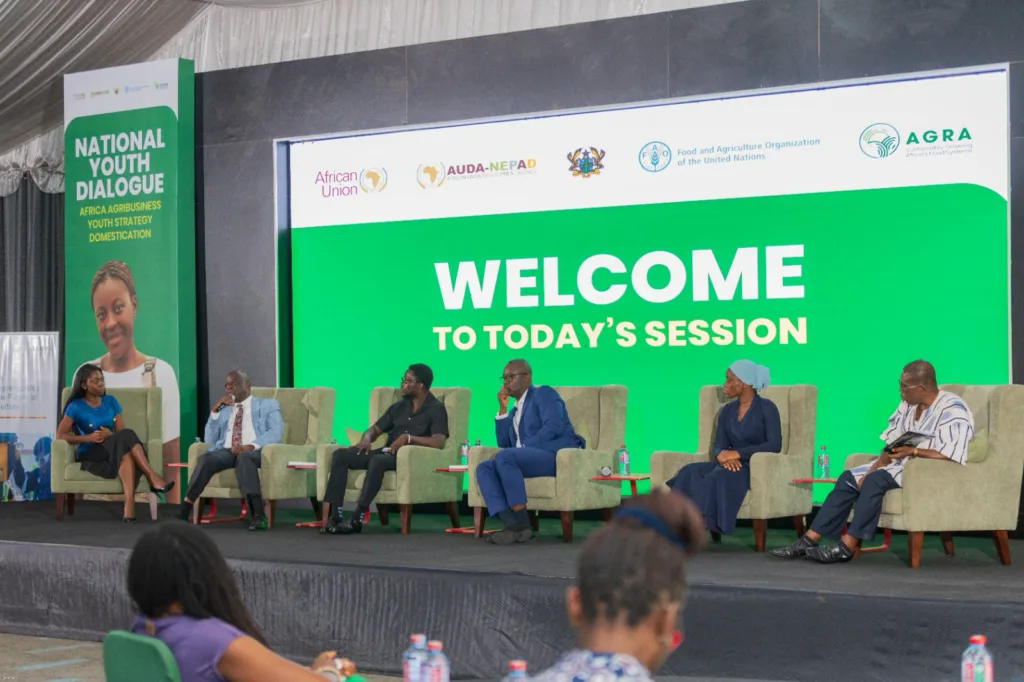
The single sharpest fact is that over 350 youth agribusiness practitioners came together to demand a greater share of investments in Ghana's food systems programmes. The young people called for urgent, coordinated and accountable actions to translate the Africa Agribusiness Youth Strategy and the Youth in Agrifood Systems Performance Index commitments into laws, budgets, programmes, and measurable results.
The Africa Agribusiness Youth Strategy (AAYS) is the African Union's blueprint for enhancing youth participation across agrifood value chains. It emphasizes enterprise development, market access, and inclusive policy design. The Youth in Agrifood Systems Performance Index (YAPI) is the union's accountability and tracking framework that measures how effectively countries support youth inclusion in agribusiness. The youth called for Ghana to move from mentioning youth in agrifood policies to making youth intentionality a funded, measured and accountable deliverable across the Feed Ghana Programme, the National Agricultural Investment Programme, the National Youth Policy, Africa Continental Free Trade Area trade systems, district delivery mechanisms, and parliamentary accountability.
The dialogue examined how the 270 planned farmer service centres, farm banks, agricultural production enclaves, input-credit systems, extension platforms, and market infrastructure promised under the Feed Ghana Programme can be converted into youth service lanes covering skills, advisory services, finance, land readiness, mechanisation, aggregation, certification, and market access. The programme expects about 2.6 million direct and indirect jobs, while the National Agricultural Investment Programme theory of change anticipates more than 900,000 direct and 1.7 million indirect jobs by 2029.
Participants noted that the Feed Ghana Programme expects to create 2.6 million jobs, while the National Agricultural Investment Programme theory of change anticipates 900,000 direct and 1.7 million indirect jobs by 2029. They said the key issues are how to define the youth share of these jobs, ensure decent work outcomes for youth, and ensure that youth-led enterprises have market access. They called for the Feed Ghana Programme to make room for ring-fenced youth access and youth-disaggregated reporting across farm banks, irrigation, mechanisation, inputs, advisory services, energy, and productive infrastructure.
The dialogue highlighted the need for a Youth Agrifood Skills and Mentorship Track through the farmer services centres, vocational institutions, universities, National Service, innovation hubs, and private agritech mentors. The participants also said the Feed Ghana Programme and the National Agricultural Investment Programme targets on climate-smart practices, insurance, warehousing, aggregation, import substitution, and child stunting reduction should be linked to youth-led climate-smart enterprises.
The sessions concluded with a Youth-Parliamentary Dialogue with members of Ghana's parliament. The youth called on the government to integrate AAYS and YAPI into the Feed Ghana Programme, the National Agricultural Investment Programme, the National Youth Policy implementation, and relevant trade and enterprise programmes. They also demanded the formalisation of youth representation in policy, planning, budgeting, sector review, district delivery, and accountability mechanisms.
Youth intentionality should not be treated as a side note in Ghana's agrifood agenda. It should be embedded in the Feed Ghana Programme's delivery machinery, the National Agricultural Investment Programme costing, and annual accountability.
Key Facts
- The Africa Agribusiness Youth Strategy is the African Union's blueprint for enhancing youth participation across agrifood value chains.
- The Youth in Agrifood Systems Performance Index is the union's accountability and tracking framework that measures how effectively countries support youth inclusion in agribusiness.
- The Feed Ghana Programme expects to create 2.6 million jobs.
- The National Agricultural Investment Programme theory of change anticipates 900,000 direct and 1.7 million indirect jobs by 2029.
- The Feed Ghana Programme and the National Agricultural Investment Programme targets on climate-smart practices, insurance, warehousing, aggregation, import substitution, and child stunting reduction should be linked to youth-led climate-smart enterprises.