

The proposed National Cathedral in Accra has been at the centre of public debate for years, with many questioning the project's cost, delays, and relevance to Ghana's development.
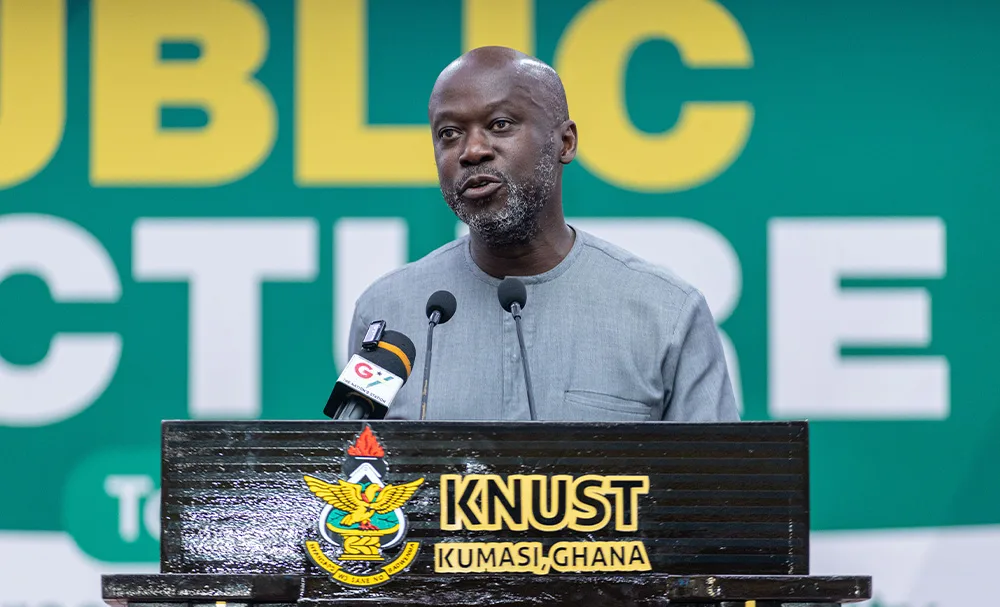
The controversy surrounding the cathedral has largely focused on its estimated $250 million budget and concerns over the project's potential economic benefits. However, at a recent lecture at the Kwame Nkrumah University of Science and Technology, Sir David Adjaye, the architect behind the design, shared a different perspective on the project's vision. He argued that the National Cathedral was designed not only as a place of worship but also as a long-term economic and cultural investment capable of positioning Ghana as a destination for religious tourism.
According to Adjaye, the National Cathedral was conceived to contribute significantly to Ghana's economy, as religious tourism remains one of the world's most enduring contributors to national economies, generating billions of dollars in revenue. Studies have shown that historic centres of worship across the world attract diverse visitors while contributing to local economies.
Drawing comparisons to these historic centres, Adjaye noted that such spaces can be 'engines of economic uplift,' generating more revenue than concerts or music events. The 2,000-year history of visiting centres of worship has demonstrated that they can have a major impact on local economies.
Beyond the religious structure itself, Adjaye revealed that the project included a large biophilic park and garden, a green urban space designed to reconnect people with nature in an increasingly dense capital city. Accra's rapid urbanisation has made public nature spaces more important than ever, and the cathedral was envisioned as a catalyst to reactivate surrounding public space and create opportunities for recreation and community life.
The architect also described the cathedral as a hybrid civic and religious complex intended to serve multiple functions beyond worship. The proposal included a music school, conference facilities, a library, chapels for weddings and smaller services, a Bible museum exploring the Ghanaian and African roots of Christianity, as well as spaces for education and social support.
In terms of the physical structure of the cathedral, Adjaye described it as a monumental architectural form inspired by traditional Akan symbolism, sacred geometry, and contemporary engineering systems. The building was designed with soaring vertical forms, layered timber-inspired structures, and elevated platforms intended to make it visible across much of Accra's skyline. It would accommodate up to 25,000 people during major gatherings and international events.
'People would enjoy this as an asset,' Adjaye said. 'We said this cathedral could activate a second opportunity.'
The architect's vision for the National Cathedral highlights the project's potential to contribute to Accra's development and economy. However, the controversy surrounding the project remains, with many questioning the project's feasibility and potential impact on the city's infrastructure.
In the coming weeks and months, the Ghanaian government will need to weigh the project's potential benefits against its costs and consider the perspectives of various stakeholders, including the public, local communities, and international donors. The National Cathedral project presents Ghana with an opportunity to redefine its identity and create a space that not only serves as a place of worship but also as a symbol of national pride and a hub for cultural and economic activity.
Key Facts
- Estimated budget: $250 million
- Controversy: Cost, delays, relevance to Ghana's development
- Architect's vision: Long-term economic and cultural investment, positioning Ghana as a destination for religious tourism
- Project features: Biophilic park and garden, music school, conference facilities, library, chapels, Bible museum
- Capacity: Up to 25,000 people during major gatherings and international events
- Location: Accra, Ghana