

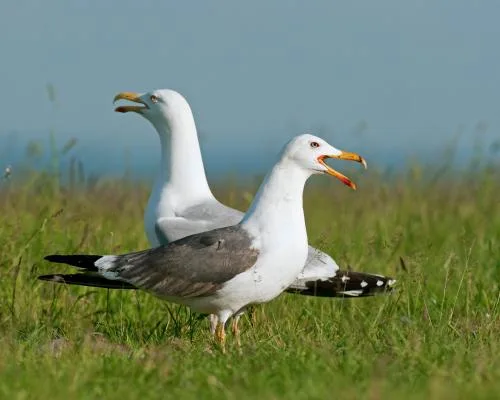
As summer approaches, a peculiar phenomenon is observed 30 miles from the ocean. A flock of gulls, often referred to as the 'pirates of the promenade,' appears in the area, leaving onlookers wondering about their presence. Derek Niemann, an observer of these birds, notes that May is the month when they're most ubiquitous, most vocal, and most beguiling.
The gulls, which include herring gulls, black-backed gulls, and others, are seen riding over the rising sun, their underwings dark, and their bib and belly uplit to cast an ethereal glow. A paint chart might well label this grey-tinted body hue 'gull white.' The birds are an assorted collection of first years, second years, non-breeders, failed breeders, and apprentices, their age flagged by the grey gradations of plumage.
A loose flock heading over the brow reminds Niemann of a bunch of laggard boys meandering their way to school. Sometimes one would lunge at its neighbour as if play fighting, and then one would be distracted, luring the whole group sideways before reluctant obligation pulled them back on course. There's generally a morning westward drift up the hill. The purpose behind their great agglomerations that gather overhead at any time of day to crisscross each other as if performing aerial country dancing remains a mystery.
Niemann's wife exclaims, "Sing up, gulls," as the pairs that fly close utter piteous little cries. Down the valley, herring gulls are competing with a cockerel for the dawn chorus, as they practise territoriality. Last week, they staged an unholy row over ascendancy on the ridge tiles and twin spires of Trinity church. One perched in temporary dominance, threw its head back, and belted out its eulogy to fishing boat harbours, rockpool adventure, and sand-filled sandals.
The sound of the gulls means people can't rid themselves of an association that throws them right back into childhood. These are forever seagulls, even when they're 30 miles inland. The mystery surrounding their presence in the area is fascinating, and their behaviour is both intriguing and entertaining to watch.
The gulls' antics have been observed for some time, and their presence has become a familiar sight in the area. However, the reason behind their appearance in this inland spot remains unclear. It's possible that the gulls are attracted to the area due to the presence of food sources, such as insects or small animals. They may be using the area as a stopover point during their migration.
As the summer months approach, the gulls are expected to become more prominent in the area. They'll likely be a source of fascination for both locals and visitors, and their antics will provide entertainment for those who are lucky enough to observe them.
The gulls' behaviour isn't just limited to their aerial displays. They're also known to be opportunistic feeders, and they'll take advantage of any available food source. This has led to them being referred to as 'chip thieves,' as they'll often steal food from unsuspecting tourists.
Despite their reputation, the gulls are an important part of the ecosystem. They play a vital role in controlling insect populations, and they're also a key indicator species. Their presence can provide valuable insights into the health of the environment, and they can serve as a warning system for potential environmental issues.
The gulls are also a popular sight among birdwatchers. Their distinctive calls and aerial displays make them a thrilling species to observe, and their presence can add a new level of excitement to a birdwatching trip.
The gulls' presence in the area is a reminder of the beauty and complexity of the natural world. Their mysterious appearance and intriguing behaviour are a testament to the wonders that can be found in the most unexpected places.
Key Facts
- The gulls appear 30 miles from the ocean.
- May is the month when they're most ubiquitous, most vocal, and most beguiling.
- The birds are an assorted collection of first years, second years, non-breeders, failed breeders, and apprentices.
- There's generally a morning westward drift up the hill.
- The gulls are opportunistic feeders and will take advantage of any available food source.
- They play a vital role in controlling insect populations and are a key indicator species.