

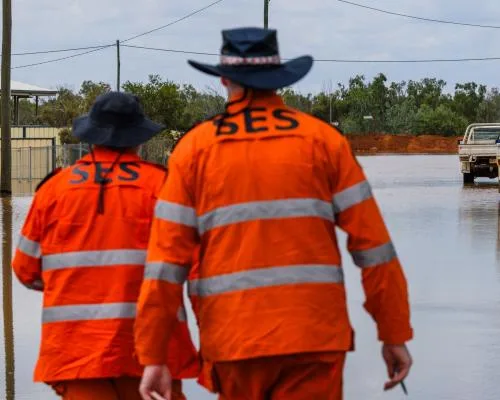
More than $57 billion of public infrastructure across Victoria will be at risk from extreme weather by 2030, with bushfires, flooding, and heat posing the greatest threat, according to new research by Infrastructure Victoria. The independent adviser assessed risks to $318 billion in government-owned or regulated assets. They found that transport, energy, and health assets were the most exposed to climate hazards.
By 2070, the value at risk could increase to more than $71 billion. Dr. Jonathan Spear, chief executive of Infrastructure Victoria, said this highlights the importance of climate-resilient infrastructure. We've just had a summer that saw bushfires, flooding, and landslides hit many Victorian communities. We know extreme weather is a reality now. It's clear that climate-resilient infrastructure is crucial.
The government needs to update and fund its adaptation plans. They don't have a choice - they must act. Funding high-priority, cost-effective infrastructure adaptation actions can save millions in recovery costs and lost productivity. Erwin Jackson, the head of Australia programs at Climateworks Centre – who wasn't involved in the research – said:
The policies at a high level need to start integrating both reducing emissions and adaptation, but also focusing on the key risks, whether that be heat, bushfire, coastal inundation.
Part of the challenge is the scale of investment required to make infrastructure more resilient. He said governments needed to identify the communities and assets that were most vulnerable. They should work with the private sector to unlock investment in adaptation and resilience building. This won't be easy, but it's necessary.
A flood warning remains in place for the Nerang and Coomera Rivers in the Gold Coast after moderate to heavy rainfall in the region since Sunday night. There are reports of flash flooding across roads. Rainfall is forecast to continue into Tuesday, with further river and creek level rises and flooding expected, according to the Bureau of Meteorology.
And in related news, the health minister, Mark Butler, said he understands changes to private health insurance rebates for older Australians have left many seniors troubled. He said it was “difficult to sustain” a system that benefited people based on age, but not on income. If legislated, the budget would remove subsidies that encourage people over 65 to take out private health insurance. Australians aged 65-69 would see their rebates cut from 28% to 24%. Those 70 and over would see their rebate cut from 32% to 24%.
The savings would be funnelled back into aged care.
Butler said he understood it was an “unwelcome change”. He added:
We’ve taken this hard, but I think responsible decision to re-equalise, if you like, private health subsidies based on household income rather than household age, and putting every single dollar we save there back into aged care. It's a tough decision, but it's one they had to make.
The shadow immigration minister, Jonno Duniam, has said Angus Taylor’s budget reply proposal to limit welfare payments only to Australian citizens was not a punishment for permanent residents. He said it was a “pro-migration policy” that would “incentivise that pathway to Australian citizenship”. ABC 7.30 host Sarah Ferguson asked Duniam how “punishing tax-paying permanent residents appeal to would-be migrants that the country so badly needs?” Duniam responded that “countless” people who have migrated to Australia and have become wealthy because of the opportunities haven't been punished. People like them who want to come won't be punished either. They'll be encouraged to become citizens.
However, there's no direct connection to Nigeria in this story. It highlights the importance of addressing climate change globally. The impact of climate hazards is a pressing issue that affects many countries. Nigeria is no exception. The country has faced its own share of climate-related disasters, including floods and droughts. It's an issue that won't go away anytime soon.
- More than $57 billion of public infrastructure in Victoria is at risk from extreme weather by 2030.
- The value at risk could increase to more than $71 billion by 2070.
- Transport, energy, and health assets are the most exposed to climate hazards.
- Funding high-priority, cost-effective infrastructure adaptation actions can save millions in recovery costs and lost productivity.
- The Australian government needs to update and fund its adaptation plans to address climate change.
The story serves as a reminder of the urgent need for climate action. It's crucial for governments and communities to work together to find solutions. They must reduce the risks associated with extreme weather events. It's not going to be easy, but it's essential. Climate-resilient infrastructure is the key to a safer future. Governments and communities can't afford to wait - they must act now.