

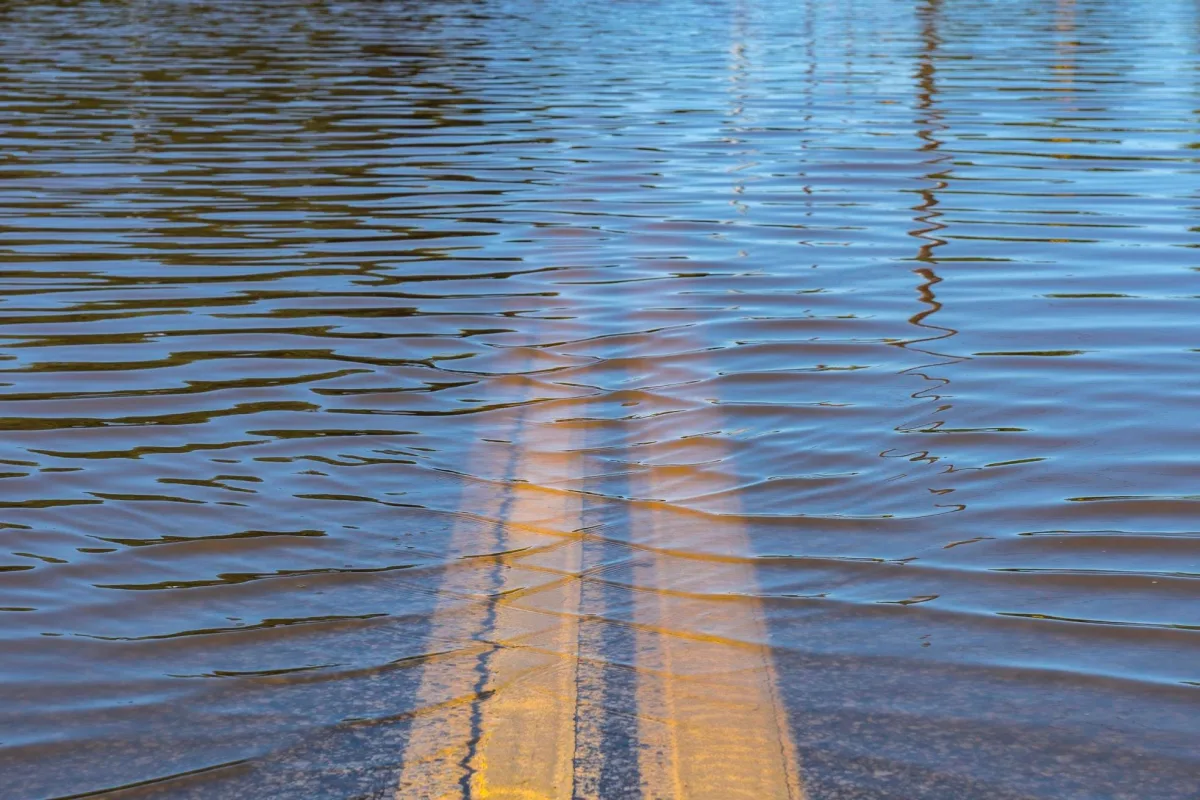
The city of Atlanta experienced significant flooding from a scattered rainstorm on Wednesday afternoon, with major interstates inundated during afternoon rush hour. Drivers were trapped in cars, and autonomous vehicle company Waymo suspended services.
The flash flooding was caused by a combination of intense rainfall, impervious surfaces, and a stormwater removal system that may have been impeded by blockages or engineering assumptions for last century's rainstorms.
A National Weather Service document explains that the percent chance of rain isn't necessarily an indicator of the intensity of rain. The document states, "If the forecaster was 80% certain that rain would develop but only expected to cover 50% of the forecast area, then the forecast would read 40% chance of rain for any given location." It's clear that probability forecasts are crucial in these situations.
The official report for Wednesday in Atlanta was 0.00 inches of rain, because nothing fell at the official recording site, the Atlanta airport. However, up to 2 to 3 inches of rain fell in a scattered shower over downtown Atlanta within a short period of time. This discrepancy highlights the importance of understanding rainfall patterns.
Scattered or widespread showers can produce rainfall at isolated locations. The University of Georgia research team, led by Grace Ahn, is working on a NOAA-funded project that uses advanced immersive reality technologies to convey risks of driving through flooded waters. They're making progress in this area, and it's essential for public safety.
The project's slogan is "Turn Around, Don’t Drown," yet many people in Atlanta drove into flooded roadways, underestimating the danger or assuming they could make it because the previous car did. This behavior is risky and can be deadly.
Former student and current NWS meteorologist Jared Rackley noted that in situations where "turning around" may not be a viable option, we need to think through the guidance in this situation too. He didn't provide a straightforward solution, but his comment highlights the complexity of the issue.
"The Clausius-Clapeyron equation shows that for every 1°C temperature increase, Earth’s atmosphere can hold 7% more water…. A warmer atmosphere leads to greater presence of evaporated water/moisture to fuel the rainstorms," wrote David Shultz. This equation is crucial for understanding the relationship between temperature and rainfall.
The state of Georgia, like many places in the South, is experiencing drought. Meteorological drought conditions are defined by prolonged lack of rainfall. Over the next several days, Georgia and much of the southeastern U.S. will experience a weather pattern conducive to increasing rain chances. It's likely that the region will see more rainfall, but it won't be enough to end the drought immediately.
It will take 1 to 2 feet of rain over a month to get parts of Georgia out of drought. However, extreme events on both sides of the rainfall ledger could actually become more frequent and/or intense. These events can have a significant impact on society.
That’s what disrupts society, more so than averages. People often want black or white answers. Is it getting wetter or drier? As we saw this week in Atlanta, "both" is a viable answer. It's not always a simple yes or no, and we can't assume that the weather will follow a predictable pattern.
Dry conditions associated with drought can also amplify flooding because extreme rain falling on hard, dry surfaces increases runoff rate like a paved surface. The flooding in Atlanta revealed the flash flood equation: Flash flooding = Intense Rainfall + Impervious Surfaces + Stormwater Removal. This equation is simple, but it's essential for understanding the causes of flash flooding.
So, is there a climate change angle? Yes, the rainstorm happened due to natural weather processes, but it's very much consistent with prevailing studies that rainstorm intensity is trending upward. In other words, it rains harder, on average, in intense events. This trend is likely to continue, and we must be prepared for it.
Up to three inches of rain falling in less than an hour is an extreme event. Basic physics explains the connection. Infrastructure design and resiliency planning must consider weather of the present and future, not the past. They can't rely on outdated assumptions and must adapt to the changing climate.