

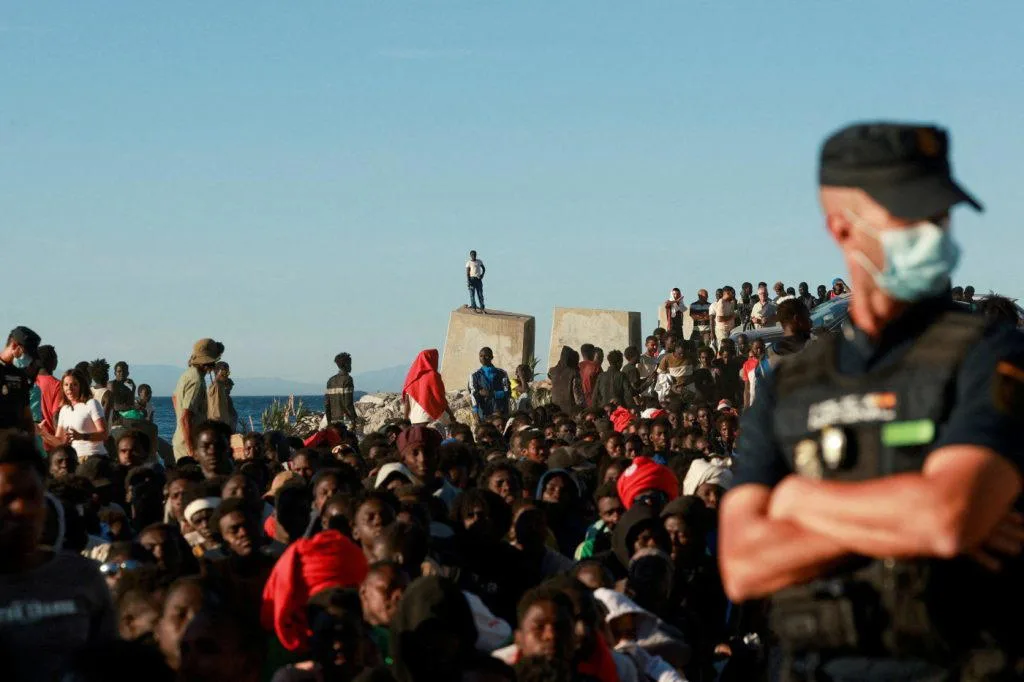
You've probably heard of the crisis unfolding in Ceuta, Spain, a small Spanish enclave in North Africa. A recent surge of migrants from Morocco trying to cross into Spain has turned deadly.
More than 72,000 migrants reached the Spanish territory of Ceuta in a single attempt last week. According to officials, 77 people have died in the process. Many of the deceased drowned while trying to swim around a barrier in the Mediterranean Sea.
A Spanish legal body, comprising forensics and Civil Guard experts, has been working to identify the bodies. They've recovered 79 bodies from the sea, but two of them were taken before the surge, leaving a toll of 77. Forensics experts have carried out 77 autopsies and identified two people who were already registered in Spain through their fingerprints.
To identify the rest, the fingerprint data will have to be sent to Morocco for possible recognition. The Spanish government's delegation in Ceuta had raised the death toll from 72 to 75 earlier on Tuesday. Morocco's interior ministry on Sunday said 11 people died on the Moroccan side of the border, all but one by drowning.
And to make matters worse, those who remain in Ceuta face squalid living conditions with limited access to shelter, food, water, and sanitation, according to AFP reporters in Ceuta who witnessed the situation firsthand.
Spain says 70,000 of the 72,000 migrants who reached Ceuta have returned to Morocco. This has left behind a large number of people who are struggling to survive in a territory that is already struggling to cope with the influx.
The crisis has raised tensions between Spain and its EU partners. The European Union has been critical of Spain's handling of the situation, and the Spanish government has come under pressure to address the humanitarian crisis.
More than 20% of the population of Ceuta is comprised of refugees and migrants. The Spanish government has promised to do more to help those in need, but the situation remains dire.
Aid organizations have been working tirelessly to provide assistance to those affected by the crisis. But with many more people still stranded in Ceuta, it's clear that more needs to be done to address this humanitarian crisis.
The Spanish government has promised to do more to address the crisis. But with the death toll continuing to rise, it's clear that more needs to be done to stop these senseless deaths.
The crisis in Ceuta is a stark reminder of the need for greater cooperation between countries to address the root causes of migration. It's a complex issue that requires a comprehensive solution.
As the international community comes together to address this crisis, it's essential that we remember the human cost of migration. The lives lost in Ceuta are a stark reminder of the need for action.
Ceuta is a tiny Spanish territory on the northern coast of Africa. It's a strategic location that has been a point of contention between Spain and Morocco for decades. The territory has a population of just over 80,000 people, with many of them being refugees and migrants who have fled conflict and poverty in their home countries.
The crisis in Ceuta has sparked a diplomatic row between Spain and Morocco. The Moroccan government has criticized Spain for not doing enough to address the crisis, while the Spanish government has accused Morocco of not doing enough to prevent the migrants from reaching Ceuta.
The conflict between Spain and Morocco is not new. The two countries have a long history of tension, with disputes over territory and resources.
The crisis in Ceuta has also highlighted the need for greater cooperation between countries to address the root causes of migration. Many of the migrants who have reached Ceuta have fled conflict and poverty in their home countries.
In recent years, Africa has faced numerous conflicts that have led to the displacement of millions of people. The crises have been exacerbated by climate change, poverty, and lack of opportunities.
The international community has a responsibility to address these crises and help those affected. The crisis in Ceuta is a stark reminder of the need for greater cooperation between countries to address the root causes of migration.
With the death toll continuing to rise, it's clear that more needs to be done to address this humanitarian crisis. The international community must come together to address the root causes of migration and provide support to those affected by the crisis.
Key Facts
- 77 people have died in the migrant rush in Ceuta.
- More than 72,000 migrants reached Ceuta in a single attempt.
- 70,000 migrants have returned to Morocco.
- 11 people died on the Moroccan side of the border.
- 77 autopsies have been carried out.
- 2 people have been identified through their fingerprints.
- Spain says 70,000 of the 72,000 migrants who reached Ceuta have returned to Morocco.
- The Spanish government has promised to do more to help those in need.
The crisis in Ceuta is a complex issue that requires a comprehensive solution. It's a stark reminder of the need for greater cooperation between countries to address the root causes of migration.