

The single sharpest fact in one or two punchy sentences. Who did what, where, when, and why it matters. Not a summary of everything — the one thing that makes someone stop scrolling. A reader who only reads this paragraph must understand what happened.
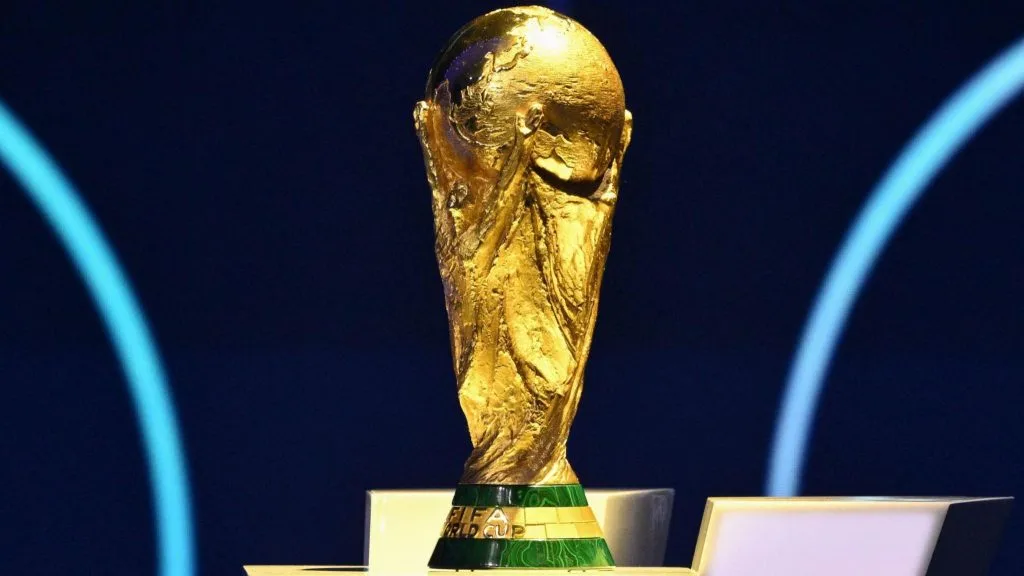
FIFA has awarded automatic qualification to six countries for the 2030 World Cup. These countries, Argentina, Uruguay, Paraguay, Spain, Portugal, and Morocco, will not participate in the usual qualification process. This decision was made to commemorate the competition's 100th anniversary.
The 2030 World Cup will be staged primarily across Spain, Portugal, and Morocco, with the opening matches taking place in Argentina, Uruguay, and Paraguay. This is a significant departure from the usual qualification process, where countries compete in their respective continental qualifying competitions. The six countries awarded automatic qualification will join the other participants in the tournament.
Morocco, one of the main hosts, has made history by becoming the first African team to reach the semi-finals in the 2022 World Cup. The Atlas Lions will automatically qualify as one of the three main hosts of the 2030 edition. This is a major achievement for the Moroccan football team and a testament to their skills.
Spain will co-host the 2030 World Cup alongside Portugal and Morocco. The 2010 world champions will therefore receive an automatic ticket to the tournament rather than compete in UEFA's qualifying process. Spain's involvement is also particularly significant because the country will host most of the tournament alongside its Iberian neighbour Portugal and Morocco across the Strait of Gibraltar.
Portugal is the third main host and will also qualify automatically. The European nation has established itself as a regular presence at recent World Cups and will avoid the usual UEFA qualification route because of its hosting status. Portugal will join Spain and Morocco as the principal hosts of the 2030 tournament.
Argentina will automatically qualify despite not being one of the main host nations. The reigning world champions have been granted a place because one of the opening matches of the 2030 World Cup will be played in Argentina as part of FIFA's centenary celebrations. Argentina won the first World Cup staged in Uruguay in 1930 and lifted the trophy again on home soil during the 1978 edition.
Uruguay will also receive automatic qualification for the 2030 World Cup. The country hosted and won the inaugural World Cup in 1930, defeating Argentina in the final. A century later, Uruguay will stage one of the tournament's opening matches as FIFA celebrates the competition's 100th anniversary.
Paraguay completes the group of six automatically qualified countries. The South American nation will host one of the opening matches of the 2030 World Cup as part of the centenary celebrations. Although Paraguay is not one of the principal tournament hosts, FIFA's decision to take the opening fixtures to Argentina, Uruguay, and Paraguay means the country will also be granted automatic qualification.
Key Facts
- Morocco is the only African country among the six automatically qualified teams.
- The six countries awarded automatic qualification will join the other participants in the tournament.
- Morocco will host most of the tournament alongside Spain and Portugal.
- Argentina will host one of the opening matches of the 2030 World Cup.
- Uruguay will stage one of the tournament's opening matches as part of FIFA's centenary celebrations.
- Paraguay will host one of the opening matches of the 2030 World Cup.
The decision to award automatic qualification to these six countries is a significant change from the usual qualification process. It will be interesting to see how this affects the tournament and the participating teams. The 2030 World Cup promises to be an exciting and unpredictable event, and this change is sure to make it even more exciting.
The six countries that have been awarded automatic qualification for the 2030 World Cup are Argentina, Uruguay, Paraguay, Spain, Portugal, and Morocco. This decision was made to commemorate the competition's 100th anniversary and has been welcomed by football fans around the world. The tournament is shaping up to be an exciting and unpredictable event, and this change is sure to make it even more exciting.