

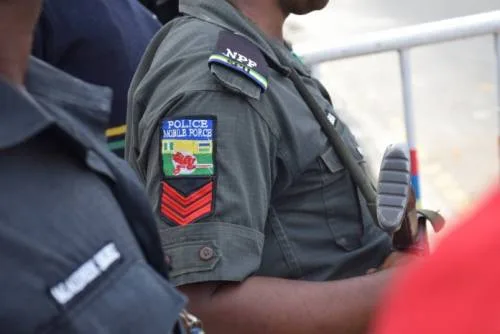
The Nigerian police have carried out a daring raid on a suspected camp of the Indigenous People of Biafra (IPOB) and its militant wing, the Eastern Security Network (ESN), in Imo State. The operation, which was conducted on May 10, 2026, resulted in the recovery of machine guns, ammunition, and drones. According to reports, the police acted on intelligence gathered about the location of the camp, which was said to be a hideout for IPOB/ESN members. The raid is a significant development in the government's efforts to crack down on the separatist group, which has been accused of carrying out violent attacks in the region.
The IPOB/ESN has been a thorn in the side of the Nigerian government, with its demands for an independent state of Biafra. The group's leader, Nnamdi Kanu, has been a vocal advocate for the cause, and his arrest in 2021 sparked widespread protests and violence in the region. The Nigerian government has accused the IPOB/ESN of carrying out attacks on security personnel and government facilities, and has vowed to take decisive action against the group. The raid on the suspected IPOB/ESN camp is a clear indication of the government's determination to deal with the separatist threat.
The recovery of machine guns, ammunition, and drones from the camp is a significant haul, and highlights the level of sophistication and planning that the IPOB/ESN has achieved. The use of drones, in particular, is a worrying development, as it suggests that the group has the capability to carry out aerial attacks. The Nigerian police have been commended for their bravery and professionalism in carrying out the raid, which was said to have been conducted with minimal casualties. The operation is a major blow to the IPOB/ESN, and is likely to deal a significant setback to the group's plans.
The raid on the suspected IPOB/ESN camp is the latest development in the ongoing saga between the Nigerian government and the separatist group. The IPOB/ESN has been accused of carrying out a series of attacks in the region, including the killing of security personnel and the destruction of government facilities. The Nigerian government has responded with force, deploying troops to the region and carrying out a series of raids on suspected IPOB/ESN hideouts. The situation remains tense, with many fearing that the conflict could escalate into full-blown violence.
Key Facts
- The Nigerian police carried out a raid on a suspected IPOB/ESN camp in Imo State on May 10, 2026.
- The raid resulted in the recovery of machine guns, ammunition, and drones.
- The operation was conducted based on intelligence gathered by the police.
- The IPOB/ESN has been accused of carrying out violent attacks in the region.
- The group's leader, Nnamdi Kanu, has been a vocal advocate for the cause of an independent state of Biafra.
- The Nigerian government has vowed to take decisive action against the IPOB/ESN.
Background to the Conflict
The conflict between the Nigerian government and the IPOB/ESN has its roots in the country's complex history. The IPOB/ESN is a separatist group that emerged in the 2010s, with the goal of establishing an independent state of Biafra. The group's leader, Nnamdi Kanu, has been a vocal advocate for the cause, and has gained a significant following in the region. The Nigerian government has responded to the IPOB/ESN's demands with force, deploying troops to the region and carrying out a series of raids on suspected IPOB/ESN hideouts.
The conflict has been marked by violence and bloodshed, with many innocent civilians caught in the crossfire. The IPOB/ESN has been accused of carrying out attacks on security personnel and government facilities, while the Nigerian government has been accused of using excessive force in its response to the separatist threat. The situation remains tense, with many fearing that the conflict could escalate into full-blown violence. The international community has called for calm and restraint, and has urged the Nigerian government to engage in dialogue with the IPOB/ESN.
The IPOB/ESN's demands for an independent state of Biafra are rooted in the region's complex history. The Biafra region was the site of a brutal civil war in the 1960s, which resulted in the deaths of millions of people. The war was sparked by the secession of the Biafra region from Nigeria, and was marked by widespread human rights abuses and atrocities. The legacy of the war continues to be felt today, with many in the region still bearing the scars of the conflict.
The Role of Nnamdi Kanu
Nnamdi Kanu is the leader of the IPOB/ESN, and has been a vocal advocate for the cause of an independent state of Biafra. Kanu was born in 1967, and grew up in the Biafra region. He became involved in the separatist movement at a young age, and quickly rose to prominence as a charismatic and passionate leader. Kanu's message of self-determination and independence has resonated with many in the region, who feel that they have been marginalized and oppressed by the Nigerian government.
Kanu's leadership of the IPOB/ESN has been marked by controversy and violence. He has been accused of inciting violence and hatred, and has been detained by the Nigerian government on several occasions. Despite this, Kanu remains a popular figure in the region, and his message of independence and self-determination continues to inspire many. The Nigerian government has vowed to take decisive action against Kanu and the IPOB/ESN, and has accused the group of carrying out attacks on security personnel and government facilities.
The Impact of the Raid
The raid on the suspected IPOB/ESN camp is a significant blow to the separatist group, and is likely to deal a major setback to their plans. The recovery of machine guns, ammunition, and drones is a significant haul, and highlights the level of sophistication and planning that the IPOB/ESN has achieved. The use of drones, in particular, is a worrying development, as it suggests that the group has the capability to carry out aerial attacks.
The raid is also a major victory for the Nigerian police, who have been commended for their bravery and professionalism in carrying out the operation. The police have been working tirelessly to crack down on the IPOB/ESN, and the raid is a clear indication of their determination to deal with the separatist threat. The operation is a significant development in the ongoing saga between the Nigerian government and the IPOB/ESN, and is likely to have major implications for the region.
The Way Forward
The raid on the suspected IPOB/ESN camp is a significant development in the ongoing conflict between the Nigerian government and the separatist group. The operation is a major blow to the IPOB/ESN, and is likely to deal a significant setback to their plans. However, the conflict is far from over, and the situation remains tense. The Nigerian government has vowed to take decisive action against the IPOB/ESN, and has accused the group of carrying out attacks on security personnel and government facilities.
The Nigerian government must engage in dialogue with the IPOB/ESN, and address the grievances of the people in the region. The use of force is not a solution to the conflict, and will only lead to more violence and bloodshed. The international community must also play a role in resolving the conflict, and must urge the Nigerian government to respect the human rights of all citizens.
The International Community's Response
The international community has been watching the conflict between the Nigerian government and the IPOB/ESN with concern. The situation has been marked by violence and bloodshed, and many innocent civilians have been caught in the crossfire. The international community has called for calm and restraint, and has urged the Nigerian government to engage in dialogue with the IPOB/ESN.
The United Nations has been particularly vocal in its condemnation of the violence, and has called for an end to the conflict. The UN has also urged the Nigerian government to respect the human rights of all citizens, and to ensure that those responsible for human rights abuses are held accountable. The international community must continue to play a role in resolving the conflict, and must urge the Nigerian government to find a peaceful solution to the crisis.
Conclusion
The raid on the suspected IPOB/ESN camp is a significant development in the ongoing conflict between the Nigerian government and the separatist group. The operation is a major blow to the IPOB/ESN, and is likely to deal a significant setback to their plans. However, the conflict is far from over, and the situation remains tense. The Nigerian government must engage in dialogue with the IPOB/ESN, and address the grievances of the people in the region. The international community must also play a role in resolving the conflict, and must urge the Nigerian government to respect the human rights of all citizens.