

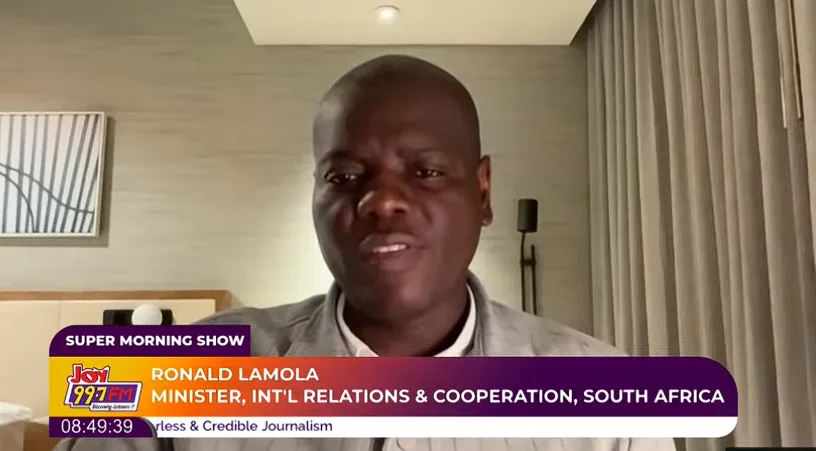
Almost three out of every four Ghanaians who were sent back from South Africa recently had broken the country's immigration laws.
South Africa's Minister of International Relations and Cooperation, Ronald Lamola, dropped the figure on Tuesday, June 10. He said 74% of the Ghanaians who returned home had overstayed their visas and were declared undesirable through proper legal processes.
"As I've said earlier on, with the bulk of all Ghanaians that have come back home, almost 74% had overstayed, and they'd been declared undesirable through our processes, and this is the law, and this has been communicated to the High Commissioner," Lamola said on the Super Morning Show.
The minister didn't give the total number of Ghanaians involved or say when exactly they returned. But his statement confirms that the majority of those forced to leave were in South Africa illegally.
Despite the breaches, Lamola stressed that the South African government is still committed to protecting everyone inside its borders, including Ghanaian nationals.
"We are indeed protecting all people within the borders of South Africa. Constitutionally, we are duty-bound to protect everyone, including Ghanaian nationals," he said.
He acknowledged that many Ghanaians contribute meaningfully to South Africa's economy across different sectors and deserve protection.
"There's a huge number of them in the various sectors of our economy. The South African government is duty-bound to ensure that they feel safe and they play their role as they're supposed to be in the country."
Lamola said the constitution doesn't differentiate between citizens and foreign nationals when it comes to safety. "The government has got the responsibility to make sure that everyone is safe," he added.
His comments come as South Africa faces rising tensions over immigration. In recent weeks, there've been reports of violence against foreign nationals. Lamola condemned those attacks.
"It's for that reason why we're condemning the violence against foreign nationals, because it's our duty as the government of South Africa to protect everyone within our borders," he explained.
At the same time, he made it clear that the government will continue to crack down on irregular migration.
"We also have a duty to deal with irregular migration by enforcing the immigration policy," he stated.
The statement is a balancing act. On one side, South Africa wants to assure foreign nationals — especially those who contribute to the economy — that they're safe. On the other side, it's signalling that breaking immigration rules will have consequences.
For Ghana, the numbers raise questions about how many of its citizens are living in South Africa without proper documents. The Ghanaian High Commission in Pretoria has been in touch with South African authorities on the matter.
Lamola said the High Commissioner was informed about the legal processes behind the returns. But he didn't say whether Ghana has raised any objections.
The issue of visa overstays isn't new. Many African migrants in South Africa struggle to renew permits or switch visas, often because of bureaucratic delays or high costs. That pushes some into overstaying, even if they entered legally.
Lamola's figure suggests that the majority of Ghanaians affected weren't asylum seekers or refugees but people who simply stayed beyond their allowed time.
South Africa has one of the strictest immigration enforcement systems on the continent. The Department of Home Affairs regularly declares foreigners "undesirable" for overstaying, which can lead to a ban from re-entering the country for up to five years.
For now, Lamola's message is clear: South Africa will protect those who follow the rules, but it will also enforce them.