

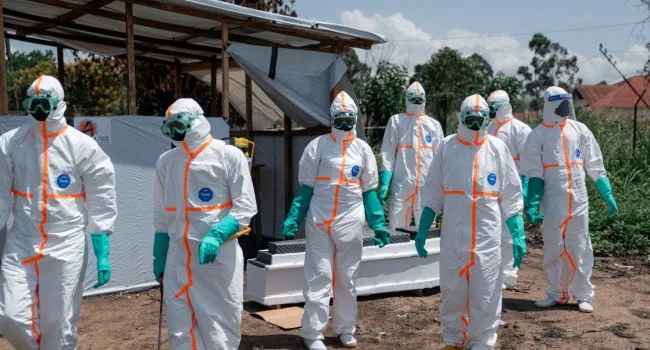
The single sharpest fact in one or two punchy sentences. Who did what, where, when, and why it matters. Not a summary of everything — the one thing that makes someone stop scrolling. The World Health Organization has confirmed 1,001 deaths in the Democratic Republic of Congo and 2 in Uganda due to Ebola.
The Ebola outbreak was first declared in mid-May, and the WHO has reported nearly 2,500 cases of the deadly virus in the two countries. The organization's latest report reveals a grim picture of the outbreak's spread and severity.
The WHO's figures indicate that the situation is dire, with the Democratic Republic of Congo accounting for the bulk of the fatalities. The organization said the outbreak in the DRC has resulted in 999 confirmed deaths, with 2 cases confirmed in Uganda.
So, what does this mean for the affected communities? The Ebola outbreak has already had a devastating impact on the people of the Democratic Republic of Congo and Uganda. Over 1,000 deaths are a stark reminder of the deadly nature of this virus.
The WHO has been working closely with governments and health officials to contain the outbreak and provide emergency response efforts. Yet, with numbers this high, it is clear that more needs to be done to stop the spread of Ebola.
The outbreak highlights the importance of continued vigilance and public health efforts to prevent the spread of infectious diseases in Africa. In the midst of this global health crisis, the need for robust public health infrastructure and response mechanisms is evident.
As the WHO continues to provide critical support and guidance, the international community must remain committed to assisting the affected countries in their efforts to combat the outbreak.
Key Facts
- 1,001 deaths confirmed in the Democratic Republic of Congo and Uganda due to Ebola
- Nearly 2,500 cases of the deadly virus reported in the two countries
- 999 confirmed deaths in the Democratic Republic of Congo, with 2 cases confirmed in Uganda
- Mid-May: the Ebola outbreak was first declared
- WHO has reported a grim picture of the outbreak's spread and severity
- Ebola outbreak has resulted in a devastating impact on the people of the Democratic Republic of Congo and Uganda
In the wake of this crisis, we must work together to support affected communities and prevent the spread of infectious diseases in Africa. The international community must remain committed to assisting the affected countries in their efforts to combat the outbreak.
The WHO has been working closely with governments and health officials to contain the outbreak and provide emergency response efforts. Yet, with numbers this high, it is clear that more needs to be done to stop the spread of Ebola.
The Ebola outbreak is a grim reminder of the importance of robust public health infrastructure and response mechanisms. As the WHO continues to provide critical support and guidance, the need for continued vigilance and public health efforts to prevent the spread of infectious diseases in Africa is evident.
The WHO's figures indicate that the situation is dire, with the Democratic Republic of Congo accounting for the bulk of the fatalities. The organization said the outbreak in the DRC has resulted in 999 confirmed deaths, with 2 cases confirmed in Uganda.
The Ebola outbreak was first declared in mid-May, and the WHO has reported nearly 2,500 cases of the deadly virus in the two countries. The organization's latest report reveals a grim picture of the outbreak's spread and severity.