

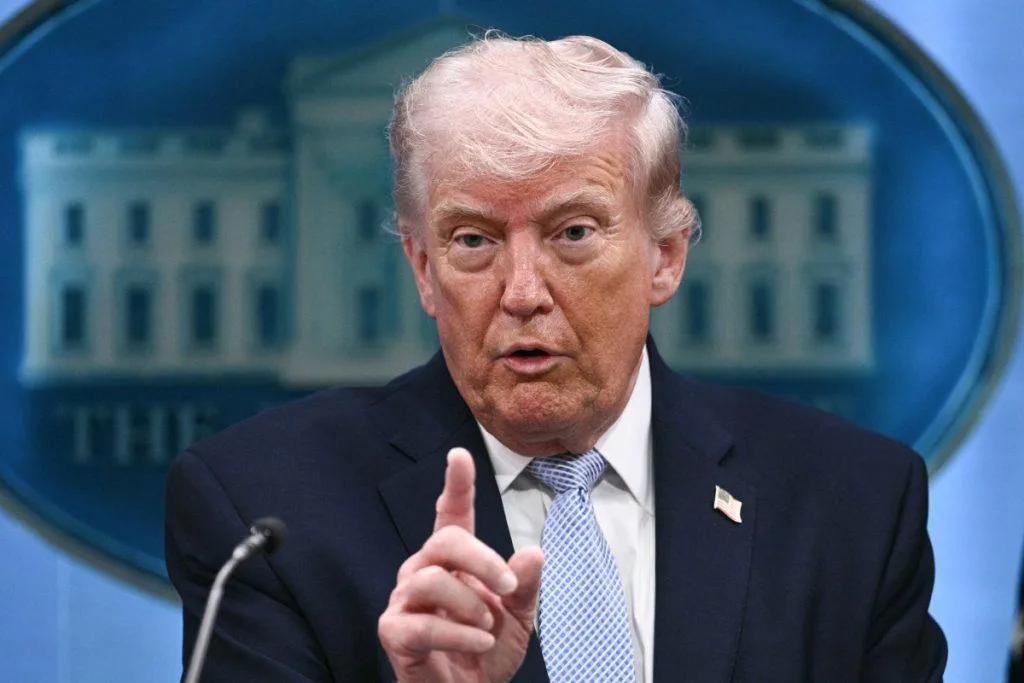
President Donald Trump on Sunday warned Iran "there won't be anything left of them" if Tehran doesn't quickly agree to a peace deal with the United States. This threat comes amidst a war that's been raging since February 28, when US and Israeli forces launched major strikes on the Islamic republic.
The war has led to an effective blockade of the critical Strait of Hormuz, through which some 20 percent of global oil exports pass in peacetime. This blockade has had a significant impact on the global economy, as energy prices are climbing. The war has also drawn neighbors Israel and Lebanon into a deadly side conflict.
Iran's clerical state, which is the patron of Hezbollah, has demanded a lasting ceasefire in Lebanon before any broader peace agreement with Trump. Trump hasn't been happy with Tehran's refusal to agree to an accord on his terms. An Israeli military official said Sunday that Hezbollah had fired around 200 projectiles at Israel and its troops over the weekend, despite Israel and Lebanon agreeing to extend a ceasefire.
Washington and Tehran agreed to a truce on April 8, but peace negotiations have stalled and sporadic attacks have continued. On Sunday, Iranian media said the United States hadn't made any concrete concessions in its latest response to Iran’s proposed agenda for negotiations to end the war.
“For Iran, the clock is ticking, and they'd better get moving, fast, or there won't be anything left of them,” Trump wrote on his Truth Social platform. “Time is of the essence!”
The Fars news agency said Washington had presented a five-point list, which included a demand for Iran to keep only one nuclear site in operation and transfer its stockpile of highly enriched uranium to the United States. This demand is seen as a major hurdle in the negotiations, as Iran has consistently refused to give up its nuclear program.
As the situation continues to escalate, the international community is watching with bated breath. The conflict has the potential to draw in other countries and escalate into a full-blown regional war. The United States and Iran have a long history of tensions, with the US imposing sanctions on Iran and Iran responding with aggressive rhetoric.
The current conflict began on February 28, when US and Israeli forces launched major strikes on Iranian targets. The strikes were seen as a response to Iran's increasing aggression in the region, including its support for militant groups and its development of ballistic missiles. Since then, the conflict has escalated, with both sides exchanging blows and accusing each other of aggression.
The impact of the conflict is being felt across the region, with many countries struggling to cope with the fallout. The conflict has also had a significant impact on the global economy, with oil prices rising and trade disrupted. As the conflict continues to escalate, it's unclear what the future holds. The situation in Iran is dire, and it's going to take a lot of effort to resolve it.
- The conflict between the US and Iran began on February 28
- The US and Israel launched major strikes on Iranian targets
- Iran has demanded a lasting ceasefire in Lebanon before any broader peace agreement
- The US has demanded that Iran keep only one nuclear site in operation and transfer its stockpile of highly enriched uranium
- The conflict has drawn in other countries, including Israel and Lebanon
- The international community is watching the situation with bated breath
The situation in Iran is complex and multifaceted, with many different players and interests at stake. It's going to be important to watch the situation closely and see how it develops. The US and Iran have a long history of tensions, and it's unclear what the future holds. The situation in Iran is dire, and it's going to take a lot of effort to resolve it.
As the world waits to see what will happen next, the situation in Iran is a powder keg waiting to be ignited. The conflict has the potential to draw in other countries and escalate into a full-blown regional war. The US and Iran have a long history of tensions, and it's unclear what the future holds. The situation in Iran is complex and multifaceted, with many different players and interests at stake.
The US and Iran have been at odds for decades, with the US imposing sanctions on Iran and Iran responding with aggressive rhetoric. The current conflict is just the latest escalation in a long history of tensions between the two countries. It's going to be important to watch the situation closely and see how it develops. The world is holding its breath, waiting to see what will happen next.
The conflict in Iran has the potential to have far-reaching consequences, not just for the region but for the entire world. The situation is complex and multifaceted, with many different players and interests at stake. It's going to be important to watch the situation closely and see how it develops. The US and Iran have a long history of tensions, and it's unclear what the future holds.
In the end, it's going to take a lot of effort to resolve the situation in Iran. The conflict is complex and multifaceted, with many different players and interests at stake. The US and Iran have a long history of tensions, and it's unclear what the future holds. The situation in Iran is dire, and it's going to take a lot of effort to resolve it. The world is watching with bated breath, waiting to see what will happen next.
The situation in Iran is a major concern for the international community, and it's going to require a lot of work to find a solution.