

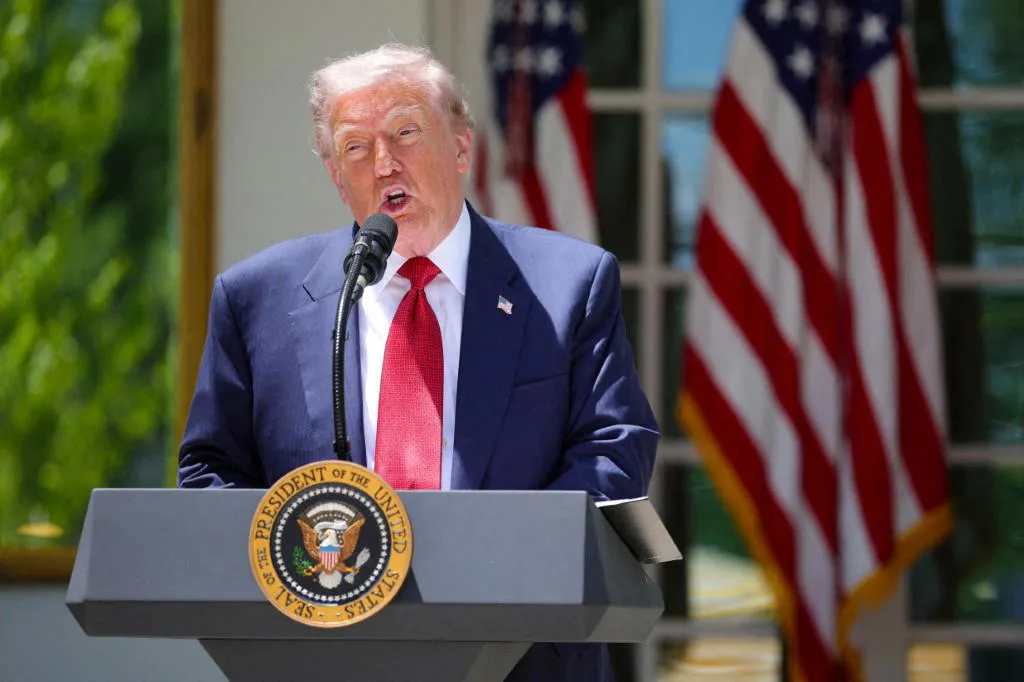
The single sharpest fact is that US President Donald Trump has postponed a planned attack on Iran, which was scheduled for Tuesday. This decision comes after Iran said it had responded to a new US proposal aimed at ending the war. Iran's response to the proposal led to the postponement.
The reason for this postponement is that Trump had been asked to do so by the leaders of Qatar, Saudi Arabia, and the United Arab Emirates, as they said 'serious negotiations are now taking place'. The US president announced this on his Truth Social network, saying he would 'hold off on our planned Military attack of the Islamic Republic of Iran'. He didn't give a new date for the attack.
But what's interesting here is that Trump has informed the US military 'that we will NOT be doing the scheduled attack of Iran tomorrow'. He's also instructed them to be prepared to go ahead with a full, large-scale assault of Iran 'on a moment’s notice, in the event that an acceptable Deal is not reached'. This shows that the situation is still volatile. A deal is far from certain, and it's unclear what the outcome will be.
The United States and Israel have been locked in a war with Iran since US and Israeli forces launched strikes in late February. Trump has struggled to break an impasse in negotiations and end the conflict, which has shaken the Middle East. It's also sent energy prices climbing. The two sides have held only a single round of talks in Pakistan, despite a fragile ceasefire in April. They haven't made much progress in the talks.
Trump warned late Sunday that 'the clock is ticking' and 'there won’t be anything left' of Iran if no peace deal is reached. This shows how high the stakes are. There's a lot of tension between the two sides. They're under pressure to reach a deal.
The Persian Gulf Strait Authority (PGSA), a new body Iran has set up to manage the Hormuz strait, said it would provide 'real-time updates' on operations and developments in the waterway. Trump says Iran must open up the strait as part of any deal. This is a critical issue, as the Strait of Hormuz is a vital energy conduit. Iran has largely kept it closed since the start of the war. It's a key point of contention in the negotiations.
So, what happens next is crucial. The US and its allies are waiting to see if Iran will agree to the terms of the deal. The deal includes keeping only one nuclear site in operation and transferring its stockpile of highly enriched uranium to the United States. If a deal is reached, it could potentially end the war. It could also reduce tensions in the Middle East.
But if not, the situation could escalate further, with potentially disastrous consequences. The US and its allies are worried about the potential consequences.
The Gulf allies, including Qatar, Saudi Arabia, and the United Arab Emirates, believe that 'a Deal will be made' that includes 'NO NUCLEAR WEAPONS FOR IRAN!' as Trump said. This shows that there's still hope for a peaceful resolution to the conflict. However, it's going to require careful negotiation and compromise from all sides. They can't afford to make mistakes.
In terms of background, Donald Trump is the 45th President of the United States, and his presidency has been marked by controversy and unpredictability. He's known for his tough stance on Iran. He's also known for his desire to negotiate a new deal. But the situation is complex, and it's not clear what the outcome will be. It's hard to predict what Trump will do next.
- The US and Israel have been at war with Iran since late February.
- The war has shaken the Middle East. It's also sent energy prices climbing.
- The two sides have held only one round of talks in Pakistan, despite a fragile ceasefire in April.
- Trump has instructed the US military to be prepared to launch a full-scale assault on Iran if a deal is not reached.
- The Persian Gulf Strait Authority (PGSA) will provide real-time updates on operations and developments in the Hormuz strait.
The situation is still unfolding, and it's not clear what the future holds. The next few days will be critical in determining the outcome of the conflict. If a deal is reached, it could potentially bring peace to the region. But if not, the situation could escalate further, with potentially disastrous consequences. The world is watching to see what happens next.