

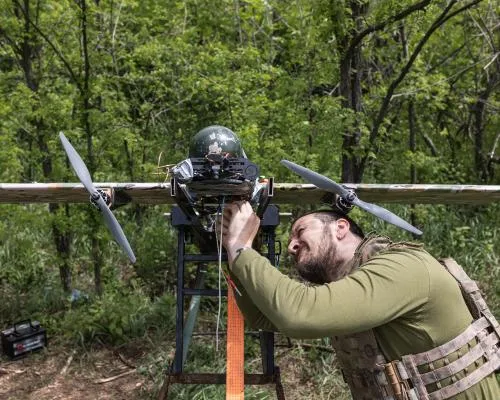
More than 500 Ukrainian drones attacked Russia overnight, killing three people around Moscow. This isn't the first large-scale drone attack on Russia since the start of the war, but it's one of the largest. Air defences shot down 556 drones in over a dozen regions, including Moscow, Russia's defence ministry said. They're still assessing the damage.
The attack came after Ukrainian President Volodymyr Zelenskyy vowed to launch more retaliatory strikes due to an earlier Russian attack on Kyiv that killed 24 people. Zelenskyy is the sixth President of Ukraine, serving since 2019. He was a comedian and actor before entering politics. He didn't have a traditional background in politics, but he's been a key figure in Ukraine's response to the war.
Moscow and Kyiv have traded attacks following a prisoner swap and the expiration of a three-day truce on Tuesday. The truce was meant to allow for the exchange of prisoners and the delivery of humanitarian aid. It didn't last long, and now they're back to fighting.
The US Treasury secretary, Scott Bessent, had previously said he wouldn't renew the general licence allowing the purchase of Russian oil stored on tankers. As of early afternoon Washington time on Saturday, no renewal notice had been posted on the Treasury website. It's unclear what this means for the future of Russian oil purchases.
Two top Democratic US senators, Jeanne Shaheen and Elizabeth Warren, on Friday urged the Trump administration against renewing the waiver because it was providing revenue to Russia to aid its war in Ukraine. They said there wasn't any evidence it was bringing down fuel costs for American consumers. They're concerned about the impact on Ukraine and the global economy.
An unexploded projectile was discovered on a property in south-eastern Romania near the EU and Nato member's border with Ukraine on Saturday, its defence ministry said. Romania shares a 650-km land border with Ukraine. Russian drones attacking Ukraine's ports on the Danube river have repeatedly breached Romanian airspace, and fragments have sometimes fallen on its territory as Ukrainian forces shoot them down. It's a dangerous situation, and Romania's defence ministry is on high alert.
The leaders of Nato's 14 eastern flank nations this week said Russia's repeated violations of their airspace underlined the urgent need to consolidate the alliance's air defences against missiles and drones. Several Russian and Ukrainian drones have crashed in Latvia since Russia invaded Ukraine, stirring public disquiet in the small former Soviet republic that is now a member of Nato and the EU. They're working to strengthen their air defences.
Latvian President Edgars Rinkevics on Saturday proposed opposition lawmaker Andris Kulbergs as the next prime minister after Evika Silina resigned. Silina stepped down, triggering the collapse of her coalition after she dismissed defence minister Andris Spruds because Ukrainian drones strayed into Latvia and exploded at an oil facility. The Latvian army said it failed to detect the drones as they crossed from Russia. Silina blamed Spruds for not developing anti-drone systems quickly enough. In response, Spruds' Progressives party withdrew support from Silina's government on Wednesday, leaving her without a parliamentary majority and exposed to a no-confidence vote.
It's a complex situation, and Latvia's government is in flux.
- Over 500 Ukrainian drones attacked Russia overnight.
- Three people were killed in the attack.
- 556 drones were shot down by air defences.
- The US let a sanctions waiver lapse, affecting Russian oil purchases.
- Two US senators urged the Trump administration against renewing the waiver.
As Ukrainian President Volodymyr Zelenskyy said, the country will continue to defend itself against Russian aggression. They won't back down, and they'll keep fighting for their freedom.
The situation in Ukraine is complex and constantly evolving. It's a challenging issue, and it's hard to predict what will happen next. The conflict has caused significant human suffering, with thousands of people killed or displaced. It's also having a major impact on the global economy, particularly in the energy sector. They're struggling to cope with the aftermath.
As the conflict continues, it's likely that we'll see more drone attacks and other forms of retaliation from both sides. They won't stop fighting anytime soon, and it's unclear what the future holds. The international community is calling for a peaceful resolution to the conflict, but it's hard to achieve. They're working towards a solution, but it's a difficult process.
In the meantime, countries like Romania and Latvia are on high alert, given their proximity to Ukraine and Russia. They're working to strengthen their air defences and protect their citizens from the ongoing conflict. They don't want to get caught in the crossfire, and they're taking precautions. It's a dangerous situation, and they're trying to stay safe.
The US decision to let the sanctions waiver lapse is likely to have significant implications for the global energy market. It could lead to higher oil prices and more economic instability, particularly in countries that rely heavily on Russian oil. They're worried about the impact, and they're trying to prepare. It's a complex issue, and they're working to find a solution.
The situation in Ukraine is a reminder of the importance of diplomacy and international cooperation. It's a complex and challenging issue, but one that requires a thoughtful and nuanced approach. They're working together to find a solution, and they won't give up. It's a difficult process, but it's necessary.