

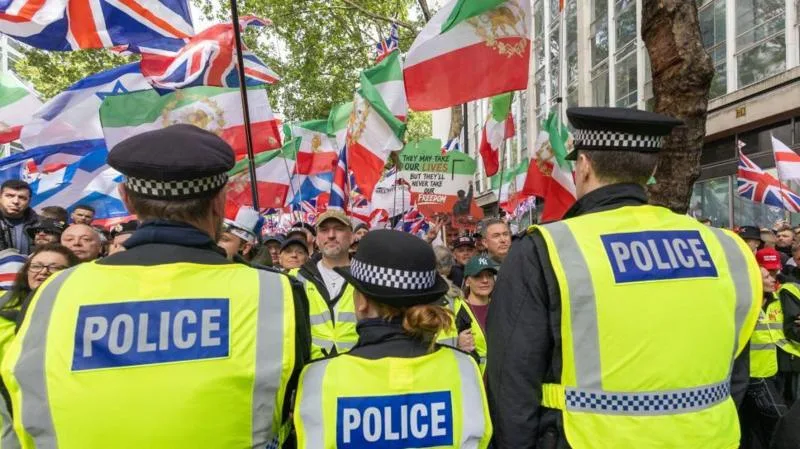
The Metropolitan Police has called it one of the most significant policing operations in years. Officers are using drones, police horses, and dogs, and they have armoured vehicles on standby. They're also managing a so-called "sterile zone" between the two protests.
The Unite the Kingdom march, organised by far-right figure Tommy Robinson, whose real name is Stephen Yaxley-Lennon, is expected to gather in Kingsway before heading to Whitehall and a rally in Parliament Square. Robinson wrote in a post on X: "Today, we Unite the Kingdom and the West in the greatest patriotic display the world has ever seen." He didn't specify what he means by "patriotic display", but it's clear he's trying to make a statement.
The separate pro-Palestinian march, commemorating Nakba Day, begins in Kensington, before heading to Waterloo Place via Piccadilly. John Rees from Stop the War, one of the organisers of the pro-Palestinian march, questioned why the Unite the Kingdom march was allowed to also take place on 16 May. He didn't get a clear answer, but the police say they're doing their best to balance the right to protest with the need to maintain order.
Sir Keir Starmer said in a post on X: "Today the voices of division will be loud. They don't speak for the country I know, one that belongs to all of us." He's concerned about the potential for violence and the impact on the community. The police are working to prevent hate crime and protect the public, and they're taking a robust approach to maintaining order.
The policing operation will cost the force £4.5m, according to Met Police Deputy Assistant Commissioner James Harman. The Met said the risks from the protests meant it had to impose a high degree of control. This includes the first use of live facial recognition cameras as part of a protest policing operation. The cameras are being used to identify potential troublemakers and prevent hate crime.
Live facial recognition is being used at Euston and King's Cross St Pancras railway stations, where people attending the Unite the Kingdom march are likely to arrive. The Met said officers had arrested two men near Euston station, who were wanted on suspicion of GBH following an incident in Birmingham. They're being held for questioning, and the police are working to determine their involvement in the incident.
Eleven foreign "far-right agitators" have been blocked from entering the country to attend the Unite the Kingdom event, the government said on Friday. Among the 11 blocked from entering the UK is the US-based, anti-Islam influencer Valentina Gomez, who attended the first Unite the Kingdom march last September. The government is working to prevent hate speech and protect the public, and they're taking a firm stance against extremism.
The Home Secretary Shabana Mahmood said the right to protest is a cornerstone of our democracy. She added: "But anyone spreading hate or committing acts of violence will face the full force of the law." The police are working to enforce this, and they're taking a zero-tolerance approach to hate crime.
The Director of public prosecutions, Stephen Parkinson, said: "This isn't about restricting free speech. It's about preventing hate crime and protecting the public, particularly at a time of heightened tensions." The police are working to balance the right to protest with the need to maintain order, and they're taking a robust approach to preventing hate crime.
Lord Mann, the government's independent advisor on antisemitism, told the BBC that organisers of public events should screen contributors to judge the level of risk they pose. Nick Aldworth, a former Met Police superintendent and national counter-terror co-ordinator, told BBC Radio 4's Today programme that when it comes to a spontaneous response from a speaker, "police will seek to enforce it... I think proving that later in court could be difficult." The police are working to prevent hate speech, and they're taking a firm stance against extremism.
Over 4,000 police officers have been deployed to London for the two rival protests. The policing operation will cost the force £4.5m. Live facial recognition cameras are being used as part of the protest policing operation. Eleven foreign "far-right agitators" have been blocked from entering the country to attend the Unite the Kingdom event. The Met said officers had arrested two men near Euston station, who were wanted on suspicion of GBH following an incident in Birmingham.
The situation in London is being closely monitored, with tens of thousands of football fans also heading to Wembley Stadium for the FA Cup Final on Saturday afternoon. The city is bracing for a potentially volatile day, with the police working to maintain order and prevent any clashes between the rival groups. They're doing their best to ensure the safety of everyone involved, and they're taking a robust approach to preventing hate crime.
The use of live facial recognition cameras has raised concerns among some civil liberties groups, who argue that it could infringe on people's right to privacy. However, the police say that it's a necessary measure to prevent hate crime and protect the public. They're working to balance the right to protest with the need to maintain order, and they're taking a firm stance against extremism.
The police are taking a robust approach to maintaining order and preventing any violence. They're working to ensure that the day passes off peacefully, and they're doing their best to prevent hate crime. The context of the protests is complex, with the Unite the Kingdom march being organised by a far-right figure and the pro-Palestinian march being held to commemorate Nakba Day.
The police are working to balance the right to protest with the need to prevent hate crime and protect the public. They're taking a zero-tolerance approach to hate crime, and they're working to maintain order. In a city that's known for its diversity and tolerance, the rival protests pose a significant challenge to the authorities. The police are working to ensure that the day passes off peacefully, and they're doing their best to prevent hate crime.
As the crowds gather and the protests get underway, the police will be working to maintain order and prevent any clashes. They're taking a difficult task, but one that's essential to ensuring the safety of everyone involved. The police are working to prevent hate speech, and they're taking a firm stance against extremism. They won't tolerate any form of hate crime, and they'll do their best to maintain order.