

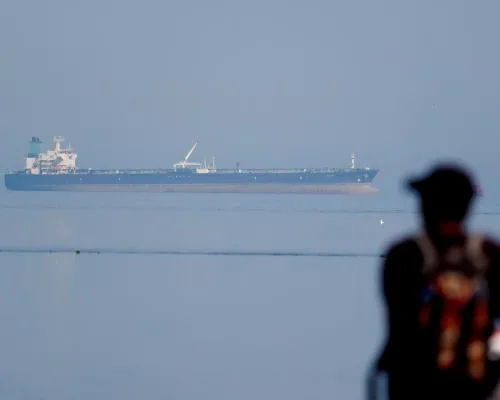
Britain has made an exemption to its oil and gas sanctions on Russia, allowing the import of diesel and jet fuel made from Russian crude oil, but refined in third-party countries. This decision comes after the US extended a waiver that critics say enables the Kremlin to earn more money and fund the war in Ukraine.
The new rules, which take effect on Wednesday, will be in place indefinitely. They will be reviewed periodically and can be amended or revoked, according to the British government. This move is likely to be met with criticism, as higher fuel costs have contributed to broader cost-of-living pressures in Britain. They're already feeling the strain, and this decision won't help.
An EU official, Valdis Dombrovskis, the EU economics commissioner, criticised the latest US waiver of sanctions on Russian oil. Dombrovskis stated, "From the EU point of view, we don't think that this is a time to ease pressure on Russia. Secretary Bessent was reassuring us that this is a temporary measure, but we know that it's already a second extension of the measure which initially was meant to last only 30 days." He didn't elaborate on what the EU plans to do next.
Britain also issued a licence for the maritime transport of liquefied natural gas from Russia's Sakhalin-2 and Yamal projects, as well as related services, including shipping, financing, and brokering, under Russia sanctions rules. This licence will run until 1 January 2027. It's not clear what impact this will have on the conflict in Ukraine.
The US warned Russia against attacking Latvia, after the Kremlin's UN ambassador, Vasily Nebenzya, threatened the country with "retaliation" over Ukrainian drones. Nebenzya claimed that Ukraine was planning to launch drones from Baltic countries, a claim denied by the Baltic countries.
"Lies and aggressive disinformation and threats are a sign of despair and weakness, and we have seen similar lies addressed against other members of this council in the previous meetings, so I'm very honoured to have the attention drawn to my country today," said Sanita Pavļuta-Deslandes, Latvia's UN representative. She didn't mince words, and it's clear that Latvia won't back down.
A funeral was held in Kyiv for Liubava Yakovlieva, 12, and her sister Vira, 17, who were killed when a Russian missile tore through their Kyiv apartment building on 14 May. The girls' mother, Tetiana, sat beside the coffins, the family's sole surviving member. The father, Yevhen, was killed on the frontline as a soldier three years ago. It's a tragic reminder of the human cost of the conflict.
Ukrainian forces struck a Russian refinery and an oil pumping station over the past 48 hours, according to Ukraine's general staff. Russia attacked Ukraine with 209 drones over the previous night, killing five civilians and wounding 24 others, officials said. Five people were injured after Russia hit the south-eastern city of Dnipro, said the regional governor, Oleksandr Hanzha. The situation on the ground is dire, and it's not getting better.
Key Facts
- Britain has exempted imports of diesel and jet fuel made from Russian crude oil.
- The new rules will be in place indefinitely, but will be reviewed periodically.
- The US extended a waiver that allows the Kremlin to earn more money from oil sales.
- Ukrainian forces struck a Russian refinery and an oil pumping station over the past 48 hours.
- Russia attacked Ukraine with 209 drones over the previous night, killing five civilians and wounding 24 others.
The situation in Ukraine continues to escalate, with both sides suffering losses. The international community is watching closely, as the conflict has significant implications for global security and the economy. As the situation continues to unfold, it's unclear how the exemption of Russian diesel and jet fuel from sanctions will impact the conflict and the global economy. The outcome won't be known for some time, and it's likely to be complex.
The EU has been critical of the US waiver, with Dombrovskis stating that it's not the right time to ease pressure on Russia. The EU has been a strong supporter of Ukraine, providing significant financial and military aid to the country. The US, on the other hand, has taken a more nuanced approach, with the waiver being seen as a way to balance the need to support Ukraine with the need to maintain a stable global economy. It's a delicate balance, and it's not clear if they've got it right.
The impact of the conflict on the global economy is significant, with higher fuel costs contributing to broader cost-of-living pressures. The exemption of Russian diesel and jet fuel from sanctions is likely to have a significant impact on the global economy, as it will allow Russia to earn more money from oil sales. This, in turn, could lead to an increase in the country's ability to fund the war in Ukraine. It's a worrying trend, and it's not likely to improve soon.
The situation in Ukraine is complex and multifaceted, with significant implications for global security and the economy. The exemption of Russian diesel and jet fuel from sanctions is a significant development, and it's unclear how it will impact the conflict and the global economy. The world is watching, and it's waiting to see what happens next. The conflict won't be resolved anytime soon, and it's likely to have far-reaching consequences.