

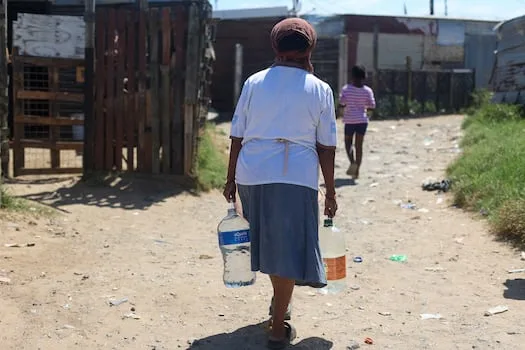
Eish, you’d think that after twenty-two years, turning on a tap and getting actual water would be a standard feature of life, not a luxury. According to the latest Stats SA 2025 general household survey, the progress is looking more like a crawl than a sprint. We’ve only moved from 84.4% of households having piped water in 2002 to 87.4% last year. That’s a measly three percent shift in over two decades. You’ve got to wonder what exactly has been happening with the infrastructure budget all this time.
While the national numbers look slightly up, the reality on the ground is far grimier. In provinces like Limpopo, Mpumalanga, the Free State, and Gauteng, access to water has actually gone backwards. It’s a bitter pill to swallow when you consider how many billions have been poured into maintenance projects that seem to dissolve into thin air. Risenga Maluleke, the statistician-general, pointed out that the population surge in these provinces isn’t helping matters. That hardly explains why the pipes are failing so spectacularly.
When learners have access to clean water and dignified sanitation facilities, they build confidence, self-respect and a sense of belonging within the school environment.
The human cost of this neglect is heavy. We aren't just talking about a mild inconvenience. We’re talking about raw sewage flooding the streets and infrastructure that’s quite literally falling apart. Community leaders told the South African Human Rights Commission that the situation is effectively crippling farming and threatening our food supply. If the farmers can’t irrigate, we don’t eat. Given the rising food insecurity, that’s a disaster waiting to happen.
Schools are feeling the sting too. A forum hosted by the Kagiso Trust recently highlighted how the lack of water ruins education. Imagine trying to learn or teach in a school where there isn't even a tap for basic hand washing. Aluyolo Mbeki from the group Equal Education shared that in KwaZulu-Natal, a staggering 86% of schools surveyed didn't even have proper hand-washing facilities. That’s not just a hygiene issue; it’s a complete failure of the system to provide even the bare minimum for our children.
The Numbers Behind the Dry Taps
- The percentage of households suffering from water cuts lasting longer than two days has jumped from 24.3% in 2012 to 37.6% last year.
- While total households with municipal piped water access grew from 9.2-million to 15.9-million, the infrastructure isn't keeping pace with the load.
- Confidence in water safety is a rollercoaster, with 92.3% of folks in Limpopo trusting their water, compared to only 64.7% in the Northern Cape.
- Roughly 25% of households reported that their access to food is currently inadequate or severely inadequate, a figure that’s climbed since before the pandemic.
- Despite the water headaches, the survey noted that social grant reliance has surged, with over half of all households now having at least one person receiving some form of support.
With the local government elections coming up on November 4, water is set to be the main event. People are tired of excuses, tired of leaking pipes, and tired of hearing about budgets that don't result in wet taps. It’s hard to blame them for being angry when you look at the stats. When the basics like water and light—where 10% of households are still off the main grid—aren't met, the ballot box is usually where the frustration lands.
Sanitation has improved from 61.7% in 2002 to 84% today, but having a flush toilet doesn't help much if there’s no water to flush it with. This gap between the services we were promised and the reality we live in is the defining political story of the moment. Whether you’re in the leafy suburbs of Joburg or the rural corners of the Northern Cape, that tap handle is starting to feel like a very dangerous gamble.