

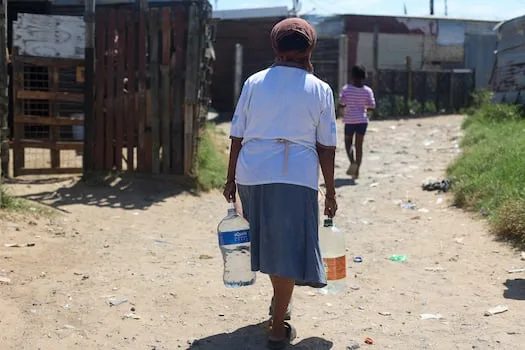
It’s been twenty-three years since the first survey, and if you feel like the taps in your house are playing a game of hide-and-seek, you aren’t alone. Statistics South Africa’s latest survey for 2025 shows that access to piped water in homes has crawled from 84.4% in 2002 to just 87.4% today. That’s a three percent bump over more than two decades. In local government terms, it’s basically standing still while the rest of the world jogs past.
The reality is quite biting when you look at the provinces. While some areas might feel like things are moving, access to water has actually gone backwards in Limpopo, Mpumalanga, the Free State, and Gauteng. This isn’t just about numbers. It’s about the reality of living in Joburg or a township in the Free State where you wake up, turn the tap, and hear that hollow, whistling sound of air instead of the flow of water. With the local government elections hitting on November 4, you can bet your bottom Rand that water will be the hottest topic on every councillor’s poster.
"There are a lot of issues that are at play. The number of households increasing in those provinces also does play a role," said Statistician-General Risenga Maluleke.
Maluleke pointed out that while the percentage isn't jumping, the raw number of people trying to get water has ballooned, reaching 15.9-million households compared to 9.2-million back in 2004. It’s like trying to fill a bucket with a hole in the bottom while the number of people waiting for a drink keeps growing. The infrastructure, that ageing metal and plastic under our feet, is just plain tired. Years of missing maintenance have turned minor leaks into massive, street-flooding crises.
Things aren't just frustrating; they're becoming expensive and exhausting for families. The survey highlights that 37.6% of households now face water cuts lasting longer than two days, a jump from 24.3% in 2012. If you’re lucky enough to have water, you might be worried about what’s actually in it. While 83.5% of people reckon their water is clear, confidence levels across the country vary wildly, dipping down to 64.7% in the Northern Cape. That’s a huge gap in trust for a basic human right.
The Human Cost of Neglect
Beyond our homes, this water mess is tearing through our schools and fields. At a recent forum by the Kagiso Trust, learners like Kgodiso Masete from Limpopo highlighted that a school without proper water isn't just a place where learning suffers—it’s a place where a child’s self-respect starts to wither. Aluyolo Mbeki, representing Equal Education, noted that 57% of schools they checked in KwaZulu-Natal had unreliable water, while 86% were missing basic hand-washing stations. This is happening while raw sewage flows in our streets, as noted by community leaders at a recent Human Rights Commission inquiry into Gauteng’s water woes.
The broader data reveals a strange picture of life in South Africa today. While 90.6% of us have mains electricity, a quarter of us are still using wood, gas, or paraffin to cook dinner. Social grants have become a massive safety net, with over half of all households receiving at least one grant, pushed higher by the pandemic-era relief measures. Meanwhile, hunger is knocking at more doors than before. Nearly one in four households report inadequate food access, a figure that jumped 4.2% since 2019.
The survey interviewed 20,095 households across the country throughout 2025. This isn't just cold data. It represents the daily lives of people struggling to balance the books while the basic services they pay their rates for simply fail to show up. It’s a sobering look at how we’re doing as a nation. While we’ve made leaps in electricity and toilets, the most important resource—water—remains a bitter point of contention.