

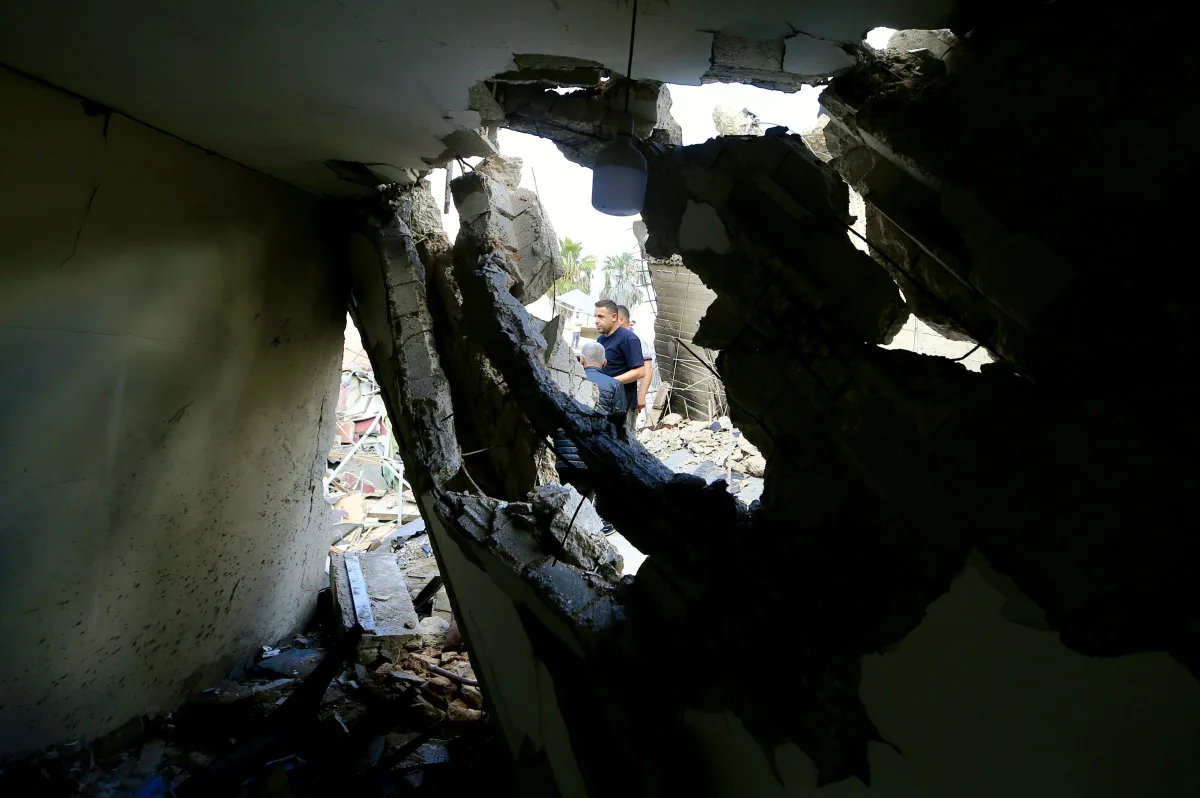
The skies over Lebanon turned into a furnace on Tuesday as Israeli warplanes conducted more than 120 air strikes. This marks the most intense aerial assault in weeks. This surge of violence effectively rips up the ceasefire agreement that had been in place since April 16. It wasn't just a random flare-up. The Israeli military is actively expanding its reach deep into Lebanese soil, ignoring previous boundaries that were supposed to keep the fighting contained.
Lebanese health authorities confirmed that 31 people lost their lives in the latest wave of attacks, while another 40 are nursing injuries. One particularly heartbreaking incident occurred in the southern town of Burj al-Shamali, where 14 individuals, including three women and two children, were killed. This brings the grim total death toll in Lebanon since the start of the offensive on March 2 to 3,213, with nearly 10,000 others wounded.
The military campaign is now scraping against historical reality. In the south, strikes landed dangerously close to Beaufort Castle, a 900-year-old stone fortress. It serves as a landmark for medieval history and is protected by UNESCO. The Qaraoun Dam—Lebanon's biggest water reservoir—was also hit. These areas are vital, yet they're now frontline targets in a rapidly widening conflict.
"We are operating with large forces in the field and capturing and controlling areas. We are fortifying the security strip to protect the northern communities."
That was the word from Israeli Prime Minister Benjamin Netanyahu as he defended the push. His forces have moved past the so-called 'Yellow Line', a boundary intended to limit movement. They're now operating further into the country to enforce what they call a 'Forward Defense Line'. This expansion, which involves clearing out villages and destroying homes within a 5 to 10-kilometre buffer zone to prevent direct threats, demonstrates the military's shift toward permanent territorial control.
Hezbollah isn't sitting on its hands while this happens. The group reported using explosive drones, rockets, and artillery to target Israeli tanks and infantry units creeping toward Zawtar al-Sharqiya. Since the ceasefire was announced in mid-April, Israel has reported the loss of 10 soldiers. Six of those were picked off by those same drone tactics. The fighting is messy, technical, and increasingly lethal for everyone involved.
While this plays out in the Levant, the ripples of the broader war between Israel and Iran are being felt thousands of kilometres away. Iran has accused the United States of breaking its own separate truce by hitting targets in southern Iran. It's a complex, multi-front situation where negotiations to end the Iran war seem to be crumbling under the weight of constant retaliatory strikes.
For the people on the ground, this means no home to return to. The Israeli military has explicitly ordered residents to stay away from dozens of villages now inside the expanded combat zone. Families who were hoping for a quick resolution are now facing the reality of lost property and shifting frontlines. As the conflict spills past previously agreed-upon zones, the possibility of a return to normalcy is increasingly unlikely.