

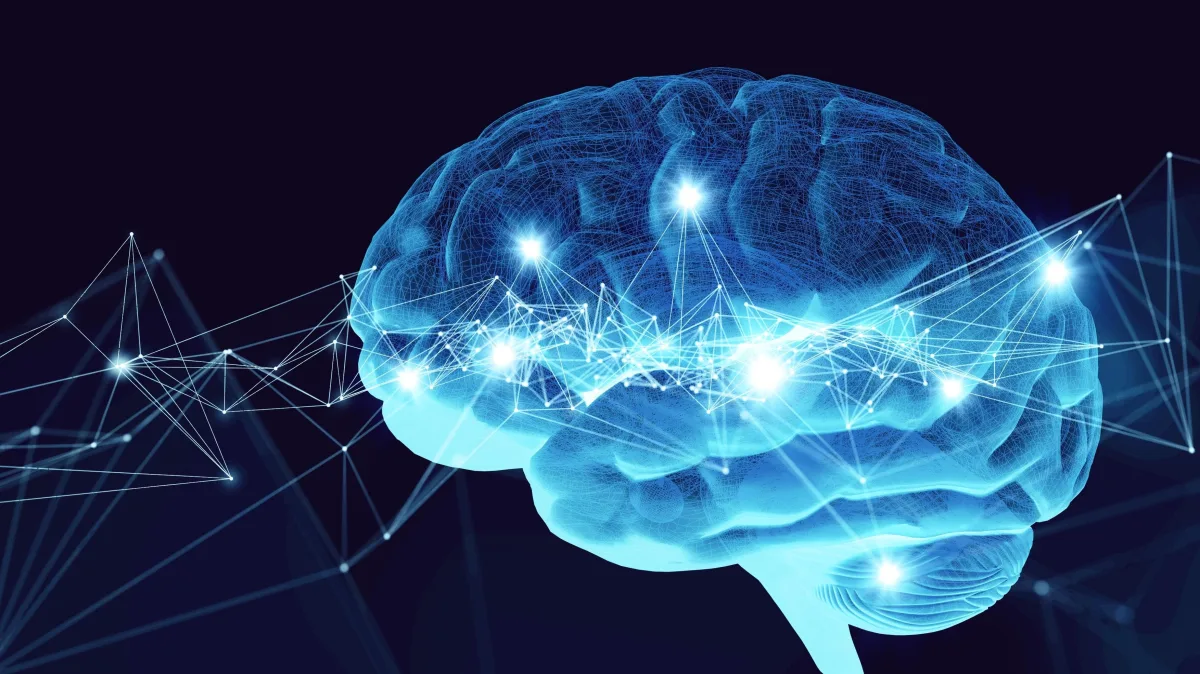
Your brain is basically holding a concert in your head every millisecond, and you’re just the guy sitting in the front row watching it happen. Allison Hamilos, a researcher with degrees from MIT and Harvard, recently broke down how our brains manage to tell us to move. It isn't just a simple button press. Instead, thousands of motor neurons fire in a coordinated explosion that sends a signal down your spine to your muscles. It’s an avalanche, and that’s why you’re suddenly stretching your legs right now.
But here's the weird part: sometimes you move because something hits you, like dodging a ball, but other times you move for absolutely no reason at all. Hamilos, who works within the Harvard-MIT Health Science and Technology Program, calls these "elective" motions. They’re the ones that feel totally random, yet they're vital. If you were a mouse in the wild, being predictable is a death sentence. An owl would spot you in a second if you followed a pattern.
By being randomly jumpy, you buy yourself a chance to survive.
"We know we don’t want to do the same thing all the time. In fact sometimes the ability to make random choices can mean life or death."
At the center of this chaos is dopamine, a chemical in your brain that acts like a nudge. It’s not a strict boss telling you exactly what to do. It’s more like a probabilistic guide. Because this chemical isn't deterministic, it leaves room for what we call free will. You aren't just a robot executing code; you're more like a complex system making choices based on odds that your brain calculates in the blink of an eye.
When this system breaks down, the results are pretty wild. Take Parkinson’s disease, for example. Patients often struggle with something called paradoxical kinesia. They might find it impossible to stand up or pick up a cup without help. Yet, they could react instantly if a ball was flying at their head.
It’s like their "self-generated" motion circuit is jammed, but their "reactive" circuit is still working perfectly. The thinking process also slows down, a condition doctors call bradyphrenia, where patients feel stuck in a loop of doing the same thing repeatedly.
On the other side of the spectrum, you have conditions like Tourette’s, where the brain seems to have too much of that spontaneous energy. People find themselves making movements they just can't stop. It’s the total opposite of the apathy seen in other disorders, proving just how delicate the balance is for our brains to function normally. Hamilos suggests there is a shared dopamine circuit mechanism that might one day explain all these different conditions under one roof.
For Nigerians dealing with the stresses of daily life, understanding this balance is fascinating. Whether it’s the intense focus needed to navigate Lagos traffic or just deciding to get out of bed on a rainy morning, our brains are constantly running these complex calculations. We often think of our decisions as purely logical. Science is showing that a lot of what we do comes from these tiny, lightning-fast internal pulses. AI is now giving us the tool to finally see these "avalanches" in action.
This research isn't just for people in white coats in Boston. It changes how we see human agency. If we can map out how the brain generates "spontaneity," we might finally treat conditions that currently leave people feeling trapped in their own bodies. It turns out the ability to just do something random is actually a high-level biological skill. So next time you feel like getting up for a drink or scratching your nose for no apparent reason, don't overthink it.
You’re just letting your brain do its thing.