

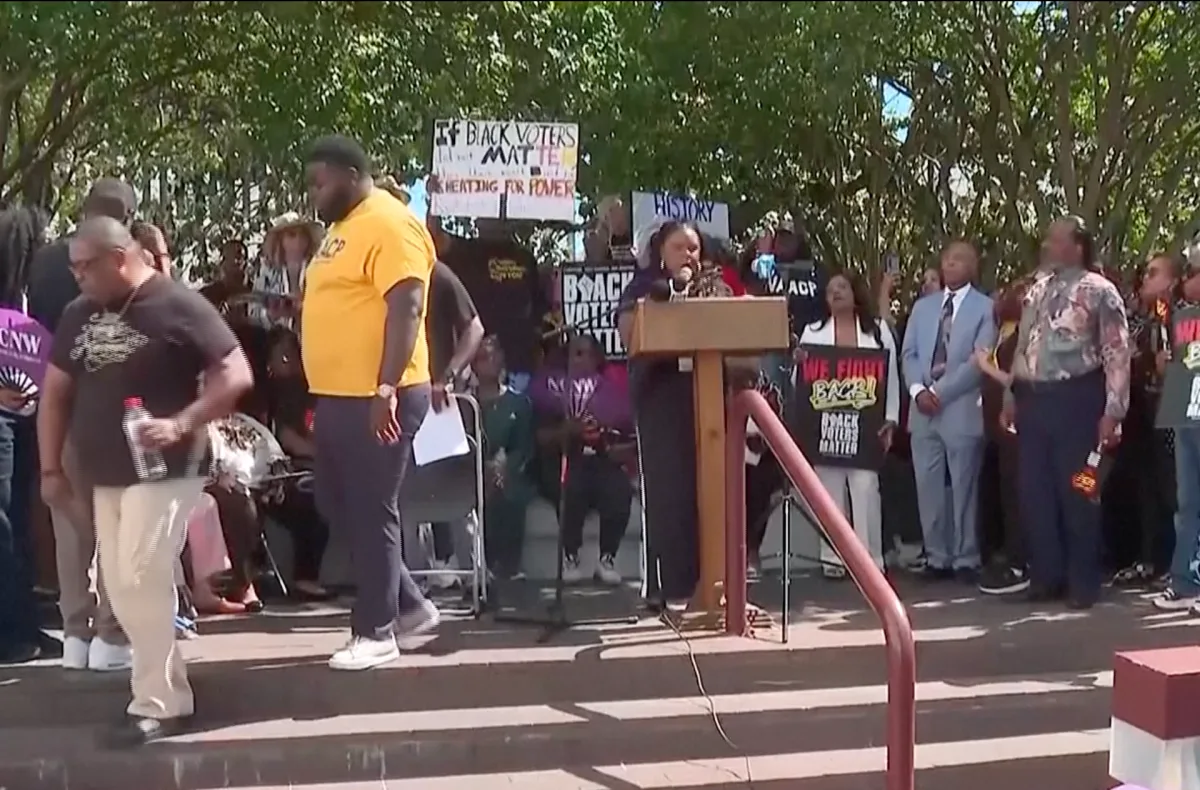
Alabama lawmakers adjourned their session after protesters entered the State House during protests over redistricting. The protesters, who were largely made up of community activists and voters, were demonstrating against a proposed redistricting plan that would significantly alter the state's electoral maps. The plan, which was introduced by Republican lawmakers, would likely give the party an advantage in future elections. It's a move that's been met with resistance from Democrats and civil rights groups, who argue that the plan is an attempt to disenfranchise minority voters. The protests are just the latest development in a long-running battle over voting rights in Alabama.
The protests began earlier in the day, with demonstrators gathering outside the State House to voice their opposition to the proposed redistricting plan. As the day wore on, the protests grew in size and intensity, with some demonstrators eventually making their way inside the building. Once inside, the protesters refused to leave, prompting lawmakers to adjourn their session. The scene was chaotic, with protesters chanting and holding signs, while lawmakers and security personnel tried to restore order. It's a situation that's been building for weeks, as lawmakers have debated the proposed redistricting plan.

The proposed redistricting plan is based on new census data, which shows that Alabama's population has grown significantly over the past decade. However, the plan has been criticized for being heavily gerrymandered, with some districts being drawn in a way that favors Republican candidates. Gerrymandering, which refers to the practice of manipulating electoral district boundaries for political gain, is a tactic that's been used by both parties in the past. But in this case, Democrats and civil rights groups argue that the plan is an attempt to disenfranchise minority voters, who tend to vote Democratic. They're concerned that the plan will lead to a lack of representation for these communities, and will undermine the democratic process.
The battle over redistricting in Alabama is part of a larger national debate over voting rights. In recent years, many states have introduced laws that restrict voting access, often under the guise of preventing voter fraud. However, these laws have been criticized for being unnecessary and discriminatory, as they tend to disproportionately affect minority voters. The issue has been the subject of numerous court challenges, with civil rights groups arguing that the laws are unconstitutional. It's a complex and contentious issue, with both sides passionately arguing their position.
And yet, despite the controversy, many Republicans continue to push for stricter voting laws, arguing that they're necessary to prevent voter fraud.

Key Facts
- The Alabama lawmakers adjourned their session due to protests over redistricting.
- The proposed redistricting plan would significantly alter the state's electoral maps.
- The plan has been criticized for being heavily gerrymandered.
- Gerrymandering refers to the practice of manipulating electoral district boundaries for political gain.
- The plan has been met with resistance from Democrats and civil rights groups.
- The protests were sparked by community activists and voters.
- The proposed redistricting plan is based on new census data.
- The plan has been criticized for being an attempt to disenfranchise minority voters.
- The battle over redistricting in Alabama is part of a larger national debate over voting rights.
- Many states have introduced laws that restrict voting access in recent years.
- These laws have been criticized for being unnecessary and discriminatory.
- The issue has been the subject of numerous court challenges.
Background on Redistricting
Redistricting is the process of redrawing electoral district boundaries, usually following a census. It's a process that's required by law, as electoral districts must be updated to reflect changes in the population. However, the process can be highly contentious, as politicians often try to manipulate the boundaries to their advantage. In Alabama, the proposed redistricting plan has been criticized for being heavily gerrymandered, with some districts being drawn in a way that favors Republican candidates. This has led to accusations that the plan is an attempt to disenfranchise minority voters, who tend to vote Democratic.
The issue of gerrymandering is complex, and it's not unique to Alabama. Many states have been accused of gerrymandering in the past, with both parties being guilty of manipulating electoral district boundaries for political gain. However, the issue has taken on a new level of urgency in recent years, as many states have introduced laws that restrict voting access. These laws have been criticized for being unnecessary and discriminatory, as they tend to disproportionately affect minority voters. It's a situation that's been condemned by civil rights groups, who argue that the laws are an attempt to undermine the democratic process.
The debate over redistricting in Alabama is also closely tied to the issue of voting rights. In recent years, many states have introduced laws that restrict voting access, often under the guise of preventing voter fraud. However, these laws have been criticized for being unnecessary and discriminatory, as they tend to disproportionately affect minority voters. The issue has been the subject of numerous court challenges, with civil rights groups arguing that the laws are unconstitutional. It's a complex and contentious issue, with both sides passionately arguing their position.
The Impact on Minority Voters
The proposed redistricting plan in Alabama has been criticized for being an attempt to disenfranchise minority voters. The plan would likely give Republican candidates an advantage in future elections, by manipulating electoral district boundaries to their favor. This has led to accusations that the plan is an attempt to undermine the democratic process, and to prevent minority voters from having a voice in the political process. It's a situation that's been condemned by civil rights groups, who argue that the plan is discriminatory and unconstitutional.
The issue of voting rights is a critical one, as it affects the ability of citizens to participate in the democratic process. In the United States, the right to vote is guaranteed by the Constitution, and it's a fundamental aspect of democracy. However, the right to vote has not always been universally applied, and there have been numerous attempts to restrict voting access throughout history. The civil rights movement of the 1960s was largely focused on securing voting rights for African Americans, who had been disenfranchised for decades. It's a legacy that continues to this day, with many civil rights groups arguing that voting rights are still under threat.
The proposed redistricting plan in Alabama is just one example of the ongoing battle over voting rights. Many states have introduced laws that restrict voting access, often under the guise of preventing voter fraud. However, these laws have been criticized for being unnecessary and discriminatory, as they tend to disproportionately affect minority voters. It's a situation that's been condemned by civil rights groups, who argue that the laws are an attempt to undermine the democratic process.
The Role of the Courts
The debate over redistricting in Alabama is likely to end up in the courts, as civil rights groups challenge the proposed plan. The issue of gerrymandering is complex, and it's not always clear what constitutes an unconstitutional redistricting plan. However, the courts have established some guidelines, and they have struck down numerous redistricting plans in the past for being discriminatory. It's a situation that's been closely watched by civil rights groups, who argue that the courts are the last line of defense against discriminatory voting laws.
The courts have played a critical role in shaping the debate over voting rights, and they will likely continue to do so in the future. In recent years, the courts have struck down numerous laws that restrict voting access, arguing that they are discriminatory and unconstitutional. The issue of gerrymandering is just one example of the ongoing battle over voting rights, and it's an issue that's likely to continue to be contentious in the future. The courts will play a critical role in resolving this issue, and their decisions will have a significant impact on the democratic process.
The proposed redistricting plan in Alabama is just one example of the ongoing battle over voting rights. The issue is complex, and it's not always clear what constitutes an unconstitutional redistricting plan. However, the courts have established some guidelines, and they have struck down numerous redistricting plans in the past for being discriminatory. It's a situation that's been closely watched by civil rights groups, who argue that the courts are the last line of defense against discriminatory voting laws.
The Reaction from Civil Rights Groups
Civil rights groups have been vocal in their opposition to the proposed redistricting plan in Alabama. The plan has been criticized for being an attempt to disenfranchise minority voters, and for being discriminatory. The NAACP, the ACLU, and other civil rights groups have all spoken out against the plan, arguing that it's unconstitutional and that it will undermine the democratic process.
The proposed redistricting plan is a clear attempt to disenfranchise minority voters, and it's a threat to the democratic process. We will do everything in our power to stop this plan, and to ensure that the voting rights of all citizens are protected.
The reaction from civil rights groups has been swift and unanimous. The proposed redistricting plan has been criticized for being an attempt to undermine the democratic process, and for being discriminatory. The plan has been met with resistance from community activists and voters, who are determined to protect their voting rights. It's a situation that's been closely watched by civil rights groups, who argue that the plan is an attempt to disenfranchise minority voters.
The proposed redistricting plan in Alabama is just one example of the ongoing battle over voting rights. The issue is complex, and it's not always clear what constitutes an unconstitutional redistricting plan. However, civil rights groups are determined to fight against any attempt to restrict voting access, and to protect the democratic process. They argue that the right to vote is fundamental, and that it's essential to the health of democracy.
The Future of Voting Rights
The debate over redistricting in Alabama is part of a larger national debate over voting rights. The issue is complex, and it's not always clear what constitutes an unconstitutional redistricting plan. However, one thing is clear: the right to vote is fundamental, and it's essential to the health of democracy. The proposed redistricting plan in Alabama is just one example of the ongoing battle over voting rights, and it's a battle that's likely to continue in the future.
The future of voting rights is uncertain, and it's an issue that's likely to be contentious in the future. Many states have introduced laws that restrict voting access, often under the guise of preventing voter fraud. However, these laws have been criticized for being unnecessary and discriminatory, as they tend to disproportionately affect minority voters. It's a situation that's been condemned by civil rights groups, who argue that the laws are an attempt to undermine the democratic process.
The proposed redistricting plan in Alabama is just one example of the ongoing battle over voting rights. The issue is complex, and it's not always clear what constitutes an unconstitutional redistricting plan. However, one thing is clear: the right to vote is fundamental, and it's essential to the health of democracy. The debate over redistricting in Alabama is part of a larger national debate over voting rights, and it's an issue that's likely to continue to be contentious in the future. The future of voting rights is uncertain, but one thing is clear: the battle over voting rights will continue, and it will be a critical issue in the years to come.
Conclusion
The debate over redistricting in Alabama is a critical issue, and it's part of a larger national debate over voting rights. The proposed redistricting plan has been criticized for being an attempt to disenfranchise minority voters, and for being discriminatory. The issue is complex, and it's not always clear what constitutes an unconstitutional redistricting plan. However, one thing is clear: the right to vote is fundamental, and it's essential to the health of democracy. The battle over voting rights will continue, and it will be a critical issue in the years to come.
The proposed redistricting plan in Alabama is just one example of the ongoing battle over voting rights. The issue is complex, and it's not always clear what constitutes an unconstitutional redistricting plan. However, civil rights groups are determined to fight against any attempt to restrict voting access, and to protect the democratic process. They argue that the right to vote is fundamental, and that it's essential to the health of democracy. The debate over redistricting in Alabama is part of a larger national debate over voting rights, and it's an issue that's likely to continue to be contentious in the future.
The future of voting rights is uncertain, and it's an issue that's likely to be contentious in the future. Many states have introduced laws that restrict voting access, often under the guise of preventing voter fraud. However, these laws have been criticized for being unnecessary and discriminatory, as they tend to disproportionately affect minority voters. It's a situation that's been condemned by civil rights groups, who argue that the laws are an attempt to undermine the democratic process. The battle over voting rights will continue, and it will be a critical issue in the years to come.