

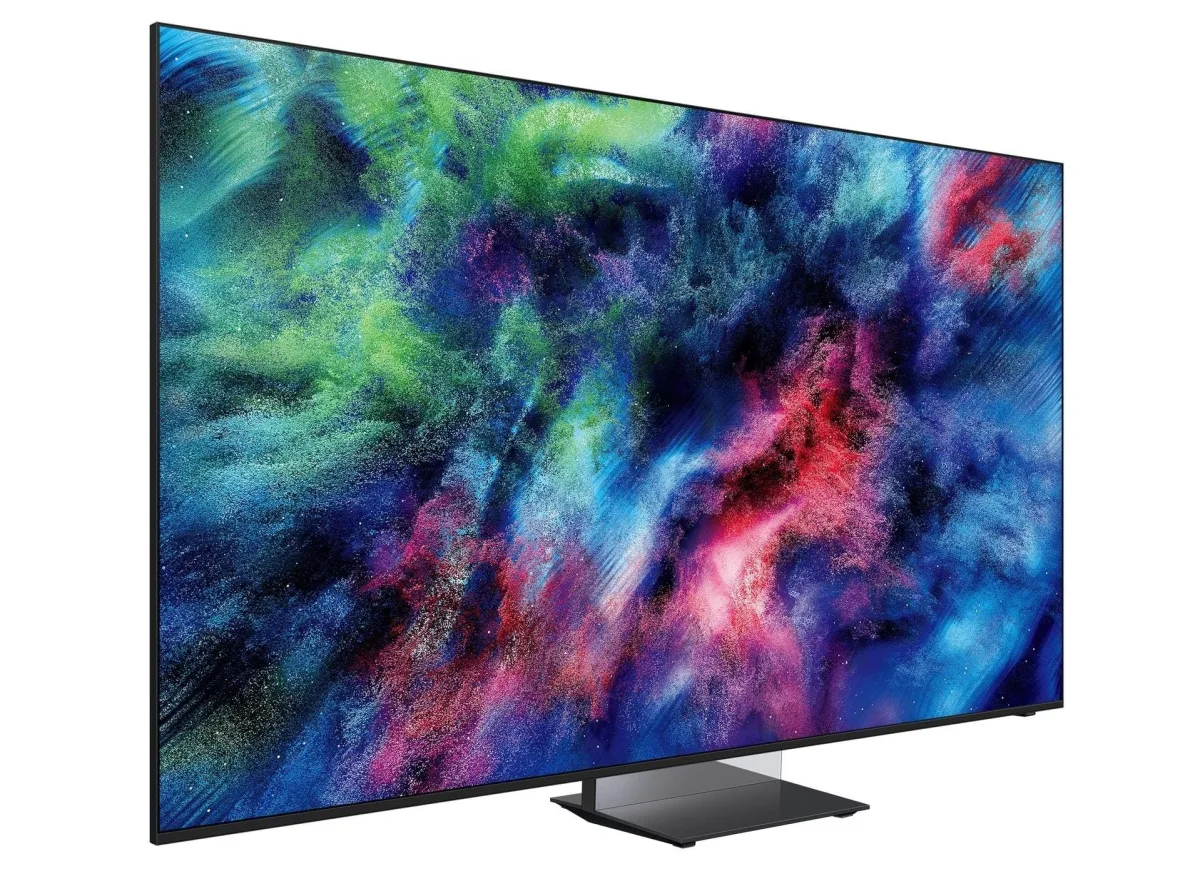
The Peak Of The Pyramid
Samsung has officially dropped the details for its 2026 TV lineup, and calling it 'diverse' is an understatement. The flagship title is technically a split decision between two heavy hitters: the new Quantum Dot OLED sets and the Micro RGB LED models. If you’ve been looking for the absolute best, these are the contenders.
The Micro RGB series is the company’s first mainstream take on a technology that made a brief, ultra-expensive debut last year on a 115-inch screen. For the 2026 version, the 65-inch model boasts 1,344 dimming zones. These zones allow the TV to control light with incredible precision. The screen hits a massive 2,800 nits of peak brightness, so your daytime viewing will actually pop rather than looking like a mirror.
Then there is the OLED side of the house. In the U.S., these are the S95H series, while our friends across the pond in the U.K. know them as the S99H. These models ditch the traditional white element found in standard OLEDs for a pure Red-Green-Blue (RGB) approach, using Samsung’s own Quantum Dot tech. The 77-inch version is an absolute beast, pushing up to 4,500 nits on smaller highlights.
The S95H series in the U.K. is a re-release of last year’s flagship Samsung OLED models. They use QD OLED technology but at significantly lower peak brightness levels than the latest S99H U.K. flagship panels.
Making Sense Of The Middle Ground
Not everyone wants (or can afford) a flagship that costs more than a decent used car. For the step-down OLED models, Samsung has decided to keep things simpler this year by using WRGB panels across the board. Some purists will miss the slightly cheaper QD OLED options of yesteryear. The new S90H series brings in some serious perks like high-end anti-reflection filters and support for 165Hz gaming.
The S90H model actually tested with 127% of the DCI-P3 color spectrum. That’s a higher color coverage than even the flagship models. The 65-inch S90H is a solid choice if you want that premium gaming performance without entering the absolute top-tier price bracket.
The entry-level OLEDs drop the fancy screen finishes and dial back the gaming support to 4K/120Hz. They still handle Nvidia G-Sync and AMD FreeSync, though. It’s a classic trade-off: you lose the peak brightness and the wide color volume of the high-end sets, but you still get the pixel-perfect contrast that makes OLED special.
Mini LED And The Budget Contenders
If you prefer the bright punch of LED tech over OLED, the QN80H series uses Mini LED lighting to deliver high contrast and '100% Color Volume'. These sets support 144Hz gaming but miss out on the ultra-premium anti-glare filters. It’s a workhorse TV for people who want vibrant colors in a bright living room.
For those on a tighter budget, the M80H series and the non-Quantum Dot Mini LED sets provide entry points into modern processing. The M80H uses the NQ4 AI Gen2 processor, which is the same brain used in the more expensive models. As you go even lower to the 'Crystal UHD' range, you lose the fancy dimming tools and get a more standard picture profile. You still get reliable, entry-level smart features.
There is 'The Frame.' This series is for people who want their TV to look like a painting hanging on the wall. The 'Pro' version uses Neo QLED panels for a better picture, while the standard model sticks with regular QLED. Both feature that signature non-reflective matte finish that makes it look like art rather than a black rectangle when it's off.
Pricing Breakdown In The U.S.
- S90H OLED Series: $1,399.99 to $5,299.99
- Entry-Level OLED: $1,199.99 to $4,499.99
- QN80H Mini LED: $1,299.99 to $5,499.99
- M80H Series: $599.99 to $2,299.99
- Crystal UHD: $249.99 to $399.99 (for standard sizes)