

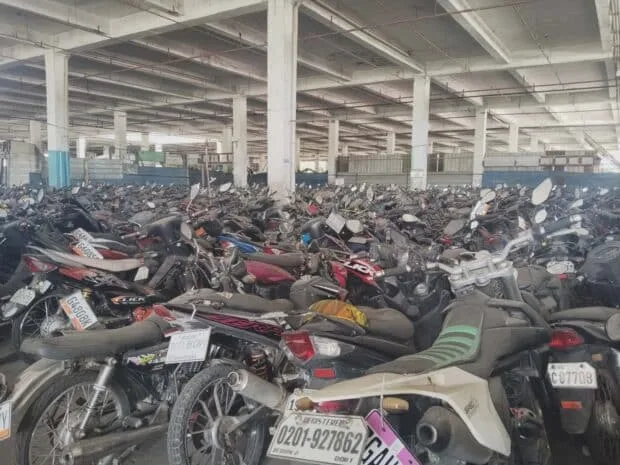
If you’ve ever walked past the Mandaue City impound lot and wondered why it looks like a graveyard for bikes, you aren't the only one. City authorities have officially decided that the pile-up has gone on long enough. They’re now moving to auction off more than 2,000 vehicles that have been sitting there gathering dust and rust for years.
Hyll Retuya, who heads the Traffic Enforcement Agency of Mandaue, known as TEAM, confirmed that the cleanup process has shifted into high gear. The sheer volume of units is massive, consisting mostly of motorcycles and tricycles that were seized for various traffic violations or abandoned by their owners. The cost of retrieving these items—often including penalties and storage fees—has simply become too expensive for the original owners to justify.
"We are preparing the disposal of both unserviceable government vehicles and long-unclaimed private vehicles," Hyll Retuya stated regarding the upcoming auction plans.
To get this done, Hyll Retuya has been holding marathon coordination meetings with the City Legal Office, the General Services Office, and the designated disposal committee. This isn't just about making extra cash for the local government; it’s about creating space. When a city grows as fast as Mandaue, every square meter of land counts. Filling up prime lots with broken-down scooters is a waste of resources that could be used for more urgent municipal needs.
The legal side of selling off someone else’s property requires a strict paper trail to avoid future headaches. The city has to ensure that every vehicle marked for sale has cleared the necessary inventory checks to confirm it hasn't been part of a criminal case that requires it to be held as evidence. The General Services Office manages the physical assets, while the City Legal Office ensures the entire disposal process adheres to the Local Government Code.
For the owners, this is the final call. Once these vehicles are put on the auction block, the legal title essentially shifts or is scrubbed, and the original owners lose their claim. The city has been dealing with this storage issue for a long time. This recent push is an effort to settle the backlog before it becomes a complete logistical nightmare. It’s also a way to prevent these units from becoming breeding grounds for mosquitoes and other pests in the humid Cebu weather.
Beyond the bikes and tricycles, there are also a handful of older, unserviceable government-owned vehicles that will be part of the lot. These are the cars and trucks that have served their time and now occupy valuable parking space meant for functional city vehicles. Getting rid of the scrap metal is a common practice for local government units looking to refresh their fleet and maintain order in their compounds. The auction will be open to the public. Local scrap metal dealers and those looking for spare parts will likely be the primary bidders.
The pressure to manage these assets comes after some high-profile drama at the facility. Just recently, two foreign nationals were arrested after allegedly trying to bribe officials with P200,000 to get an impounded vehicle released without going through the proper legal channels. Such incidents highlight the value some people still place on these units. The city is eager to formalize the disposal process through a transparent, public auction rather than letting them rot away. By opening this up to the public, Mandaue hopes to turn a long-standing eyesore into a straightforward administrative procedure.