

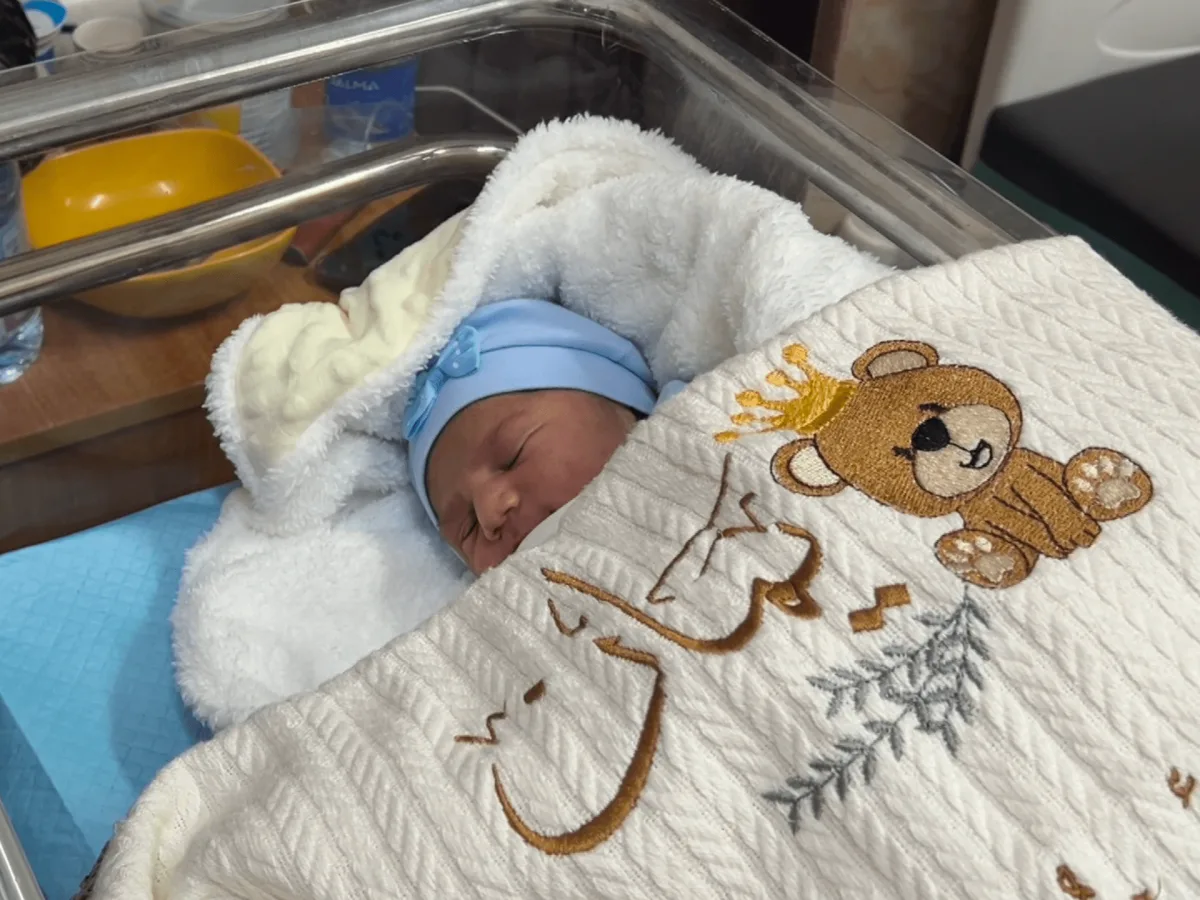
A newborn baby has brought joy to a Palestinian family in Nablus, but the celebration is bittersweet. The child's father was shot dead by Israeli forces just a day before the baby's arrival. The family is struggling to come to terms with the loss of their loved one, while also navigating the challenges of caring for a newborn.
The Israeli raid on Nablus was part of a larger operation aimed at targeting Palestinian militants. However, the raid resulted in the death of several civilians, including the newborn's father. The incident has sparked widespread outrage and condemnation, with many calling for an end to the violence. The Palestinian family is not alone in their grief, as many others have lost loved ones in the conflict.

The conflict between Israel and Palestine is a long-standing one, with roots dating back to the early 20th century. The dispute over land and territory has led to numerous wars, raids, and attacks, resulting in the loss of thousands of lives. The international community has been trying to broker a peace deal, but so far, a lasting solution has eluded them. The situation remains volatile, with both sides dug in and refusing to back down.
The newborn's arrival has brought some comfort to the family, but it's a reminder that life goes on, even in the midst of conflict. The family is trying to stay strong, but it's clear that the loss of their loved one will be felt for a long time. The baby's mother is trying to care for her newborn, while also grieving the loss of her partner. It's a difficult situation, and one that many families in the region have faced.
Key Facts
- The newborn baby was born in Nablus, a city in the West Bank.
- The baby's father was killed in an Israeli raid on Nablus.
- The raid was part of a larger operation aimed at targeting Palestinian militants.
- Several civilians were killed in the raid, including the newborn's father.
- The incident has sparked widespread outrage and condemnation.
- The conflict between Israel and Palestine is a long-standing one, with roots dating back to the early 20th century.
- The dispute over land and territory has led to numerous wars, raids, and attacks.
- The international community has been trying to broker a peace deal, but so far, a lasting solution has eluded them.
Background to the Conflict
The conflict between Israel and Palestine is a complex one, with deep-rooted historical, cultural, and religious factors at play. The dispute over land and territory is a major factor, with both sides claiming a right to the same territory. The Israeli government has been building settlements in the West Bank, which has been a major point of contention. The Palestinian leadership has been calling for an end to the settlements and a return to the pre-1967 borders.

The conflict has also been fueled by religious tensions, with both sides having competing claims to the same holy sites. The situation is further complicated by the fact that the Israeli government has been imposing strict restrictions on the movement of Palestinians, making it difficult for them to access basic necessities like food, water, and medical care. The restrictions have also made it difficult for Palestinians to access their holy sites, which has led to widespread frustration and anger.
The international community has been trying to broker a peace deal, but so far, a lasting solution has eluded them. The United States, the European Union, and the United Nations have all been involved in efforts to negotiate a peace agreement, but the talks have been slow to produce results. The Israeli government has been resistant to making concessions, while the Palestinian leadership has been calling for a more comprehensive approach to the peace process.
Human Cost of the Conflict
The conflict between Israel and Palestine has had a devastating human cost. Thousands of people have been killed or injured, and many more have been displaced from their homes. The conflict has also had a profound impact on the mental health of those living in the region, with many people suffering from anxiety, depression, and post-traumatic stress disorder. The conflict has also had a significant impact on the economy, with many businesses struggling to stay afloat due to the restrictions imposed by the Israeli government.
The human cost of the conflict is not just limited to the number of people killed or injured. The conflict has also had a profound impact on the social fabric of the region, with many families torn apart by the violence. The conflict has also led to a brain drain, with many young people leaving the region in search of better opportunities. The region's infrastructure has also been severely damaged, with many roads, bridges, and buildings destroyed or damaged.
The conflict has also had a significant impact on the environment, with many natural resources being depleted or destroyed. The conflict has also led to a significant increase in pollution, with many toxic substances being released into the air and water. The region's biodiversity has also been severely impacted, with many species being driven to extinction due to the conflict.
International Response
The international community has been slow to respond to the conflict, with many countries failing to take a strong stance against the violence. The United States has been a major player in the region, but its response has been criticized for being biased towards Israel. The European Union has also been involved in efforts to broker a peace agreement, but its efforts have been hindered by internal divisions.
The United Nations has been trying to play a more active role in the peace process, but its efforts have been limited by the lack of cooperation from the parties involved. The UN has been providing humanitarian aid to those affected by the conflict, but its efforts have been hindered by the restrictions imposed by the Israeli government. The UN has also been calling for an end to the violence and a return to the negotiating table, but its calls have been largely ignored.
The international community has been criticized for its failure to take a stronger stance against the violence. Many countries have been accused of turning a blind eye to the conflict, while others have been accused of actively supporting one side or the other. The conflict has also been fueled by the lack of accountability, with many perpetrators of violence being allowed to act with impunity.
The Role of the Media
The media has played a significant role in the conflict, with many outlets providing biased coverage of the events. The Israeli government has been accused of trying to control the narrative, with many journalists being denied access to the region. The Palestinian leadership has also been accused of trying to manipulate the media, with many outlets being pressured to provide favorable coverage.
The media has also been criticized for its failure to provide balanced coverage of the conflict. Many outlets have been accused of providing one-sided coverage, with some outlets focusing solely on the Israeli perspective while others focus solely on the Palestinian perspective. The lack of balanced coverage has contributed to the polarization of the conflict, with many people being misled about the true nature of the conflict.
The media has also been accused of sensationalizing the conflict, with many outlets focusing on the most dramatic and violent aspects of the conflict. The sensationalism has contributed to the perpetuation of negative stereotypes, with many people viewing the conflict as a simplistic struggle between good and evil. The media has a responsibility to provide accurate and balanced coverage of the conflict, but so far, it has failed to live up to this responsibility.
A Way Forward
The conflict between Israel and Palestine is a complex and deeply entrenched one, but there are ways forward. The international community must take a stronger stance against the violence and demand that both sides return to the negotiating table. The Israeli government must be held accountable for its actions, and the Palestinian leadership must be pressured to take a more comprehensive approach to the peace process.
The conflict between Israel and Palestine is a reminder that even in the darkest of times, there is always hope for a better future. As one Palestinian activist noted, "The conflict may seem insurmountable, but we must never give up hope. We must continue to push for a just and lasting peace, no matter how difficult the journey may be."
The way forward will not be easy, but it is possible. The international community must work together to broker a peace agreement that is fair and just for both sides. The agreement must address the core issues of the conflict, including the dispute over land and territory. The agreement must also provide for the protection of human rights and the promotion of economic development.
The conflict between Israel and Palestine is a stark reminder of the need for peace and reconciliation in the world. The conflict has had a devastating impact on the region, but it has also brought people together in a shared desire for peace. The way forward will be difficult, but with determination and perseverance, it is possible to achieve a lasting and just peace.