

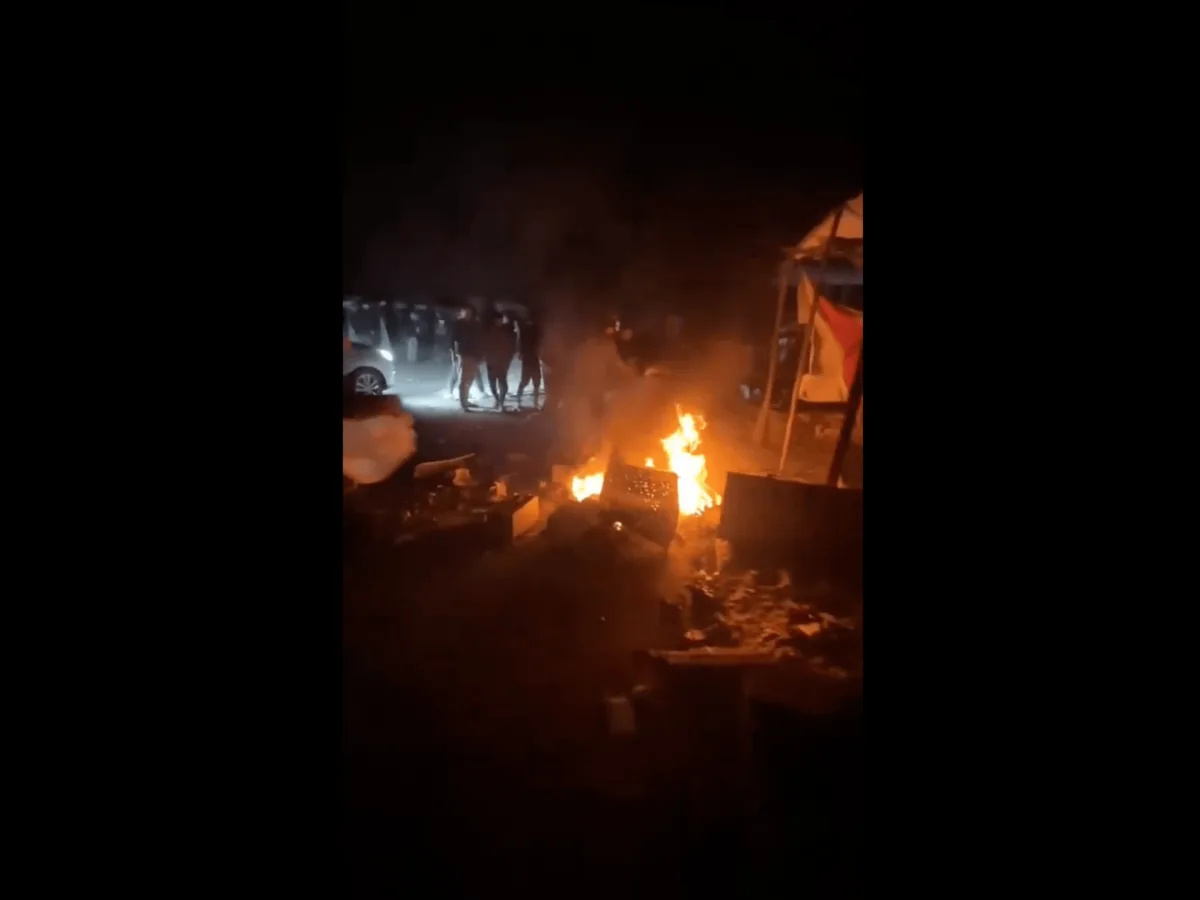
A devastating Israeli strike on Gaza City has left a trail of destruction and chaos, with a massive fire engulfing a significant portion of the city. The strike, which occurred in the northern part of the city, targeted a group of civilians, according to eyewitnesses and video footage from the scene. The footage shows flames rising from the targeted area, with people running for their lives and emergency services struggling to reach the scene. The Israeli military has not commented on the incident, but it's believed that the strike was part of a broader operation aimed at targeting militant groups in the region. The incident has raised concerns about the escalating violence in the region and the potential for further civilian casualties.
The Gaza Strip, a coastal region bordering Egypt and Israel, has been a flashpoint for violence in recent years. The region has been under an Israeli blockade since 2007, which has severely limited the movement of people and goods in and out of the territory. The blockade, which Israel says is necessary to prevent militant groups from acquiring weapons, has had a devastating impact on the local economy and living conditions. The incident has sparked widespread condemnation from international leaders and human rights groups, who have called for an immediate end to the violence and a lifting of the blockade. The United Nations has also expressed concern about the incident, with the Secretary-General urging all parties to exercise restraint and avoid further escalation.

The Israeli-Palestinian conflict, which has been ongoing for decades, is a complex and deeply entrenched issue. The conflict has its roots in the early 20th century, when Zionist Jews, fleeing persecution in Europe, began to immigrate to Palestine, then under Ottoman rule. The subsequent establishment of the State of Israel in 1948 led to the displacement of hundreds of thousands of Palestinians, who were forced to flee their homes and seek refuge in neighboring countries. The conflict has continued to simmer ever since, with periodic outbreaks of violence and a seemingly intractable stalemate in peace negotiations. The latest incident has raised fears that the conflict could be entering a new and more dangerous phase, with potentially catastrophic consequences for civilians on both sides.
The incident has also sparked a wave of protests and demonstrations across the region, with thousands of people taking to the streets to condemn the Israeli strike and demand an end to the violence. The protests, which have been largely peaceful, have drawn attention to the plight of civilians in Gaza and the need for a lasting resolution to the conflict. Yet, despite the outrage and condemnation, it's unclear what the next steps will be, or how the international community will respond to the crisis. The United States, a key ally of Israel, has been criticized for its response to the incident, with many arguing that it has not done enough to condemn the strike or pressure Israel to lift the blockade.
Key Facts
- The Israeli strike on Gaza City occurred in the northern part of the city
- The strike targeted a group of civilians, according to eyewitnesses and video footage
- The incident has sparked a massive fire, with flames rising from the targeted area
- The Israeli military has not commented on the incident
- The Gaza Strip has been under an Israeli blockade since 2007
- The blockade has had a devastating impact on the local economy and living conditions
- The incident has sparked widespread condemnation from international leaders and human rights groups
- The United Nations has expressed concern about the incident and called for restraint
- The Israeli-Palestinian conflict has been ongoing for decades
- The conflict has its roots in the early 20th century, when Zionist Jews began to immigrate to Palestine
- The establishment of the State of Israel in 1948 led to the displacement of hundreds of thousands of Palestinians
- The conflict has continued to simmer ever since, with periodic outbreaks of violence
Background to the Conflict
The Israeli-Palestinian conflict is a complex and deeply entrenched issue, with roots dating back to the early 20th century. The conflict has its origins in the Zionist movement, which emerged in the late 19th century and sought to establish a Jewish homeland in Palestine. The movement gained momentum in the early 20th century, with thousands of Jewish immigrants arriving in Palestine, then under Ottoman rule. The subsequent establishment of the State of Israel in 1948 led to the displacement of hundreds of thousands of Palestinians, who were forced to flee their homes and seek refuge in neighboring countries. The conflict has continued to simmer ever since, with periodic outbreaks of violence and a seemingly intractable stalemate in peace negotiations.

The conflict has been marked by numerous attempts at peace negotiations, including the Oslo Accords in the 1990s and the Annapolis Conference in 2007. However, these efforts have been thwarted by a combination of factors, including the failure of Israeli and Palestinian leaders to reach a lasting agreement, the rise of militant groups, and the continued expansion of Israeli settlements in the West Bank. The settlements, which are considered illegal under international law, have been a major point of contention in the conflict, with many arguing that they undermine the prospects for a two-state solution. The Israeli government has maintained that the settlements are necessary for security reasons, but this argument has been rejected by the international community.
The conflict has also been marked by a significant imbalance in power, with Israel possessing a powerful military and a strong economy. The Palestinian Authority, which governs the West Bank and Gaza Strip, has limited resources and a fragile economy, which has been severely impacted by the Israeli blockade. The blockade, which has been in place since 2007, has severely limited the movement of people and goods in and out of the territory, leading to widespread poverty and unemployment. The incident has sparked widespread condemnation from international leaders and human rights groups, who have called for an immediate end to the violence and a lifting of the blockade.
The Humanitarian Crisis
The humanitarian crisis in Gaza is a major concern, with the territory facing severe shortages of food, water, and medical supplies. The crisis has been exacerbated by the Israeli blockade, which has severely limited the movement of people and goods in and out of the territory. The blockade has also had a devastating impact on the local economy, with many businesses forced to close due to a lack of supplies and customers. The incident has sparked widespread condemnation from international leaders and human rights groups, who have called for an immediate end to the violence and a lifting of the blockade.
The humanitarian crisis in Gaza is not a new phenomenon, but rather the result of years of neglect and abuse. The territory has been under Israeli occupation since 1967, and has faced numerous challenges, including poverty, unemployment, and a lack of access to basic services. The crisis has been exacerbated by the rise of militant groups, which have launched numerous attacks on Israel, leading to a significant escalation in violence. The incident has raised fears that the conflict could be entering a new and more dangerous phase, with potentially catastrophic consequences for civilians on both sides.
The situation in Gaza is a ticking time bomb, with the potential for a major humanitarian disaster. The international community must act now to address the crisis and prevent further suffering. The incident has sparked widespread condemnation from international leaders and human rights groups, who have called for an immediate end to the violence and a lifting of the blockade. The United Nations has also expressed concern about the incident, with the Secretary-General urging all parties to exercise restraint and avoid further escalation.
The Role of the International Community
The international community has a crucial role to play in resolving the Israeli-Palestinian conflict and addressing the humanitarian crisis in Gaza. The United Nations, in particular, has a responsibility to act, given its role as a guardian of international law and a promoter of peace and security. The UN has been involved in numerous attempts to resolve the conflict, including the Oslo Accords and the Annapolis Conference, but these efforts have been thwarted by a combination of factors, including the failure of Israeli and Palestinian leaders to reach a lasting agreement.
The international community must also take a stronger stance against the Israeli blockade, which has had a devastating impact on the local economy and living conditions. The blockade, which has been in place since 2007, has severely limited the movement of people and goods in and out of the territory, leading to widespread poverty and unemployment. The incident has sparked widespread condemnation from international leaders and human rights groups, who have called for an immediate end to the violence and a lifting of the blockade. The United States, in particular, has been criticized for its response to the incident, with many arguing that it has not done enough to condemn the strike or pressure Israel to lift the blockade.
The European Union has also been criticized for its response to the incident, with many arguing that it has not done enough to condemn the strike or pressure Israel to lift the blockade. The EU has been a major player in the Middle East peace process, but its efforts have been thwarted by a combination of factors, including the failure of Israeli and Palestinian leaders to reach a lasting agreement. The incident has raised fears that the conflict could be entering a new and more dangerous phase, with potentially catastrophic consequences for civilians on both sides.
The Future of the Conflict
The future of the Israeli-Palestinian conflict is uncertain, with many fearing that the conflict could be entering a new and more dangerous phase. The incident has raised fears that the conflict could escalate further, with potentially catastrophic consequences for civilians on both sides. The international community must act now to address the crisis and prevent further suffering. The United Nations, in particular, has a responsibility to act, given its role as a guardian of international law and a promoter of peace and security.
The conflict has been marked by numerous attempts at peace negotiations, including the Oslo Accords and the Annapolis Conference. However, these efforts have been thwarted by a combination of factors, including the failure of Israeli and Palestinian leaders to reach a lasting agreement. The incident has sparked widespread condemnation from international leaders and human rights groups, who have called for an immediate end to the violence and a lifting of the blockade. The Israeli government has maintained that the blockade is necessary for security reasons, but this argument has been rejected by the international community.
The conflict has also been marked by a significant imbalance in power, with Israel possessing a powerful military and a strong economy. The Palestinian Authority, which governs the West Bank and Gaza Strip, has limited resources and a fragile economy, which has been severely impacted by the Israeli blockade. The incident has raised fears that the conflict could be entering a new and more dangerous phase, with potentially catastrophic consequences for civilians on both sides. The international community must act now to address the crisis and prevent further suffering.
The Impact on Civilians
The impact of the conflict on civilians has been devastating, with many facing severe shortages of food, water, and medical supplies. The incident has sparked widespread condemnation from international leaders and human rights groups, who have called for an immediate end to the violence and a lifting of the blockade. The humanitarian crisis in Gaza is a major concern, with the territory facing severe shortages of food, water, and medical supplies. The crisis has been exacerbated by the Israeli blockade, which has severely limited the movement of people and goods in and out of the territory.
The blockade has had a devastating impact on the local economy, with many businesses forced to close due to a lack of supplies and customers. The incident has raised fears that the conflict could be entering a new and more dangerous phase, with potentially catastrophic consequences for civilians on both sides. The international community must act now to address the crisis and prevent further suffering. The United Nations, in particular, has a responsibility to act, given its role as a guardian of international law and a promoter of peace and security.
The conflict has also had a significant impact on the mental health of civilians, with many experiencing trauma and stress due to the ongoing violence. The incident has sparked widespread condemnation from international leaders and human rights groups, who have called for an immediate end to the violence and a lifting of the blockade. The humanitarian crisis in Gaza is a major concern, with the territory facing severe shortages of food, water, and medical supplies. The crisis has been exacerbated by the Israeli blockade, which has severely limited the movement of people and goods in and out of the territory.
The Way Forward
The way forward for the Israeli-Palestinian conflict is uncertain, with many fearing that the conflict could be entering a new and more dangerous phase. The incident has raised fears that the conflict could escalate further, with potentially catastrophic consequences for civilians on both sides. The international community must act now to address the crisis and prevent further suffering. The United Nations, in particular, has a responsibility to act, given its role as a guardian of international law and a promoter of peace and security.
The conflict has been marked by numerous attempts at peace negotiations, including the Oslo Accords and the Annapolis Conference. However, these efforts have been thwarted by a combination of factors, including the failure of Israeli and Palestinian leaders to reach a lasting agreement. The incident has sparked widespread condemnation from international leaders and human rights groups, who have called for an immediate end to the violence and a lifting of the blockade. The Israeli government has maintained that the blockade is necessary for security reasons, but this argument has been rejected by the international community.
The conflict has also been marked by a significant imbalance in power, with Israel possessing a powerful military and a strong economy. The Palestinian Authority, which governs the West Bank and Gaza Strip, has limited resources and a fragile economy, which has been severely impacted by the Israeli blockade. The incident has raised fears that the conflict could be entering a new and more dangerous phase, with potentially catastrophic consequences for civilians on both sides. The international community must act now to address the crisis and prevent further suffering.