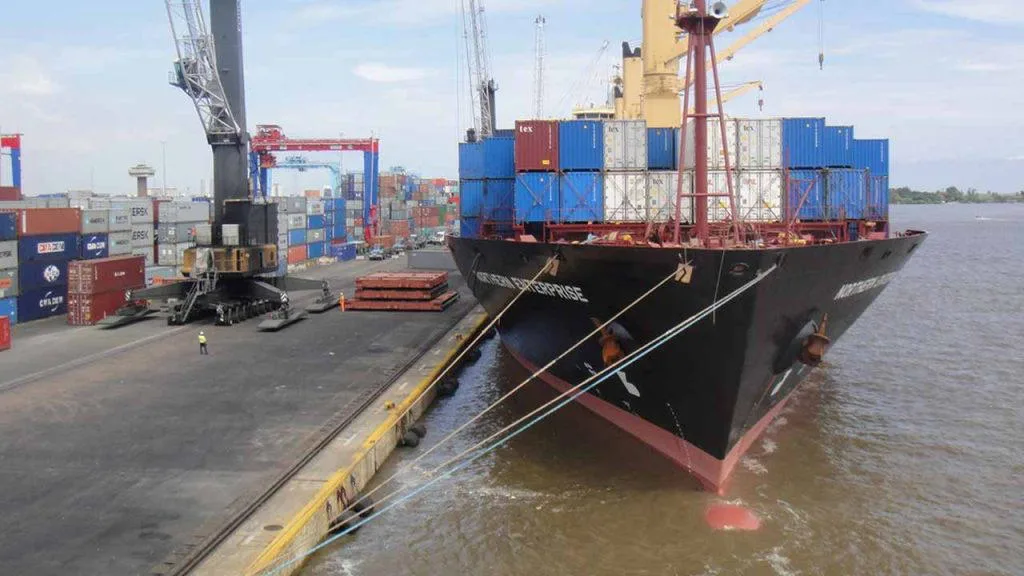
The Maritime Academy of Nigeria (MAN) in Oron, Akwa Ibom State, has secured a significant boost for its reputation. Yesterday, the institution officially received its Integrated Management System (IMS) certification, a move facilitated by the Standards Organisation of Nigeria (SON).
This isn't just about another paper to hang on the office wall. It represents a systematic shift in how the academy manages its operations, focusing on international quality assurance, environmental care, and the safety of its staff and students.
Adegboyega Oyetola, the Minister of Marine and Blue Economy, was on the ground to oversee the presentation. He noted that the academy’s ability to meet these specific global benchmarks proves it is ready to compete with the best training grounds in the world.
The significance of this certification cannot be overstated. It positions the Academy as a centre of excellence, equipped to produce highly skilled and globally competitive maritime professionals.
For those who haven't been keeping track, the Maritime Academy of Nigeria has been working to shed its old skin and reinvent itself as a top-tier maritime hub. The institution, which was established back in 1979 as the Nautical College of Nigeria, has faced years of scrutiny regarding its infrastructure and the quality of its curriculum. By adopting the IMS framework, the school is essentially formalizing its commitment to continuous improvement and operational efficiency.
This certification is a big deal for the broader Marine and Blue Economy ministry. As the federal government pushes to diversify the economy away from its heavy reliance on oil, the maritime sector is seen as a goldmine that is yet to be fully tapped. Developing local capacity means Nigeria won't have to keep relying on foreign institutions to train the people who run our ships and ports.
Engr. Kehinde Olayinka Akinola, the Chairman of the Governing Council of the Academy, echoed these sentiments. He pointed out that the new certification touches on the school's administrative processes, training standards, and its general environmental responsibility. Essentially, the school is trying to tell the world that its graduates are now trained in an environment that mimics the high-pressure, high-safety atmosphere of modern international shipping lines.
The Path to Certification
To earn the IMS badge, the academy had to pass a rigorous audit process overseen by the Standards Organisation of Nigeria. This involves proving that they track their hazards, manage their waste, and maintain strict record-keeping systems that align with ISO standards. These standards are the global common language for safety and quality, ensuring that a certificate earned in Oron carries the same weight as one from a similar school in Europe or Asia.
Beyond the hardware and the shiny certificates, this change impacts the students directly. Students entering the maritime industry now need to understand complex environmental regulations and safety protocols that were previously overlooked in local training. With the school’s systems now certified, the practical training provided in the workshops and on-site simulators should ideally align with what these students will see when they step onto a real-life vessel.
This is a calculated effort to fix the country’s maritime credentials. Nigeria has always had the potential to be a maritime giant given our coastline, yet we have often struggled with human capital development that matches our geographical advantage. By aligning with these international best practices, the academy hopes to reverse the trend where local sailors find it hard to get recognized internationally. The focus now shifts to whether the school can maintain these standards, as the certification is not a one-off prize but a continuous process of audits and reviews.