

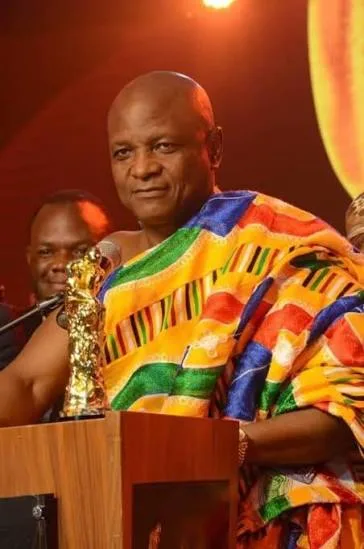
The Agbogbomefia of the Asogli State, Togbe Afede XIV, has served a blunt reminder to Ghana’s corporate elite: nice-sounding economic indicators aren't the finish line. While the country’s recent macroeconomic data shows some signs of life, he insists that unless these improvements reflect in the pocket and plate of the average citizen, the progress is just an academic exercise.
Speaking as the Chairman of the 10th Ghana CEO Summit and Expo 2026, the traditional ruler pointed to the 3.4 percent inflation rate recorded in April. This figure, though a slight uptick from March’s 3.2 percent, remains the lowest since the Consumer Price Index rebasing in 2021. Yet, for him, a stable currency and rising GDP numbers don't tell the whole story if families are still finding it difficult to cope with daily costs.
Stability and macroeconomic numbers aren't ends in themselves because what matters is enhancement of the well-being of the people.
His message comes at a time when Ghanaian businesses are grappling with a rapidly shifting global landscape. He noted that geopolitical tensions and the constant evolution of technology are changing how nations trade and operate. CEOs must be more than just spectators to these global shifts. He’s pushing for a mindset of innovation and disciplined leadership to stay competitive.
Ernest De-Graft Egyir, the founding CEO of the network, received special recognition for keeping the summit alive for a decade. Togbe Afede XIV described him as the chief architect of the platform. He noted how difficult it is to sustain such a high-level dialogue forum in the current business climate. The event, themed “Accelerating Ghana’s Economic Transformation Through Leadership, Technology, Energyisation and Industrialisation for Sustainable Growth,” aimed to bridge the gap between policy ambition and reality.
The Agbogbomefia outlined a four-point reality for business leaders to digest. First, change isn't a suggestion; it's inevitable. Second, leaders must actively look for the opportunities hidden within the current chaos of the global economy. Third, the primary goal of any business should remain the upliftment of livelihoods. Finally, the hardest task remains keeping the ship steady while navigating these waves of instability.
He placed heavy emphasis on the 'one-plus-one-equals-three' effect of teamwork. According to him, the best outcomes are rarely the result of a single brilliant mind but the product of a well-coordinated team. This, he argued, is how ordinary people build companies that change the course of an entire industry.
On the matter of corporate governance, he urged CEOs to stop treating board meetings like rubber-stamp sessions. He insisted that for a company to survive, board members must be kept fully informed and empowered to offer genuine oversight. He described qualities like selflessness, loyalty, and honesty not just as moral virtues, but as business requirements that prevent the collapse of institutions.
This call for integrity hits home for many who have watched local firms struggle with governance scandals in recent years. By tying ethical values directly to national and corporate transformation, he's challenging the belief that business in Ghana is only about 'who you know' or 'what you can get away with.' If leaders at the top don't hold themselves to these standards, he warned, the dream of economic acceleration will remain just that—a dream.
The summit represents an attempt to move from the 'what-if' to the 'how-to.' With the tagline 'From Vision to Action,' participants were pressed to focus on implementation rather than repeating familiar complaints about the economy. Boardrooms must now translate this energy into actual projects that lower prices or create sustainable jobs.