

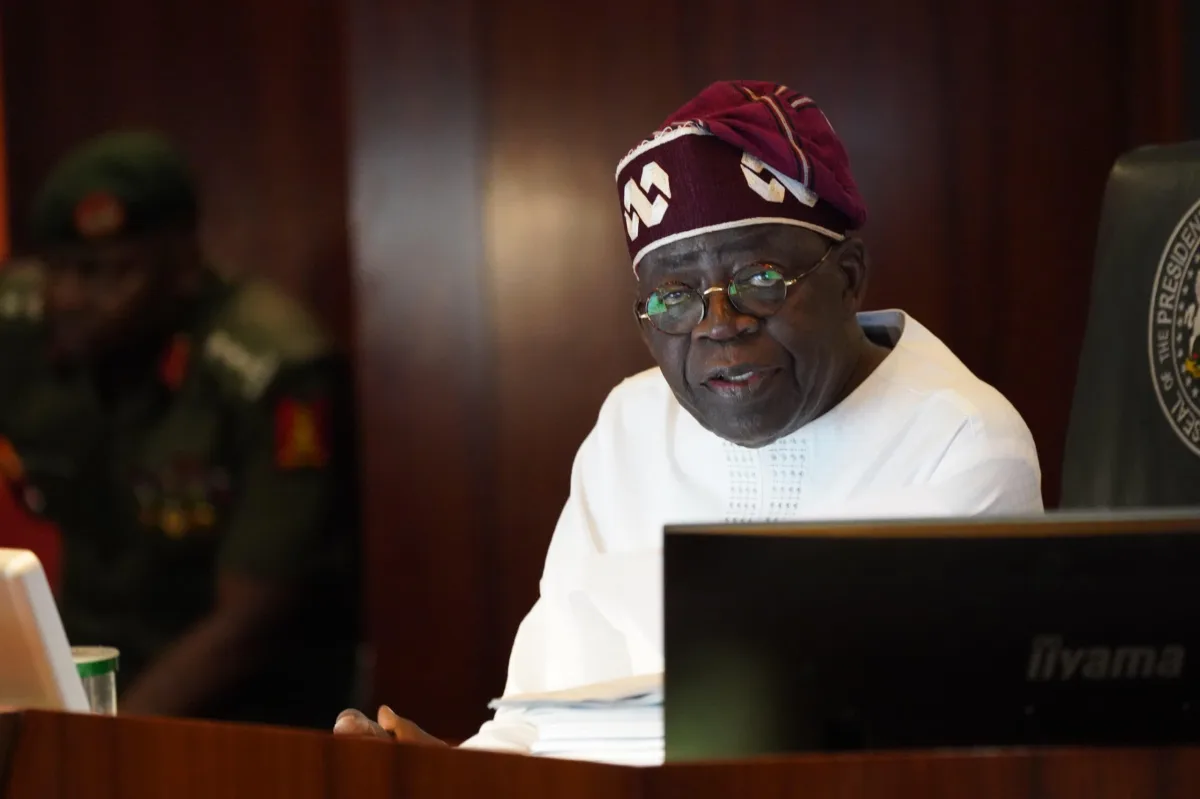
President Tinubu Marks Third Anniversary in Office
President Bola Tinubu marked three years in office on Friday with a bold declaration: the Nigerian economy is no longer on life support. Standing on the foundation of what he calls "difficult but necessary" reforms, the President argued that the country has finally stopped the bleeding that characterized his early days in power. For those struggling to keep up with the cost of daily life, this statement feels both like a promise and a challenge to their current reality.
When President Tinubu took the oath of office, he inherited a ledger deep in the red. The administration faced what it described as a "mountain" of crises, including the burden of subsidizing fuel at the staggering rate of 18.4 billion naira every single day. Beyond the petrol queues and pump price hikes, the government estimates that currency speculators and arbitrage—where people exploited the difference between official and parallel market rates—cost the country over 8 trillion naira in just three years.
The President emphasized that "the situation demanded urgent and courageous action. Difficult but necessary decisions had to be taken to stabilise the economy and prevent a deeper national crisis."
The government claims that the bitter medicine is beginning to work. The President pointed to the Nigerian Exchange Group as his star performer, noting that the All Share Index has surged from 53,000 in 2023 to a record-breaking 250,000 today. Market capitalization has followed suit, jumping from 30 trillion naira to 160 trillion naira in the same timeframe, indicating that investors are finding fresh reasons to bet on the country, despite the inflation that continues to affect households.
Infrastructure and Energy Moves
The administration is betting heavily on concrete, with plans for over 2,700 kilometres of road works currently in motion. This massive construction push includes the much-discussed Lagos-Calabar Coastal Highway, the Sokoto-Badagry Super Highway, and the crucial Abuja-Kaduna-Zaria-Kano arterial road. By linking the corners of the country through these massive transport arteries, officials believe they are laying the groundwork for a more efficient movement of goods and people. The infrastructure plan includes many other key projects.
In the energy sector, the focus is shifting toward production capacity and long-term security. The 5 billion dollar NLNG Train 7 project is moving toward its finish line, which the government says will eventually pour more dividends into the national treasury. At the same time, the state is pushing for a broader adoption of compressed natural gas and electric vehicles to bring down the high transportation costs that have plagued commuters and commercial drivers since the removal of subsidies.
Investment in the Next Generation
Beyond roads and balance sheets, the administration's education loan scheme has become a focal point for their social agenda. With over 282 billion naira already paid out, more than 1.5 million students have tapped into the fund to keep their academic dreams alive. This initiative aims to bridge the gap for those who otherwise would have dropped out due to rising tuition fees and the high cost of campus life.
Regarding the housing sector, the federal government says it has delivered over 10,000 units across 14 states and the Federal Capital Territory. These projects were designed to kill two birds with one stone: providing homes while acting as a massive engine for employment. The administration claims these construction sites have already created over 300,000 jobs, providing a much-needed lifeline for the country's huge youth population.