

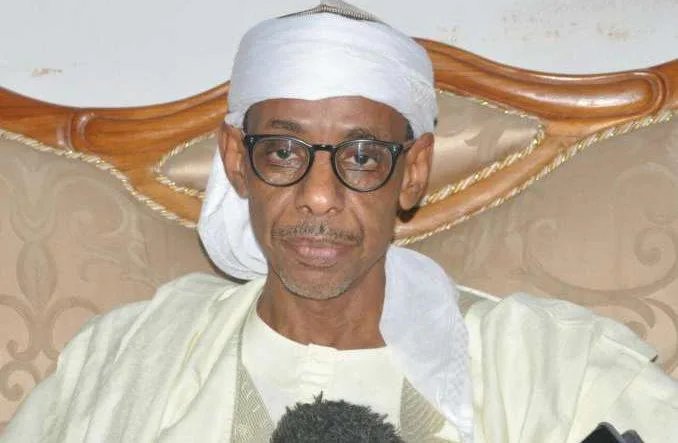
The man who once worked inside Nigeria's election commission is now warning that the agency can't be trusted to run a free vote — unless the government takes its hands off.
Dr Hakeem Baba-Ahmed, national chairman of the Peoples Redemption Party (PRP) and a former Secretary to the Independent National Electoral Commission (INEC), says the commission needs serious reforms before the 2027 general elections. He spoke with the News Agency of Nigeria (NAN) in Abuja on Sunday.
His main complaint: the people who run INEC are appointed by the same government that wants to win the election. That creates a conflict of interest, he argues.
"The moment you hand over an electoral body to a partisan administration that wants to retain power, you create serious questions about its neutrality," Baba-Ahmed said.
He wants the appointment process for the INEC chairman, national commissioners, and Resident Electoral Commissioners (RECs) to be reviewed so the executive has less control.
Baba-Ahmed also wants INEC to have budgetary independence — meaning the commission should defend its own budget before the National Assembly instead of having it filtered through the executive. That way, the government can't use money to pressure the election body.
He didn't stop at structural reforms. He called for tougher punishment for politicians and individuals who engage in electoral malpractice or violence. According to him, electoral offences thrive in Nigeria because the people who commit them rarely face consequences.
"Politicians who compromise the electoral process must face the consequences of their actions. The culture of impunity must end," he said.
Baba-Ahmed warned that any election that lacks credibility could further weaken Nigeria's democracy and make ordinary people lose faith in democratic institutions. He added that broader reforms to strengthen key institutions like INEC would be central to the PRP's restructuring agenda for the country.
The PRP chairman has a long history with Nigeria's electoral system. He served as INEC Secretary under Professor Maurice Iwu from 2005 to 2010, a period that included the controversial 2007 elections — widely regarded as one of Nigeria's least credible polls. He later became a critic of the electoral process, arguing that successive governments have failed to fix the fundamental problems.
His party, the PRP, was founded in 1978 by the late politician and activist Aminu Kano. It has historically positioned itself as a progressive alternative to the two dominant parties — the All Progressives Congress (APC) and the Peoples Democratic Party (PDP). However, it has struggled to win significant national votes in recent elections.
Baba-Ahmed's call for reform comes as political parties begin positioning for the 2027 elections. The APC won the 2023 presidential election under Bola Tinubu, while the PDP came second. Several opposition parties have accused INEC of bias in favour of the ruling party, though the commission has denied those claims.
INEC has faced repeated criticism over logistics failures, delayed results transmission, and allegations of vote-buying in past elections. In 2023, the commission introduced the Bimodal Voter Accreditation System (BVAS) to reduce fraud, but the system experienced glitches on election day, leading to widespread frustration.
Baba-Ahmed's proposal — insulating INEC from executive control — isn't new. Civil society groups and opposition parties have made similar demands for years. But his insider experience gives his words extra weight. He knows how the system works from the inside, and he's saying it needs a major fix.
Whether the government will listen is another matter. The APC-led administration hasn't shown any appetite for reducing its influence over INEC. And any reform that requires constitutional amendment would need a two-thirds majority in the National Assembly — a high bar in a deeply divided political environment.
For now, Baba-Ahmed's message is clear: if Nigeria wants elections that people can trust, the government must stop being the referee and the player at the same time.