

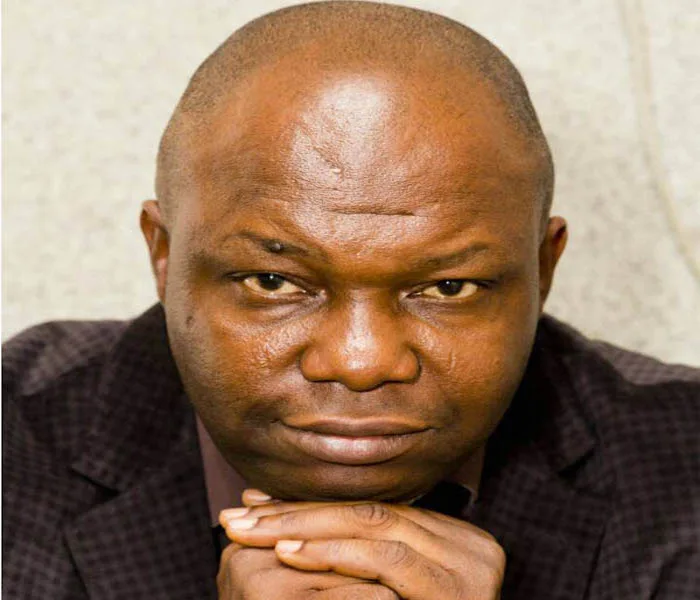
In 2000 or 2001, a young journalist sat inside the Presidential Villa in Aso Rock, waiting for President Olusegun Obasanjo to arrive for the monthly Presidential Media Chat. The room was brightly lit, beautifully idyllic — but his mind was elsewhere. He was thinking about the men who had ruled from that same spot: Ibrahim Babangida, who once declared he wasn't just in office but in power, and Sani Abacha, who breathed his last in that complex. He thought of Francisco Goya's painting Saturn Devouring His Son — the Greek myth of a god eating his own child to prevent a prophecy that one would overthrow him. Babangida, he felt, had tried to gobble a democratic Nigeria for fear of what would happen after he left power.
Nigeria had returned to civilian rule on 29 May 1999, after 28 years of military rule. The people sang victory songs, expecting democracy to solve all their problems. The media had built an El-Dorado of a democratic Nigeria. But the journalist, Festus Adedayo, now asks: has democracy delivered? He compares the promise of democracy to George Orwell's Animal Farm — the animals overthrow their oppressive farmer, only to find themselves under a new tyranny.
Seated with Adedayo that evening were John Momoh of Channels Television, Nkechi Nwankwo of Champion newspaper, and a representative of New Nigerian. Opposite them were Obasanjo's media aides and ministers. When the president arrived, they clapped like fawners. Obasanjo made several gaffes during the chat, but no one told him. The god must earn his fawn.
Adedayo's essay, published on June 14, 2026, is a meditation on the gap between the dream of democracy and its reality. He writes: "June 12: Broken bottle on our forehead, bludgeon on the back; democracy, is this your face?" The question is directed at the Nigerian state, which he says has inflicted wounds on its citizens in the name of democracy.
When the military finally left power in 1999, Nigerians believed they had arrived in the promised land. The Second Republic had lasted only four years — a brief, magical interlude. The 28 years of khaki rule had been a time of repression and retrogression. Democracy was supposed to be different. But Adedayo suggests that the same forces that devoured Nigeria's hope during the June 12 crisis are still at work.
Aso Rock, he says, was where soldiers midwifed the crisis that almost ate Nigeria during the June 12 struggle.
Adedayo's piece isn't just a history lesson. It's a challenge to Nigerians to ask whether democracy has kept its promises. The broken bottle on the forehead and the bludgeon on the back are metaphors for the violence and disillusionment that have marked the democratic era. The essay ends without an answer — only a question hanging in the air: democracy, is this your face?