

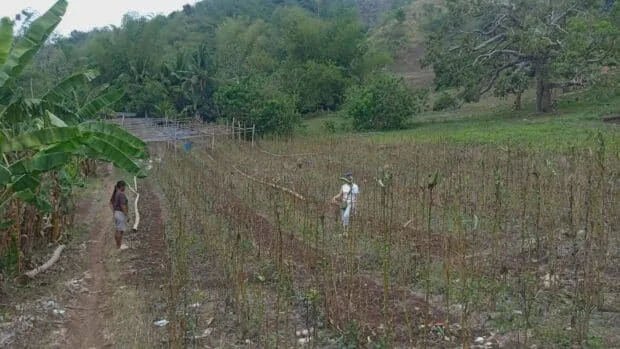
The city government of Cebu has admitted it doesn't have direct control over its irrigation systems, which are managed by the National Irrigation Administration (NIA). This alarming revelation was made during an executive session of the Cebu City Council, where councilors pressed the City Agriculture Department (CAD) over its preparedness for the expected dry spell that could severely affect farmers in the city's 28 upland barangays. The dry spell won't just affect the farmers, it'll also impact the entire city.
The CAD has disclosed that while Cebu City has 44 irrigation facilities across its agricultural areas, the systems fall under the management of the NIA, limiting the city government's authority over operations, rehabilitation, and long-term planning. Councilor Pastor 'Jun' Alcover Jr. questioned how the city could mount an effective drought response if it lacked command over the very systems expected to deliver water to farms. He didn't think the city could respond effectively without controlling the irrigation systems.
'Ang mga tawo ma-deceive nga naa man diay irrigation, but that's not ours. Naa ba tay plan nga maghimo or unsay arrangement sa NIA. Lisod kaayo ta maghimo og correction because they're not under LGU,' Alcover said. He emphasized that the city can't make corrections because the systems aren't under the city's control.
The issue carries major implications for Cebu City's food security and agricultural resilience as the state weather bureau, Pagasa, warned of extreme heat and prolonged dry conditions in the coming months. The city's food security is at risk, and it's crucial that the city government takes action. During the session, City Agriculturist Joey Baclayon said only 21 out of the city's 44 irrigation facilities currently operate, while the rest remain under rehabilitation or suffer from water and power supply problems. The city can't afford to have non-operational irrigation facilities.
The city currently has more than 13,000 registered farmers cultivating around 8,800 hectares of agricultural land. However, Baclayon admitted that the department lacked enough funding to implement many of its proposed interventions. The CAD requested P10 million under Supplemental Budget No. 1 for irrigation rehabilitation and another P15 million for farm inputs such as hoses, drums, seeds, fertilizers, and solar-powered pumps. They need the funding to support the farmers.
But the city subsidizes the electricity costs of several irrigation facilities despite lacking direct authority over them. Baclayon said the city subsidizes 18 irrigation systems managed by NIA. One major issue, he added, involves the rising cost of electricity needed to operate pumps. The cost of electricity is a significant concern. Another issue involves declining water sources in upland areas. The city can't ignore these problems.
Councilors questioned the arrangement between the city and NIA and asked whether formal agreements existed. Alcover repeatedly demanded copies of the memoranda of agreement (MOAs), saying the council needed to determine the exact responsibilities of both parties. They want to know what each party is responsible for.
The executive session also revived long-standing criticisms over the city's repeated purchase of water drums and hoses instead of investing in larger, long-term water infrastructure. Alcover recalled the city's struggles during previous droughts, when officials scrambled to deploy water tankers to upland communities suffering from water shortages. The city can't keep relying on temporary solutions.
Councilor Harry Eran suggested that the city invest in centralized pumping and reservoir systems to reduce farmers' dependence on costly irrigation fees and unreliable water sources. Dave Tumulak, meanwhile, criticized the city's recurring dependence on temporary solutions. They don't think the city should keep using temporary fixes.
Key Facts
- Cebu City has 44 irrigation facilities, but they're managed by the National Irrigation Administration (NIA).
- Only 21 out of the 44 irrigation facilities currently operate.
- The city has more than 13,000 registered farmers cultivating around 8,800 hectares of agricultural land.
- The CAD requested P10 million under Supplemental Budget No. 1 for irrigation rehabilitation and another P15 million for farm inputs.
- The city subsidizes the electricity costs of 18 irrigation systems managed by NIA.
The city government needs to come up with a clearer and more aggressive response to address the looming El Niño crisis. The councilors are pushing for more sustainable water systems instead of emergency responses every dry season. As the state weather bureau warned of extreme heat and prolonged dry conditions, the city must take immediate action to protect its farmers and agricultural lands. The city can't afford to wait.
The CAD has already identified irrigation areas needing rehabilitation and planned to shift to solar-powered pumps to reduce electricity costs. However, the city needs to do more to address the root causes of the problem. The lack of control over the irrigation systems is a major concern, and the city must find a way to work with the NIA to ensure that the systems are functioning properly. They can't ignore this issue.
The city's food security and agricultural resilience are at stake, and the councilors are urging the city government to take immediate action. The El Niño crisis is looming, and the city must be prepared to respond. The councilors are pushing for a more sustainable solution, and the city government must listen to their concerns. It's crucial that the city government acts now.
As the dry season approaches, the city must take action to protect its farmers and agricultural lands. The CAD must work with the NIA to ensure that the irrigation systems are functioning properly. The city must also invest in larger, long-term water infrastructure to reduce farmers' dependence on costly irrigation fees and unreliable water sources. They can't keep relying on temporary fixes.
The city government must come up with a comprehensive plan to address the looming El Niño crisis. The plan must include measures to protect the city's farmers and agricultural lands, as well as to ensure that the city's food security and agricultural resilience are maintained. The city must take immediate action to address the problem, and the councilors are urging the city government to do so. They won't give up until the city government acts.