

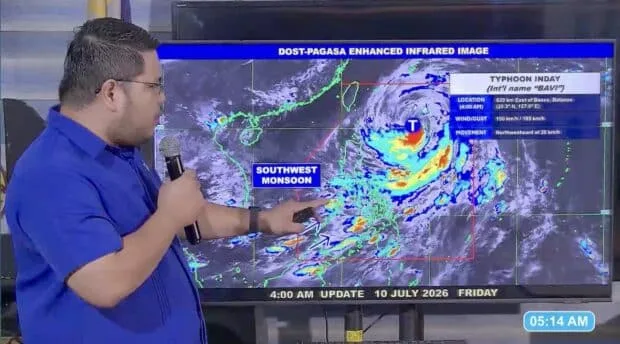
The Philippine Coast Guard (PCG) enforced a no-sail policy for sea travel between Batangas and several ports in Mindoro, Romblon, Palawan, and Western Visayas after the government issued Typhoon Inday warnings.
The Philippine Ports Authority (PPA) clarified that it does not directly supervise voyages, but trips are automatically cancelled once a no-sail directive is issued. The no-sail policy was enforced at 8 a.m. on Friday morning, July 10, and is expected to last until the typhoon passes.
Typhoon Inday made landfall at 8:30 a.m. in the province of Aurora. The government has placed several areas under the state of calamity due to the typhoon, including Mindoro and Batangas.
Thousands of passengers and cargo shipments are affected by the no-sail policy, which includes ferries and other sea vessels. Shipping companies may also cancel voyages in accordance with the terms of their Certificates of Public Convenience (CPC) issued by the Maritime Industry Authority (MARINA).
The Philippine National Coast Watch Center (NCWC) warned that the typhoon will bring strong winds and heavy rainfall to several areas in Luzon. The weather condition is expected to be severe, but the exact timing and location of the impact are still uncertain.
The Office of Civil Defense (OCD) has activated its Emergency Operations Center (EOC) to monitor the situation and provide assistance to affected communities.
The Philippine Coast Guard, the Philippine Ports Authority, and the Maritime Industry Authority are working together to ensure the safety of passengers and cargo shipments. They are also coordinating with local government units to provide assistance to those affected by the typhoon.
The no-sail policy is in effect until further notice, and passengers are advised to check with their shipping companies for updates on their scheduled voyages.
The Philippine government has also activated its disaster response teams to respond to any emergencies that may arise due to the typhoon.
Thousands of people are expected to be affected by the typhoon, and the government is preparing for a possible increase in evacuees and aid distribution.
The typhoon's impact is expected to be severe, and the government is urging the public to take precautions and follow evacuation orders.
The Philippine weather agency has forecasted that the typhoon will exit the country on Sunday, July 12. However, the weather condition may still be severe in some areas.
The government is also preparing for possible power outages, flooding, and landslides due to the typhoon.
The Philippine government has appealed for international assistance in response to the typhoon.
The country's disaster response teams are working around the clock to respond to emergencies and provide aid to affected communities.
The Philippine Coast Guard, the Philippine Ports Authority, and the Maritime Industry Authority are working together to ensure the safety of passengers and cargo shipments.
Thousands of people are expected to be affected by the typhoon, and the government is preparing for a possible increase in evacuees and aid distribution.
Key Facts
- Typhoon Inday made landfall at 8:30 a.m. in the province of Aurora.
- The government has placed several areas under the state of calamity due to the typhoon, including Mindoro and Batangas.
- Thousands of passengers and cargo shipments are affected by the no-sail policy.
- Shipping companies may also cancel voyages in accordance with the terms of their Certificates of Public Convenience (CPC) issued by the Maritime Industry Authority (MARINA).
- The Philippine National Coast Watch Center (NCWC) warned that the typhoon will bring strong winds and heavy rainfall to several areas in Luzon.