

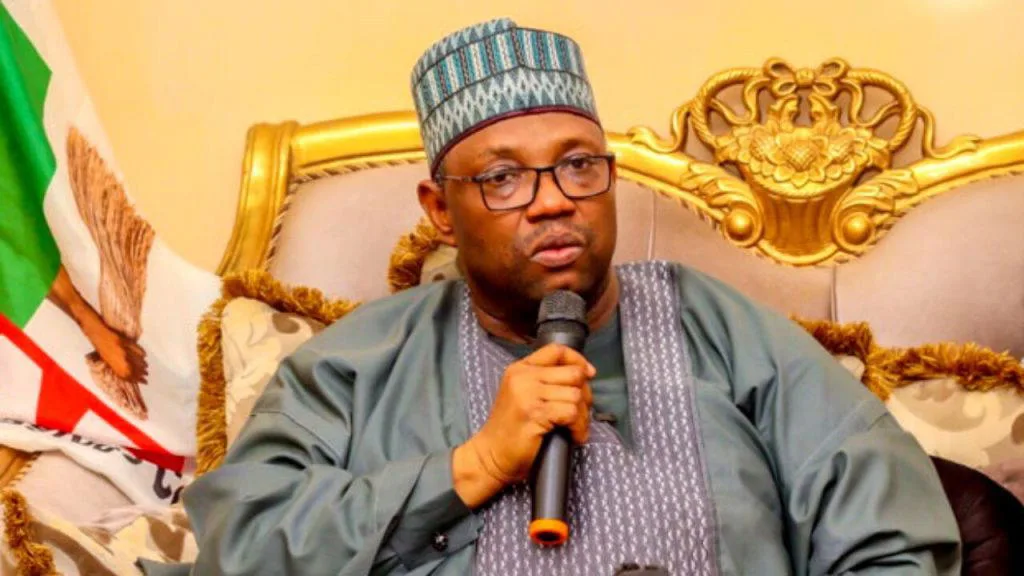
The single sharpest fact in this story is that Dr Sani Abdullahi Shinkafi, a senatorial aspirant, has denied withdrawing from the Zamfara North primary. This denial has sparked a fresh crisis within the All Progressives Congress (APC) in Zamfara State, with Shinkafi accusing influential party figures of orchestrating his exclusion. He won't back down, and his accusations are serious.
Dr Sani Abdullahi Shinkafi is a notable figure in Zamfara State, having previously held various positions within the APC. His current title is that of a senatorial aspirant, and his full name is often mentioned in discussions about the APC's internal dynamics. Shinkafi's allegations are significant, as they come at a time when the APC is still reeling from its devastating loss of all elective positions in Zamfara State after the 2019 elections. The party can't afford another crisis like this.
In a letter addressed to the APC National Chairman, Professor Nentawe Yilwatda, Shinkafi stated that he didn't withdraw from the senatorial race and didn't write any letter indicating that he stepped down. He also claimed that aspirants in Zamfara were informed that President Bola Ahmed Tinubu had directed all senatorial aspirants to step down for serving senators ahead of the May 19 primary election. This directive was allegedly made without any meeting or consultation, contradicting earlier statements made by the President and National Chairman of the APC. It's clear that there's a lot of confusion and misinformation.
Shinkafi argued that this arrangement violates Sections 84 to 87 of the Electoral Act 2026, which require political parties to conduct primaries and obtain written consent from cleared aspirants before adopting consensus candidates. He warned that the APC risked repeating the political crisis that crippled the party in Zamfara in 2019 if it failed to respect due process and internal democracy. The party can't ignore these warnings, or it'll face serious consequences.
Shinkafi recalled that the Supreme Court, in a judgment delivered on May 24, 2019, upheld the nullification of APC primaries in Zamfara State over irregularities in the nomination process, leading to the loss of all seats won by the party. This judgment was a major blow to the party, and it's still feeling the effects. The current dispute bears striking similarities to the events that triggered the party's collapse in the state ahead of the 2019 elections.
Shinkafi also alleged that political thugs and hoodlums were mobilised to disrupt the senatorial primaries in parts of the state to pave the way for an illegal consensus arrangement. He further warned that worsening economic hardship, insecurity, and internal divisions within the APC could weaken the party's chances in the next general election in Zamfara State. The party's chances won't improve if it doesn't address these issues.
Shinkafi said he had directed his supporters in Zamfara North Senatorial District not to participate in what he described as an 'undemocratic affirmation' of preferred candidates. He declared, "This injustice won't stand, and I'll challenge my exclusion from Zamfara North Senatorial Primary in the Court of Law." He's determined to fight for his rights, and he won't back down.
Key Facts
- Dr Sani Abdullahi Shinkafi denied withdrawing from the Zamfara North primary.
- Shinkafi accused influential party figures of orchestrating his exclusion.
- The APC faces fresh allegations of candidate imposition, exclusion of cleared aspirants, and violation of the Electoral Act.
- The Electoral Act 2026 requires political parties to conduct primaries and obtain written consent from cleared aspirants before adopting consensus candidates.
- The Supreme Court upheld the nullification of APC primaries in Zamfara State in 2019 due to irregularities in the nomination process.
The APC's handling of this situation will be crucial in determining the party's chances in the next general election. With Shinkafi's denial of withdrawal and his allegations of irregularities, the party must now navigate a complex web of internal dynamics and potential legal challenges. The outcome of this situation will have significant implications for the APC's prospects in Zamfara State and potentially beyond. The party's future is uncertain, and it's hard to predict what'll happen next.
As the APC navigates this crisis, it's essential to consider the broader context of the party's history in Zamfara State. The APC's loss of all elective positions in 2019 was a significant blow, and the party must now work to regain the trust of its supporters and the wider electorate. The party can't ignore its past mistakes, or it'll repeat them. With the 2027 elections approaching, the APC must find a way to resolve its internal disputes and present a united front if it hopes to succeed. It won't be easy, but it's necessary.
The situation in Zamfara State is a microcosm of the broader challenges facing the APC. The party must balance the competing interests of its various factions and find a way to promote internal democracy and due process. Failure to do so could have far-reaching consequences, not just for the APC but for the entire Nigerian political landscape. The party's actions will have a significant impact on the country's politics.
The crisis in the Zamfara APC is a complex and multifaceted issue, with significant implications for the party's prospects in the next general election. As the situation continues to unfold, it's essential to consider the broader context and the potential consequences of the APC's actions. The party must now navigate a difficult path, balancing the competing interests of its various factions and working to promote internal democracy and due process. The party's future depends on it, and it's crucial that it gets it right. The APC's prospects in Zamfara State and beyond will depend on how it handles this crisis.