

The Federal High Court in Abuja has made a ruling that nullifies portions of the 2027 election timetable issued by the Independent National Electoral Commission (INEC). This judgment is a major development in the country's electoral process. It's a decision that didn't come as a surprise to many, as INEC's actions had been questioned by several stakeholders.
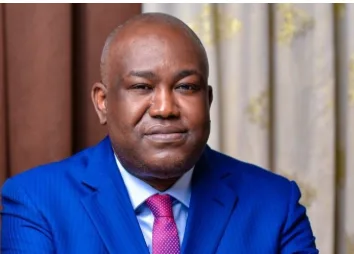
Dr. Gbenga Hashim, a former presidential candidate, has commended the court for its decision. He described the judgment as a victory for the rule of law and constitutional order. Hashim specifically praised Hon. Justice M. G. Umar for what he termed a courageous and principled decision. He didn't hesitate to express his admiration for the court's ruling.
The court's ruling was in response to a suit filed by the Youth Party against INEC. The Youth Party had challenged INEC's decision to impose restrictive timelines on political parties for the conduct of primaries and other pre-election activities ahead of the 2027 general elections. The court held that INEC acted outside its statutory powers and that the electoral body lacks the legal authority to fix timelines for party primaries. It's clear that INEC won't be able to impose its will on political parties without facing legal challenges.
"I have consistently argued that INEC must act within the confines of the Electoral Act," Hashim stated. "Unfortunately, those warnings weren't heeded." He also described the ruling as timely and necessary, saying it would protect the integrity of Nigeria's electoral process and strengthen democratic governance. Hashim's comments reflect his long-standing commitment to upholding the rule of law in Nigeria's electoral process.
The court's decision has significant implications for the 2027 elections. INEC will need to revisit its timetable and ensure that it complies with the Electoral Act. The commission hasn't yet issued an official response to the development, but it's expected to do so soon. It's likely that INEC will face intense scrutiny in the coming days.
Dr. Gbenga Hashim is a well-known figure in Nigerian politics. He's been a vocal advocate for electoral reform and has consistently spoken out against actions that undermine the Electoral Act. His comments on the court's ruling are significant, as they reflect his commitment to upholding the rule of law in Nigeria's electoral process. Hashim doesn't shy away from expressing his opinions on matters that affect the country's democratic governance.
The Youth Party, which filed the suit against INEC, is one of the many political parties in Nigeria. The party's decision to challenge INEC's timetable reflects its commitment to ensuring that the electoral process is fair and transparent. The party's actions have been hailed by many as a significant step towards promoting democratic governance in Nigeria. It's clear that the Youth Party won't back down from a fight when it comes to defending the country's democratic principles.
The Electoral Act, 2026, is a critical piece of legislation that governs Nigeria's electoral process. The act sets out the rules and regulations for conducting elections in Nigeria and provides a framework for ensuring that the electoral process is free, fair, and transparent. The act has been amended several times since its enactment, and its provisions are regularly reviewed and updated to reflect changing circumstances. It's essential that all stakeholders comply with the Electoral Act to ensure that the electoral process is credible.
In the coming days, INEC is expected to review its timetable and make necessary adjustments to comply with the court's ruling. The commission will need to work closely with political parties and other stakeholders to ensure that the electoral process is conducted in a manner that is consistent with the Electoral Act. The 2027 elections are expected to be highly competitive, and it will be important to ensure that all stakeholders comply with the Electoral Act. INEC can't afford to make any mistakes that could undermine the credibility of the electoral process.
Key Facts
- The Federal High Court in Abuja nullified parts of the 2027 election timetable issued by INEC.
- The court held that INEC acted outside its statutory powers and lacks the legal authority to fix timelines for party primaries.
- Dr. Gbenga Hashim commended the court for its decision, describing it as a victory for the rule of law and constitutional order.
- The Youth Party filed the suit against INEC, challenging the electoral body's decision to impose restrictive timelines on political parties.
- The Electoral Act, 2026, sets out the rules and regulations for conducting elections in Nigeria and provides a framework for ensuring that the electoral process is free, fair, and transparent.
The court's ruling has been welcomed by many as a significant step towards promoting democratic governance in Nigeria. However, it's also likely to have significant implications for the 2027 elections. As the electoral process unfolds, it will be important to monitor developments closely and ensure that the Electoral Act is upheld. The electoral process won't be without its challenges, but it's essential that all stakeholders work together to ensure that the process is credible.
In the run-up to the 2027 elections, there will be intense scrutiny of INEC and the electoral process. The court's ruling has added a new layer of complexity to the process, and it will be important to ensure that all stakeholders comply with the Electoral Act. The 2027 elections are expected to be highly competitive, and the outcome will have significant implications for Nigeria's democratic governance. It's clear that the stakes are high, and all stakeholders must ensure that the electoral process is conducted in a manner that is consistent with the Electoral Act.
As the country prepares for the 2027 elections, it's clear that the electoral process will be subject to intense scrutiny. The court's ruling has set an important precedent, and it will be important to ensure that the Electoral Act is upheld. The 2027 elections will be a critical test of Nigeria's democratic governance, and it's essential that all stakeholders work together to ensure that the electoral process is free, fair, and transparent. The country can't afford to have a disputed election that could undermine its democratic governance.
The Electoral Act, 2026, is a critical piece of legislation that governs Nigeria's electoral process. The act has been amended several times since its enactment, and its provisions are regularly reviewed and updated to reflect changing circumstances. The act sets out the rules and regulations for conducting elections in Nigeria and provides a framework for ensuring that the electoral process is free, fair, and transparent. It's essential that all stakeholders comply with the Electoral Act to ensure that the electoral process is credible.
In the coming months, INEC will need to work closely with political parties and other stakeholders to ensure that the electoral process is conducted in a manner that is consistent with the Electoral Act. The commission will need to revisit its timetable and make necessary adjustments to comply with the court's ruling. The 2027 elections are expected to be highly competitive, and it will be important to ensure that all stakeholders comply with the Electoral Act. INEC won't be able to impose its will on political parties without facing legal challenges.
The court's ruling has significant implications for the 2027 elections. The ruling has added a new layer of complexity to the electoral process, and it will be important to monitor developments closely. As the electoral process unfolds, it will be essential to ensure that the Electoral Act is upheld and that the electoral process is free, fair, and transparent. The electoral process won't be without its challenges, but it's essential that all stakeholders work together to ensure that the process is credible.
Dr. Gbenga Hashim's comments on the court's ruling reflect his long-standing commitment to upholding the rule of law in Nigeria's electoral process. His comments are significant, as they highlight the importance of ensuring that the electoral process is conducted in a manner that is consistent with the Electoral Act. The 2027 elections are expected to be highly competitive, and it will be important to ensure that all stakeholders comply with the Electoral Act. Hashim's comments didn't come as a surprise to many, as he's been a vocal advocate for electoral reform.
The Youth Party's decision to challenge INEC's timetable reflects its commitment to ensuring that the electoral process is fair and transparent. The party's actions have been hailed by many as a significant step towards promoting democratic governance in Nigeria. The court's ruling has added a new layer of complexity to the electoral process, and it will be important to monitor developments closely. The Youth Party won't back down from a fight when it comes to defending the country's democratic principles.
The Electoral Act, 2026, is a critical piece of legislation that governs Nigeria's electoral process. The act sets out the rules and regulations for conducting elections in Nigeria and provides a framework for ensuring that the electoral process is free, fair, and transparent. The act has been amended several times since its enactment, and its provisions are regularly reviewed and updated to reflect changing circumstances. It's essential that all stakeholders comply with the Electoral Act to ensure that the electoral process is credible.
In the coming months, it will be essential to ensure that all stakeholders comply with the Electoral Act. The court's ruling has significant implications for the 2027 elections, and it will be important to monitor developments closely. The 2027 elections are expected to be highly competitive, and it will be essential to ensure that the electoral process is conducted in a manner that is consistent with the Electoral Act. The electoral process won't be without its challenges, but it's essential that all stakeholders work together to ensure that the process is credible.
The court's ruling has been welcomed by many as a significant step towards promoting democratic governance in Nigeria. However, it's also likely to have significant implications for the 2027 elections. As the electoral process unfolds, it will be important to monitor developments closely and ensure that the Electoral Act is upheld. The electoral process won't be without its challenges, but it's essential that all stakeholders work together to ensure that the process is credible. The country can't afford to have a disputed election that could undermine its democratic governance.