

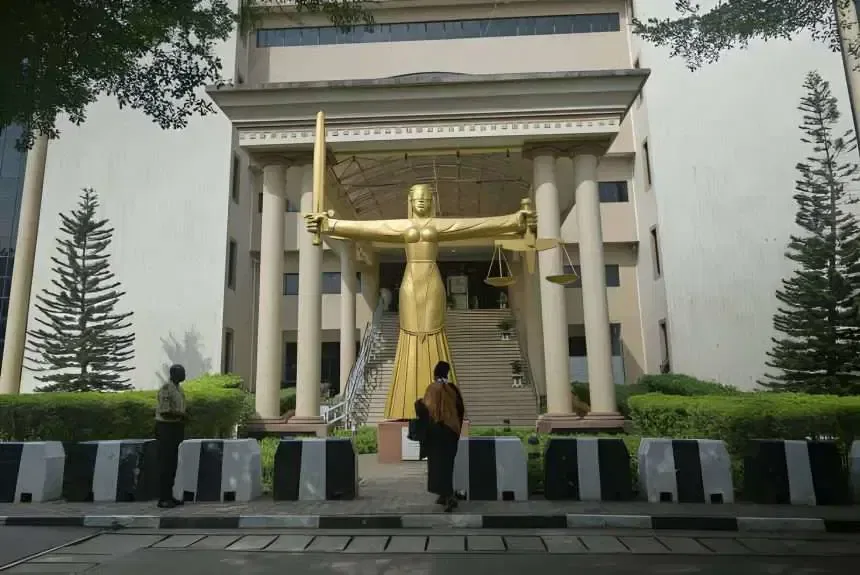
The Federal High Court in Abuja has delivered a judgment that could alter the course of the 2027 general elections. The court's ruling is bound to have far-reaching implications, as it has voided the timelines set by the Independent National Electoral Commission (INEC) for the conduct of party primaries and the nomination of candidates. This decision is a direct response to a suit filed by the Youth Party (YP), which sought to compel INEC to comply with the Electoral Act 2026's 120-day pre-election deadline for submitting party registers and candidates' personal particulars.
At the heart of the controversy is the question of whether INEC has the legal authority to impose restrictive timelines on political parties for primaries and other pre-election activities. The court, in its judgment, held that INEC's timelines are inconsistent with the provisions of the Electoral Act, 2026. Specifically, the court ruled that INEC can't lawfully abridge or limit the statutory period for submitting personal particulars of candidates by prescribing a shorter timeframe in its 2027 election timetable. This means that INEC's powers don't extend to fixing or prescribing the timetable within which political parties may conduct their primary elections.
The judgment, delivered by Justice Mohammed Umar, followed a careful consideration of the provisions of Sections 29, 82, and 84(1) of the Electoral Act, 2026. The court agreed with the YP that INEC's powers don't extend to fixing or prescribing the timetable within which political parties may conduct their primary elections for the purpose of nominating candidates for the 2027 general elections. The court's decision effectively sets aside INEC's May 10 deadline requiring political parties to submit a register and database of all their members as a condition for qualifying to participate in the general elections. It's clear that INEC's deadline won't be enforced, and political parties won't have to meet this requirement.
The implications of this judgment are profound. For one, it restores greater flexibility to political parties in the management of their internal affairs. The court's decision also strengthens internal democracy, promotes party autonomy, and protects the rights of aspirants and candidates. As the former presidential candidate, Gbenga Hashim, noted, the ruling vindicates his long-held position that INEC exceeded its powers under the Electoral Act, 2026. He didn't mince words, and his statement highlights the significance of the court's decision.
In light of this judgment, INEC will review its revised timetable for the 2027 general elections to ensure compliance with the Electoral Act, 2026. The Coalition of United Political Parties (CUPP) and other political parties have already called on INEC to obey the court judgment and adjust its timetable accordingly. They're pushing for INEC to take immediate action, and it's likely that INEC won't ignore their demands. The next steps will be crucial, as INEC must work closely with political parties to implement a revised and realistic timetable that reflects the directives of the Federal High Court. It won't be easy, but INEC must find a way to make it work.
'We commend the Federal High Court for this progressive and constitution-aligned judgment. INEC must immediately obey this ruling and adjust its timetable accordingly,' said Acting National Chairman of CUPP, Chief Peter Ameh. He's right, and it's essential that INEC takes his words seriously.
As the parties prepare for the 2027 general elections, this judgment has significant implications for the electoral process. The court's decision has effectively widened the democratic space, allowing political parties to conduct their primaries and nominate candidates without the constraints imposed by INEC's timelines. The judgment also underscores the importance of adherence to the Electoral Act, 2026, and the need for INEC to operate within the confines of the law. It's a crucial reminder that INEC can't act unilaterally, and it must always follow the law.
Key Facts
- The Federal High Court in Abuja has voided INEC's timelines for party primaries and candidate nomination.
- The court ruled that INEC exceeded its powers under the Electoral Act, 2026.
- The judgment affects the 2027 general elections.
- Political parties have called on INEC to obey the court judgment and adjust its timetable accordingly.
The road ahead will be shaped by INEC's response to the court's judgment. As the electoral body reviews its revised timetable, it must ensure that the new timelines are consistent with the provisions of the Electoral Act, 2026. This won't be an easy task, and INEC will have to work hard to get it right. The 2027 general elections will be a critical test of Nigeria's democratic institutions, and the successful conduct of these elections will depend, in large part, on the ability of INEC to navigate the complexities of the electoral process while adhering to the rule of law. It's a tough challenge, but INEC can't afford to fail.
The Federal High Court's judgment on INEC's timelines for party primaries and candidate nomination marks a significant milestone in the lead-up to the 2027 general elections. As the electoral process unfolds, it's essential to remember that the integrity of the process is paramount. The court's decision has set a crucial precedent, emphasizing the importance of adherence to the Electoral Act, 2026, and the need for INEC to operate within the bounds of the law. The judgment won't be forgotten, and it will have a lasting impact on Nigeria's electoral process. The country's democratic institutions will be stronger as a result, and that's a positive development.