

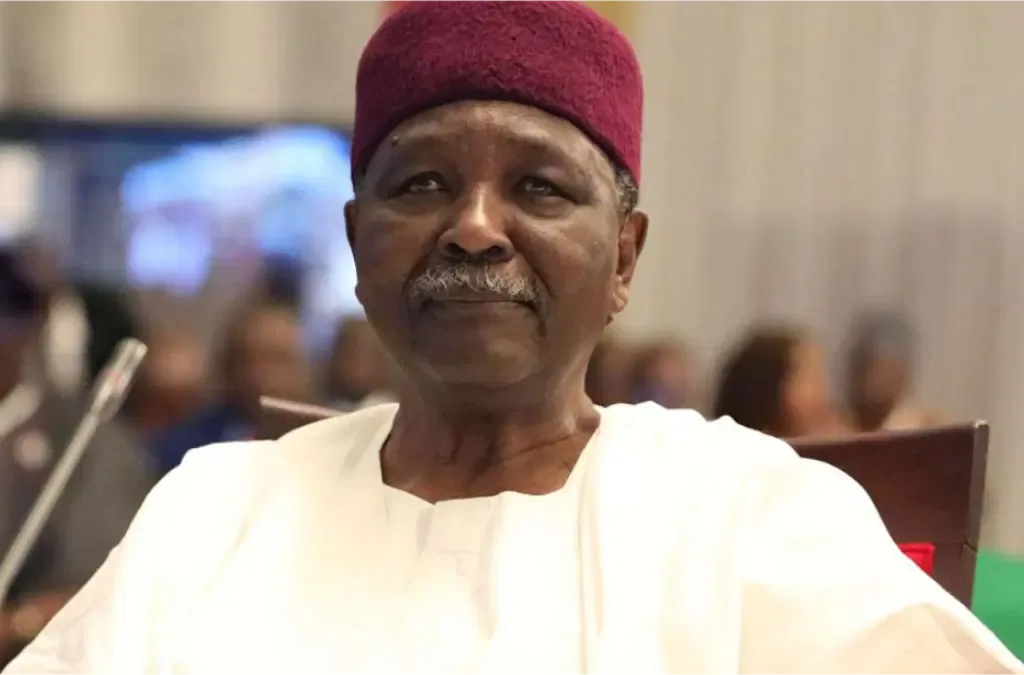
Former Head of State, Gen. Yakubu Gowon, has made startling revelations about the Nigerian Civil War in his autobiography, 'My Life of Duty & Allegiance'. One of the most striking disclosures is that late military ruler, Gen. Murtala Mohammed, ignored military advice during key operations, leading to devastating losses. He didn't consider the warnings, and this led to a significant setback for the federal troops.
Gowon reflects on the wartime roles of notable figures such as Ojukwu, former President Olusegun Obasanjo, and Chief Obafemi Awolowo. He specifically highlights Murtala's plan to cross the River Niger from Asaba into Onitsha, describing it as 'quite suicidal'. Murtala's plan was to cross the river by boats and barges. Despite warnings from Army Headquarters that rebel forces could destroy the Onitsha Bridge and trap federal troops, Murtala pressed ahead with the river crossing. This resulted in catastrophic consequences, including the loss of men and equipment.
'Murtala didn't accept my advice and did exactly as he had proposed, to cross the River Niger by boats and barges, but with catastrophic consequences of the loss of men and equipment during the failed river crossing.'
Gowon acknowledges Murtala's bravery under fire, but he criticizes his decision-making. Gowon also recounts an incident where Murtala sent him an insulting signal from the battlefield. This nearly led to his removal from command. However, Chief Awolowo intervened, and Gowon chose to overlook Murtala's conduct. He didn't want to escalate the situation.
Regarding Ojukwu, Gowon reveals that he never wanted the Biafran leader captured or killed. He says, 'But to kill him? Never, except in the battlefield where whoever got the first lucky shot survives!' Gowon emphasizes that the war was fought to preserve Nigeria, not to settle personal scores. The Federal Government's 'No Victor, No Vanquished' declaration after the war was made to promote reconciliation, reconstruction, and rehabilitation. It wasn't meant to punish or reward anyone.
The autobiography further delves into the failed peace efforts preceding the war, particularly the collapse of negotiations after the Aburi meeting in Ghana. Gowon attributes the failure to distrust and hardening political positions between the Federal Government and the Biafran leadership. They couldn't agree on anything, and this led to the war.
Gowon also discusses the internal crisis within the 3 Marine Commando, led by Colonel Benjamin Adekunle. Despite initial successes, the division became destabilized due to battlefield exhaustion. Morale among soldiers deteriorated, leading to instances of self-inflicted wounds to escape the frontlines. The soldiers were exhausted, and they didn't know how to cope.
In his memoir, Gowon attempts to balance criticism of wartime commanders with acknowledgment of their bravery and contributions. His revelations offer a unique perspective on the Nigerian Civil War, highlighting the complexities and challenges faced by those involved. It's a valuable insight into the war and its aftermath.
- Gen. Murtala Mohammed defied Gen. Yakubu Gowon's advice during the Nigerian Civil War.
- The failed river crossing from Asaba into Onitsha resulted in significant losses for federal troops.
- Gowon chose not to capture or kill Chukwuemeka Odumegwu Ojukwu, emphasizing the need for reconciliation after the war.
- The Federal Government's 'No Victor, No Vanquished' declaration aimed to promote unity and reconstruction.
- The 3 Marine Commando, led by Colonel Benjamin Adekunle, suffered from battlefield exhaustion and low morale.
The Nigerian Civil War, fought from 1967 to 1970, was a pivotal moment in the country's history. The conflict resulted in significant human suffering and economic loss. Gowon's autobiography provides valuable insights into the war's most critical events and the decisions made by key figures. It's a must-read for anyone interested in Nigerian history.
As Nigeria continues to navigate its complex history and political landscape, understanding the events and decisions that shaped the country is essential. Gowon's revelations serve as a reminder of the importance of leadership, diplomacy, and reconciliation in preventing and resolving conflicts. They're crucial in maintaining peace and stability.
In the context of Nigerian history, the Civil War remains a sensitive and complex topic. Gowon's autobiography offers a unique perspective on the conflict, highlighting the human side of the war and the challenges faced by those involved. The book is a valuable resource for anyone seeking to understand the intricacies of the Nigerian Civil War and its lasting impact on the country. It's a detailed account of the war and its aftermath.