

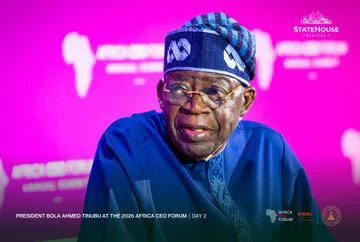
Seven Civil Society Organisations (CSOs) have commenced a campaign to pressure President Bola Tinubu into giving his assent to the Audit Service Bill passed by the National Assembly. The CSOs include the Centre for Social Justice, Action Aid Nigeria, Paradigm Leadership Support Initiative, Accountability Lab, Africa Network for Environment and Economic Justice, The Statecraft Report, and BUDGIT. They're urging the president to sign the bill into law.
The Lead Director of the Centre for Social Justice, Eze Onyekpere, stated that signing the bill is crucial to crowning the several fiscal reforms introduced by President Tinubu. He added that it would also make the anti-corruption efforts of the current administration more effective by closing various avenues of revenue leakage. Onyekpere said, "The Bill seeks to strengthen the last mile of public finance management and the anti-corruption agenda of the Federal Government of Nigeria." He didn't elaborate on the specifics, but it's clear that the bill's passage is a key step.
The bill introduces key reforms, including the establishment of the Federal Audit Service, the Federal Audit Board, appointment procedure, and qualification for the Auditor-General of the Federation (AuGF). It also expands the functions and powers of the AuGF. These functions include introducing timelines for the performance of statutory functions across the board. The bill also holds the AuGF accountable and imposes sanctions and penalties for audit infractions. The AuGF won't be able to avoid responsibility.
"It's a good opportunity for President Tinubu to consolidate his fiscal reforms and prove to Nigerians that he's serious about fighting corruption," said John Onyeukwu, Founder and Chief Analyst of The Statecraft Report. He didn't mince words, emphasizing the importance of the bill's passage. The president can't afford to delay.
The AuGF's functions, when the bill is signed into law, would include value for money and performance audit, forensic audit, audit of special funds, classified expenditure, donations, grants, and loans. The bill makes it mandatory for Internal Auditors to submit Internal Audit Reports to the AuGF on a monthly, quarterly, and half-yearly basis. This will facilitate the work of the AuGF. They'll be able to access the information they need.
The CSOs have respectfully urged the signing of the Federal Audit Service Bill into law and directed the following immediately upon assent: constitute the Federal Audit Board within 90 days and publish a clear timeline for the appointment of the Director-General of the Federal Audit Service. They also requested that the Attorney-General publish a plain-language summary of the bill's key provisions for public communication and transparency. The CSOs aren't asking for much, just a clear commitment to transparency.
The bill's assent is expected to build public confidence in fiscal reforms. Emma Ujah, Abuja Bureau Chief, reported that the CSOs briefed the media on why the president should urgently give his assent. The briefing highlighted the importance of the bill in strengthening public finance management and anti-corruption efforts. The media won't let up on this story.
As the president considers the bill, it's essential to examine the background of the CSOs involved. The Centre for Social Justice, for example, is a non-profit organisation that focuses on promoting social justice and accountability in Nigeria. The organisation has been at the forefront of advocacy for transparency and good governance in the country. They're not new to this fight.
In the context of Nigeria's history of corruption, the Audit Service Bill is a crucial step towards promoting transparency and accountability. The bill's provisions, such as the expansion of the AuGF's functions and powers, are designed to prevent revenue leakage and ensure that public funds are used efficiently. Nigeria can't afford to waste any more money.
The next step will be for President Tinubu to sign the bill into law. Once signed, the Federal Audit Board will be constituted, and the Director-General of the Federal Audit Service will be appointed. The bill's implementation will be a critical test of the administration's commitment to fighting corruption and promoting transparency. They won't be able to hide from their responsibilities.
Key Facts
- The Audit Service Bill was passed by the National Assembly.
- The bill introduces key reforms, including the establishment of the Federal Audit Service and the Federal Audit Board.
- The AuGF's functions will include value for money and performance audit, forensic audit, and audit of special funds.
- The bill makes it mandatory for Internal Auditors to submit Internal Audit Reports to the AuGF on a monthly, quarterly, and half-yearly basis.
- The CSOs have urged the president to sign the bill into law and direct the constitution of the Federal Audit Board within 90 days.
The Audit Service Bill is a crucial piece of legislation that has the potential to promote transparency and accountability in Nigeria. As the president considers the bill, it's essential to examine the potential impact on the country's anti-corruption efforts. With the bill's assent, Nigeria may take a significant step towards preventing revenue leakage and ensuring that public funds are used efficiently. The country can't wait any longer.
As the campaign to pressure President Tinubu to sign the bill continues, it's essential to consider the role of civil society organisations in promoting transparency and accountability. The CSOs involved in the campaign have demonstrated a commitment to promoting good governance and fighting corruption in Nigeria. They won't back down.
The Audit Service Bill is a crucial step towards promoting transparency and accountability in Nigeria. The bill's provisions, such as the expansion of the AuGF's functions and powers, are designed to prevent revenue leakage and ensure that public funds are used efficiently. As the president considers the bill, it's essential to examine the potential impact on the country's anti-corruption efforts and the role of civil society organisations in promoting transparency and accountability. The bill's passage is a key step towards a more transparent Nigeria.