

The Joint Admissions and Matriculation Board (JAMB) Equal Opportunity Group (JEOG) has proposed AI-driven education reforms to bridge equity gaps in Nigeria's higher education system. The single sharpest fact in this developing story is that JAMB's committee, established to promote inclusive education, now sees AI as a realistic opportunity to expand educational opportunities for vulnerable learners.
Speaking at the National Engagement on Inclusive Higher Education and Artificial Intelligence in Abuja, JAMB's outgoing Registrar, Prof. Ishaq Oloyede, said that responsible deployment of AI will improve learning opportunities and build a more inclusive, efficient and responsive tertiary education system across Nigeria. This is the second fact that makes this story interesting, as it connects AI directly to educational equity.
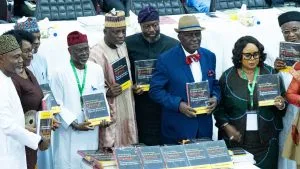
The conference also featured the presentation of two books – 'A Peep into the Future of Higher Education in Nigeria, celebrating Prof. Ishaq Oloyede's decade as JAMB Registrar,' and 'Early Start, Great Finish:', both by Emeritus Prof. Peter Okebukola. Okebukola, who spoke on behalf of JEOG, noted that artificial intelligence presents higher education institutions with a realistic opportunity to improve efficiency while expanding educational opportunities for vulnerable learners.
The JEOG has also supported more than 4,200 candidates with disabilities through free transportation, accommodation and assistive devices, allowing them to participate in the Unified Tertiary Matriculation Examination. And, in a related development, Okebukola warned that technological innovation would only promote inclusion when deliberately designed to accommodate persons with disabilities, emphasizing that AI does not benefit persons with disabilities by accident, but rather only where it is designed and deliberate.
Prof. Olanrewaju Adigun, a Professor of Environmental Law, speaking on behalf of the contributors, said the commemorative volume reflects scholars' shared commitment to advancing reforms in Nigeria's higher education system.
'From advertisement to candidate application and admission, AI is going to play major roles in our operations,' Okebukola said.
JAMB's outgoing Registrar, Prof. Ishaq Oloyede, praised JEOG's contributions over the years, and expressed confidence that the conference would help shape the group's future direction.
Prof. Asabe Kabir Usman of Usmanu Danfodiyo University reviewed 'A Peep into the Future of Higher Education in Nigeria', describing it as a compelling case for innovation-driven reforms in tertiary education. Deputy Vice-Chancellor of the University of Calabar, Prof. Eno Grace Nta, reviewed 'Early Start, Great Finish: Survival and Success Manual for Underage Nigerian University Students', saying universities must place greater emphasis on protecting exceptionally gifted underage students after they gain admission.
And, while there are several Nigerian angles in this story, including the focus on expanding educational opportunities for disadvantaged learners and the emphasis on leveraging AI to improve educational equity, there are also some global implications to consider, as this trend of using AI to bridge educational gaps could have far-reaching consequences for education systems worldwide.
'The democratization of education must go beyond admission to ensuring that students, irrespective of gender, social class, disability or geographical location, are provided with opportunities to thrive and complete their academic programmes,' Prof. Usman said.
JEOG's proposal to leverage AI for inclusive education reforms is part of a broader effort to promote educational equity and accessibility in Nigeria.