

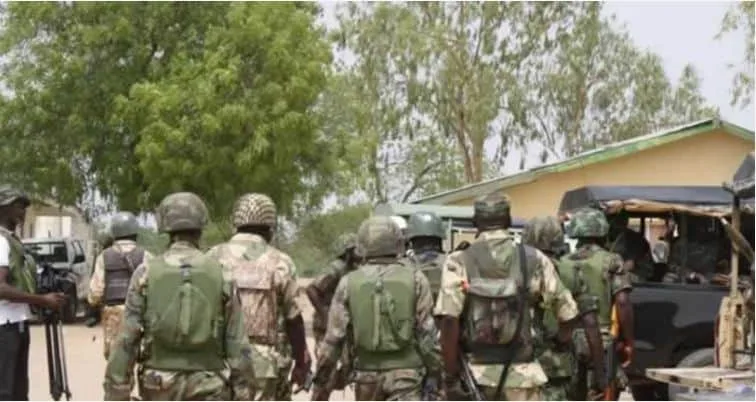
The Nigerian Army's raid on a suspected IPOB hideout in Enugu has brought attention to the ongoing conflict between the Nigerian government and the separatist movement. The IPOB, or Indigenous People of Biafra, has been seeking independence for the southeastern region of Nigeria, which they claim has been marginalized by the government. The Nigerian Army's operation was aimed at disrupting the IPOB's activities and recovering weapons and explosives.
The raid was carried out by Nigerian Army troops, who engaged in an intense gun battle with ESN members, the militant wing of the IPOB. The troops were able to destroy a shrine at the hideout, which was believed to be used by the IPOB for spiritual and ideological purposes. The recovery of IEDs, or improvised explosive devices, is a significant concern, as it suggests that the IPOB has been planning to carry out attacks on civilian and military targets.
The incident has sparked concerns about the escalating violence in the region and the potential for further clashes between the Nigerian government and the IPOB. The Nigerian Army has been accused of human rights abuses in its crackdown on the IPOB, and the incident has raised questions about the government's approach to addressing the separatist movement. The IPOB has been labeled a terrorist organization by the Nigerian government, but its supporters argue that it is a legitimate movement seeking to address the grievances of the Igbo people.
The conflict between the Nigerian government and the IPOB has a long and complex history, dating back to the 1960s. The Igbo people, who are the dominant ethnic group in the southeastern region, have felt marginalized and excluded from power by the Nigerian government. The IPOB has tapped into these feelings of resentment and frustration, and has been able to mobilize support among many Igbo people.
Key Facts
- The Nigerian Army raided a suspected IPOB hideout in Enugu on May 9, 2026.
- The operation was carried out by Nigerian Army troops, who engaged in an intense gun battle with ESN members.
- A shrine at the hideout was destroyed, and IEDs were recovered.
- The IPOB has been seeking independence for the southeastern region of Nigeria.
- The Nigerian government has labeled the IPOB a terrorist organization.
Background
The IPOB was formed in 2014 by Nnamdi Kanu, a charismatic leader who has been able to mobilize support among many Igbo people. The movement has been driven by a sense of grievance and resentment among the Igbo people, who feel that they have been marginalized and excluded from power by the Nigerian government. The IPOB has been able to tap into these feelings, and has been able to build a significant following in the southeastern region.
The Nigerian government has responded to the IPOB with force, and has accused the movement of being a terrorist organization. The government has also accused the IPOB of being responsible for a series of attacks on civilian and military targets, including the killing of police officers and the destruction of property. The IPOB has denied these allegations, and has argued that it is a peaceful movement that is seeking to address the grievances of the Igbo people through nonviolent means.
The conflict between the Nigerian government and the IPOB has been marked by violence and bloodshed, with many people killed and injured in clashes between the two sides. The incident has raised concerns about the potential for further escalation and the need for a peaceful resolution to the conflict.
The IPOB Movement
The IPOB movement has been driven by a sense of grievance and resentment among the Igbo people, who feel that they have been marginalized and excluded from power by the Nigerian government. The movement has been able to tap into these feelings, and has been able to build a significant following in the southeastern region. The IPOB has been led by Nnamdi Kanu, who has been able to mobilize support among many Igbo people.
The IPOB has been seeking independence for the southeastern region of Nigeria, which it claims has been marginalized and oppressed by the Nigerian government. The movement has argued that the Igbo people have been denied their rights and have been subjected to discrimination and persecution. The IPOB has also argued that the Nigerian government has failed to address the grievances of the Igbo people, and has instead responded to the movement with force and repression.
The IPOB is a movement that is driven by a sense of justice and a desire for self-determination, said Nnamdi Kanu, the leader of the IPOB. We are seeking to address the grievances of the Igbo people and to promote the rights and interests of our people.
The Nigerian Government's Response
The Nigerian government has responded to the IPOB with force, and has accused the movement of being a terrorist organization. The government has also accused the IPOB of being responsible for a series of attacks on civilian and military targets, including the killing of police officers and the destruction of property. The IPOB has denied these allegations, and has argued that it is a peaceful movement that is seeking to address the grievances of the Igbo people through nonviolent means.
The Nigerian government has been criticized for its response to the IPOB, with many arguing that it has been heavy-handed and repressive. The government has been accused of human rights abuses, including the killing of IPOB members and the destruction of their property. The government has also been accused of failing to address the grievances of the Igbo people, and of instead seeking to suppress the movement through force and intimidation.
The incident has raised concerns about the potential for further escalation and the need for a peaceful resolution to the conflict. The Nigerian government and the IPOB need to engage in dialogue and to seek a peaceful resolution to the conflict, rather than resorting to violence and repression.
The International Community's Response
The international community has been watching the conflict between the Nigerian government and the IPOB with concern, and has called for a peaceful resolution to the conflict. The United Nations has urged the Nigerian government and the IPOB to engage in dialogue and to seek a peaceful resolution to the conflict, rather than resorting to violence and repression.
The international community has also called on the Nigerian government to respect the human rights of the Igbo people, and to address their grievances through peaceful and democratic means. The IPOB has also been urged to renounce violence and to seek a peaceful resolution to the conflict, rather than resorting to attacks on civilian and military targets.
The incident has highlighted the need for a peaceful resolution to the conflict, and the importance of addressing the grievances of the Igbo people through peaceful and democratic means. The Nigerian government and the IPOB need to engage in dialogue and to seek a peaceful resolution to the conflict, rather than resorting to violence and repression.
The Way Forward
The conflict between the Nigerian government and the IPOB is a complex and deeply ingrained one, and will require a sustained and concerted effort to resolve. The Nigerian government and the IPOB need to engage in dialogue and to seek a peaceful resolution to the conflict, rather than resorting to violence and repression.
The international community can play a role in supporting a peaceful resolution to the conflict, by urging the Nigerian government and the IPOB to engage in dialogue and to seek a peaceful resolution to the conflict. The international community can also provide support and assistance to the Nigerian government and the IPOB, to help them to address the grievances of the Igbo people and to promote peace and stability in the region.
The incident has highlighted the need for a peaceful resolution to the conflict, and the importance of addressing the grievances of the Igbo people through peaceful and democratic means. The Nigerian government and the IPOB need to engage in dialogue and to seek a peaceful resolution to the conflict, rather than resorting to violence and repression.
Conclusion
The conflict between the Nigerian government and the IPOB is a complex and deeply ingrained one, and will require a sustained and concerted effort to resolve. The Nigerian government and the IPOB need to engage in dialogue and to seek a peaceful resolution to the conflict, rather than resorting to violence and repression. The international community can play a role in supporting a peaceful resolution to the conflict, by urging the Nigerian government and the IPOB to engage in dialogue and to seek a peaceful resolution to the conflict.
The incident has highlighted the need for a peaceful resolution to the conflict, and the importance of addressing the grievances of the Igbo people through peaceful and democratic means. The Nigerian government and the IPOB need to engage in dialogue and to seek a peaceful resolution to the conflict, rather than resorting to violence and repression. The incident has also highlighted the need for the Nigerian government to respect the human rights of the Igbo people, and to address their grievances through peaceful and democratic means.