

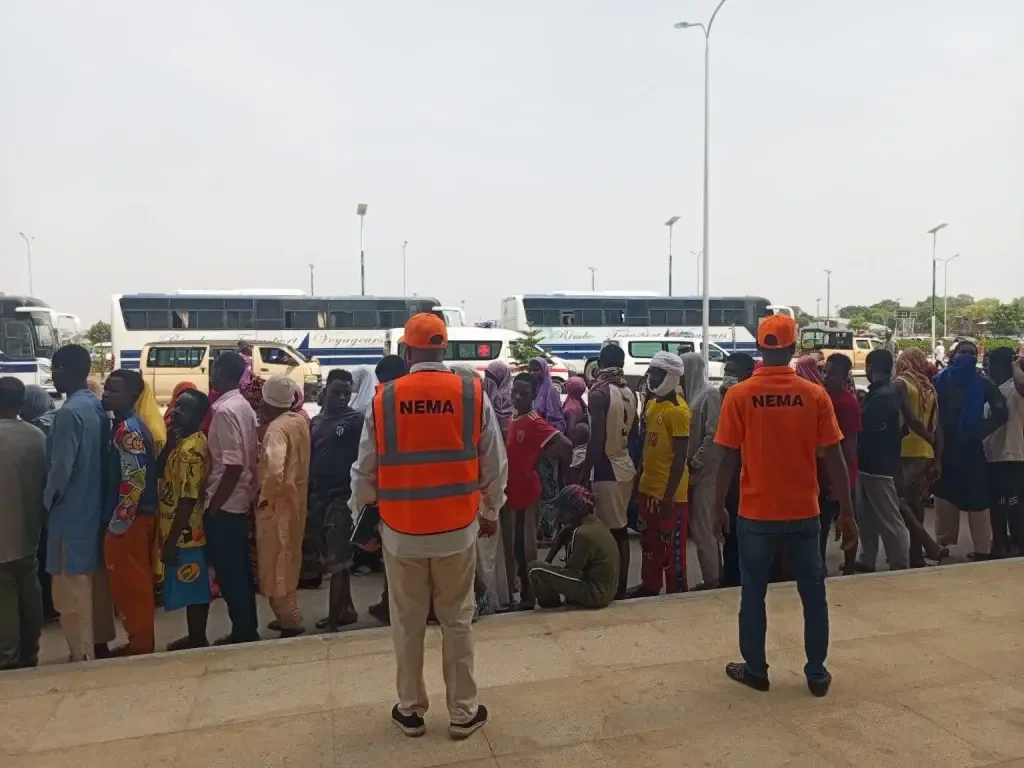
The National Emergency Management Agency (NEMA) has repatriated 497 Nigerian migrants from Niamey to Kano. This exercise was a voluntary repatriation, not a forced evacuation, and it's a significant development because it shows the government's efforts to bring back Nigerians stranded in other countries.
Dr. Nura Abdullahi, the Head of Operations at NEMA's Kano Office, explained that the returnees were brought back by the Federal Government through the Ministry of Foreign Affairs. The operation was a tripartite arrangement involving the Nigerian Mission in Niger Republic, the Ministry of Foreign Affairs, and the International Organisation for Migration (IOM). This arrangement ensured the safe and dignified return of stranded Nigerians. They worked together to make sure the returnees didn't face any more challenges.
The returnees comprised 174 males, 97 females, 137 boys, and 89 girls from various states, including Kano, Jigawa, Borno, and Kaduna. Upon arrival, NEMA, in collaboration with relevant stakeholders, provided them with the necessary care. They gave them meals and other essentials. The National Commission for Refugees, Migrants and Internally Displaced Persons also provided drugs to the Nigerian Red Cross medical team. This team helped returnees with health challenges.
According to Dr. Abdullahi, most of the returnees were likely heading to Libya but returned after realizing the journey was unsafe. He advised Nigerians to avoid traveling to other countries in search of greener pastures, saying, 'no country is better than their country of origin.' He didn't want them to face the same challenges the returnees faced. Dr. Abdullahi warned that they won't find better opportunities elsewhere, and it's not worth the risk.
One of the returnees, Sani Hamisu from Kano State, shared his experience. He traveled to Libya in search of better opportunities after facing financial hardship. He said, 'I wanted to support my family as the first son and also get married, so I decided to travel to Libya.' He didn't know what awaited him. 'In the desert, there was no water and no food, many died.' He recalled the harsh conditions. 'Once your water finishes, nobody can help you even with a cup of water.' He won't forget the struggles he faced.
Sani spent six years in Libya doing different menial jobs and eventually returned home empty-handed. He said, 'IOM rescued us in the desert and took us back to Niger Republic before we were brought to Nigeria.' He's grateful for their help. They can't repay the organization, but they're thankful for the rescue.
Another returnee, Harira Muhammad, a mother of two from Borno, traveled to Libya eight months ago to support her sick husband. She said, 'My husband was knocked down by a car during a Boko Haram attack, and has had a leg fracture since then.' She traveled to Libya in search of greener pastures, but they were attacked by bandits who collected their money. She didn't give up. Harira urged the government to support them with business grants to enable them to rebuild their lives and care for their families. They need help to get back on their feet.
The repatriation of these migrants highlights the need for support and care for those who have been stranded in other countries. It's essential for the government to provide them with the necessary resources to rebuild their lives and reintegrate into society. They can't do it alone, and they need assistance. The government should help them, as they're struggling to survive.
Key Facts
- 497 Nigerian migrants repatriated from Niger Republic
- The exercise was a voluntary repatriation, not a forced evacuation
- The returnees were brought back by the Federal Government through the Ministry of Foreign Affairs
- The operation was a tripartite arrangement involving the Nigerian Mission in Niger Republic, the Ministry of Foreign Affairs, and the International Organisation for Migration (IOM)
- The returnees comprised 174 males, 97 females, 137 boys, and 89 girls from various states
The story of these returnees serves as a reminder of the dangers and challenges faced by migrants who travel to other countries in search of better opportunities. It's crucial for the government to provide support and resources to those who have been stranded and are seeking to rebuild their lives. They won't forget the struggles they faced, and they hope the government will help them. The government has a responsibility to help its citizens, and it should take action to support them.