

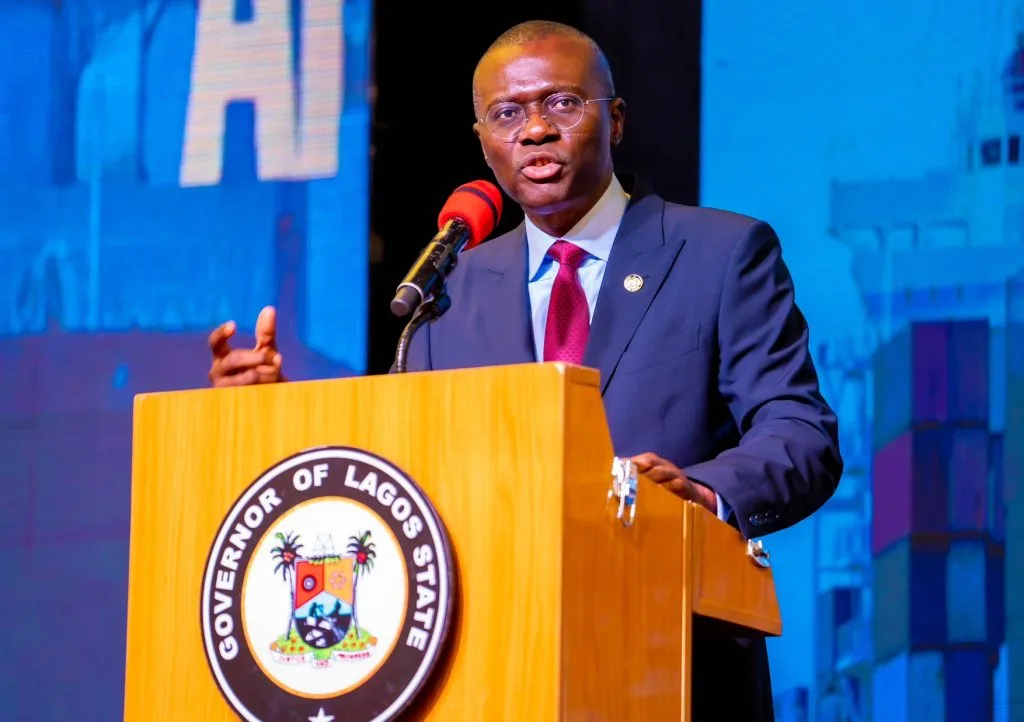
The Lagos State Government has announced a record ₦2.6 trillion in total revenue for 2025, marking a 16% growth from the ₦2.3 trillion generated in 2024. This increase is largely attributed to the state's Internally Generated Revenue (IGR), which saw an 18.5% rise to ₦1.87 trillion in 2025, up from ₦1.58 trillion in 2024. It's a notable increase, and the state's IGR has been a key factor in this growth.
Commissioner for Finance, Mr. Abayomi Oluyomi, disclosed this information during a ministerial press briefing held to commemorate the seventh year in office of Governor Babajide Sanwo-Olu and his deputy, Dr. Obafemi Hamzat. Mr. Oluyomi attributed the growth to aggressive digital transformation and reforms in tax administration.
He highlighted the Lagos State Internal Revenue Service's (LIRS) focus on broadening the tax base, closing revenue gaps, and fostering long-term revenue growth. They're working to ensure the state's revenue generation is sustainable.
The state also recorded a major leap in tax revenue collection, which climbed from ₦678.13 billion in 2023 to ₦1.045 trillion in 2024. This marked the first time the Lagos Internal Revenue Service surpassed the ₦1 trillion threshold. Tax revenue further surged to ₦1.443 trillion in 2025, reflecting a 38% increase over the previous year. This growth is a testament to the effectiveness of the state's revenue generation strategies. They're seeing a significant return on their investments in digital transformation and tax administration reforms.
The LIRS has upgraded and expanded its e-Tax platform to include stamp duties, Capital Gains Tax filing integration, geo-tagging, report builder, Corporate Affairs Commission integration, and expatriate tracking through the Nigeria Immigration Service integration. The e-Tax mobile application has been migrated to the cloud to provide more secure and robust access to taxpayer data. Multiple payment channels, including mobile, POS, USSD, WhatsApp, and online payment systems, have been strengthened to improve compliance and ease of payment. This won't only make it easier for taxpayers to pay their taxes but also reduce the risk of errors and fraud.
Speaking on debt and funds management, Mr. Oluyomi stated that Lagos maintained strong fiscal discipline and sustainable debt ratios despite executing major infrastructure projects across the state. The State Government is committed to infrastructure renewal, using a hybrid approach combining medium- to long-term loans and innovative financing mechanisms. Lagos successfully issued a ₦230 billion bond at a competitive fixed rate of 16.25% to finance projects in health, housing, transportation, agriculture, science and technology, and environmental sustainability. They won't be taking on too much debt, as they're being cautious about their financial management.
The state maintained a Debt-Service-to-Revenue ratio of 19.2%, well below the 30% fiscal responsibility threshold. Total debt-to-GDP stood at 4.11% compared to the World Bank benchmark of 20%. The state's prudent financial management and transparency have earned Lagos strong credit ratings from local and international rating agencies. Fitch Ratings reaffirmed Lagos' AAA national rating, which is a testament to the state's financial stability. They can't afford to be reckless with their finances, and it's clear they're taking a responsible approach.
Several landmark projects have been funded through bonds and innovative financing initiatives, including the Opebi Link Bridge, Blue Line Rail Phase II, Massey Children’s Hospital, Lagos HOMS schemes, Alaba Rago International Market redevelopment, and the construction of a 280-bed multi-specialist Ojo General Hospital. Despite prevailing economic challenges globally and nationally, Lagos continues to strengthen its position as Nigeria's economic powerhouse through strategic fiscal reforms, technology-driven revenue systems, and disciplined financial management. They're not immune to economic challenges, but they're better equipped to handle them.
Mr. Abayomi Oluyomi said, 'The Lagos State Internal Revenue Service remains focused on broadening the tax base, closing revenue gaps, and fostering long-term revenue growth, all essential to funding the state’s expanding urban and infrastructure requirements.' They're committed to finding new ways to generate revenue and won't rely on a single source of income.
Key Facts
- Total revenue: ₦2.6 trillion in 2025
- Internally Generated Revenue (IGR): ₦1.87 trillion in 2025
- Tax revenue: ₦1.443 trillion in 2025
- Debt-Service-to-Revenue ratio: 19.2%
- Total debt-to-GDP: 4.11%
- Bond issuance: ₦230 billion at 16.25% fixed rate
The state's commitment to infrastructure development and fiscal discipline is a positive sign for the future of Lagos, as it continues to navigate the challenges of economic growth and development. With its strong revenue generation and prudent financial management, Lagos is poised to maintain its position as a leading economic hub in Nigeria. It's clear they won't be giving up their position as a major economic player anytime soon.
In the context of Nigeria's economic landscape, Lagos State's achievements are particularly noteworthy. The state's ability to generate significant revenue through internal means is a testament to its economic resilience and diversity. As the country continues to face economic challenges, Lagos State's model of fiscal discipline and innovative revenue generation may serve as an example for other states to follow. They can't solve all of Nigeria's economic problems, but they're showing that it's possible to achieve economic growth through responsible management.