

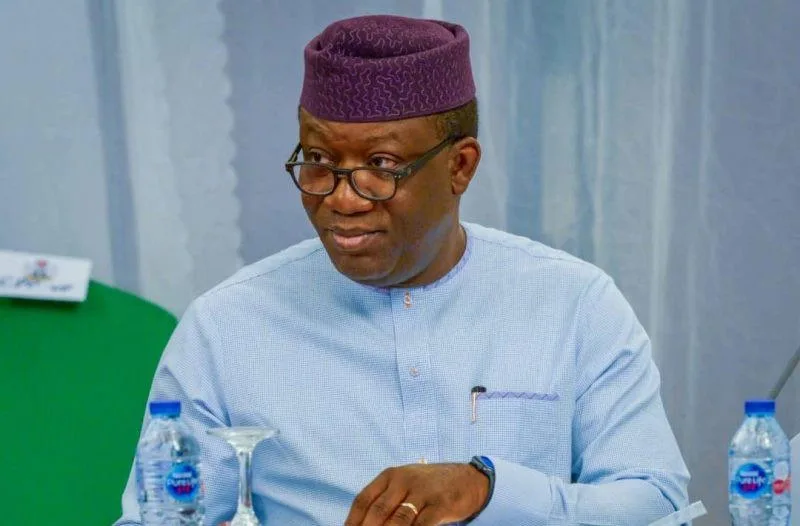
Former Ekiti State Governor Kayode Fayemi has warned that the All Progressives Congress (APC) has lost its vision. Fayemi, a founding member of the APC, expressed deep concern over the party's current trajectory.
He spoke on the program 'State Affairs with Edmund Obilo', saying the party has derailed from its original purpose. Fayemi pointed to a severe lack of intellectualism and internal debate within the ruling party.
This isn't where the party has come from. We've lost our bearing and the vision of the founding fathers of this party, Fayemi said.
Fayemi noted that bypassing competitive elections in favor of handpicked agreements creates deep-seated resentment among party members. He warned that this trend could lead to an implosion.
Fayemi disagreed with the characterization of President Bola Tinubu's leadership style as the imposition of candidates. He suggested the President is simply consumed by the immense pressures of governing the nation.
Maybe they just agree with him, Fayemi remarked when questioned about why party members consistently defer to the President's choices. However, he issued a stern warning against the growing culture of party loyalists rushing to the presidential villa for political favors and endorsements.
It would be unfortunate if everybody is running to Aso Rock because they want something, he warned. Fayemi's warning comes at a critical time for the APC, which has been facing internal conflicts and power struggles.
As a founding member of the APC, Fayemi's comments carry significant weight. He's been a vocal advocate for reform within the party and has spoken out against the concentration of power in the hands of a few individuals.
Fayemi's concerns about the lack of intellectualism within the APC aren't new. Many have criticized the party for its lack of policy debates and its reliance on personalities rather than ideas.
The APC was formed in 2013 as a merger of several opposition parties. It was seen as a beacon of hope for Nigerians who were disillusioned with the ruling People's Democratic Party (PDP).
However, over the years, the APC has struggled to live up to its promise. The party has been plagued by internal conflicts and power struggles, which have weakened its ability to deliver on its campaign promises.
Fayemi's warning is a call to action for the APC to reform and rediscover its vision. The party's future is uncertain, and it's unclear whether it will heed his warning and take steps to address its internal problems.
Key Facts
- Kayode Fayemi is a former Ekiti State Governor and founding member of the APC.
- Fayemi expressed his concerns about the APC on 'State Affairs with Edmund Obilo'.
- The APC was formed in 2013 as a merger of several opposition parties.
- President Bola Tinubu is the leader of the APC.
- Fayemi warned against the growing culture of party loyalists rushing to the presidential villa for political favors and endorsements.
The implications of Fayemi's warning are significant. If the APC fails to reform and rediscover its vision, it risks losing the support of its members and the Nigerian people.
This could have far-reaching consequences for the party and the country as a whole. The APC's ability to deliver on its campaign promises and provide effective governance is crucial to Nigeria's development and growth.
The country is navigating a complex political landscape, and the APC's internal conflicts and power struggles are a major concern. Fayemi's warning is a timely reminder of the need for reform and renewal within the party.
The question on everyone's mind is whether the APC will heed Fayemi's warning and take steps to address its internal problems. The party's future is uncertain, and its ability to reform and rediscover its vision will have significant implications for Nigeria's political landscape and the country's future.
As the APC struggles to find its footing, Nigerians are watching with bated breath. The party's ability to deliver on its campaign promises and provide effective governance is crucial to the country's development and growth.
So, what's next for the APC? Will the party be able to reform and rediscover its vision, or will it continue down the path of internal conflicts and power struggles?
The answer to this question will have significant implications for Nigeria's political landscape and the country's future.
One thing is clear: the APC's internal problems are a major concern that needs to be addressed. Fayemi's warning is a call to action for the party to reform and rediscover its vision.
It's a warning that the APC would do well to heed, lest it risks losing the support of its members and the Nigerian people.
The APC's future remains uncertain. The party's ability to deliver on its campaign promises and provide effective governance is crucial to Nigeria's development and growth.
As the country navigates its complex political landscape, the APC's internal conflicts and power struggles are a major concern.
The party's internal problems are a major concern that needs to be addressed. Fayemi's warning is a call to action for the party to reform and rediscover its vision.
As the APC struggles to find its footing, Nigerians are watching with bated breath. The party's ability to deliver on its campaign promises and provide effective governance is crucial to the country's development and growth.
But what does the future hold for the APC? Will the party be able to reform and rediscover its vision, or will it continue down the path of internal conflicts and power struggles?
The answer to this question will have significant implications for Nigeria's political landscape and the country's future.
As the APC navigates its internal conflicts and power struggles, it's clear that the party's ability to deliver on its campaign promises and provide effective governance is crucial to Nigeria's development and growth.
The APC's internal problems are a major concern that needs to be addressed. Fayemi's warning is a call to action for the party to reform and rediscover its vision.
It's a warning that the APC would do well to heed, lest it risks losing the support of its members and the Nigerian people.
As the country navigates its complex political landscape, the APC's internal conflicts and power struggles are a major concern.
The party's ability to deliver on its campaign promises and provide effective governance is crucial to Nigeria's development and growth.
And as the APC struggles to find its footing, Nigerians are watching with bated breath.
The party's internal problems are a major concern that needs to be addressed. Fayemi's warning is a call to action for the party to reform and rediscover its vision.
It's a warning that the APC would do well to heed, lest it risks losing the support of its members and the Nigerian people.
So, what's next for the APC? Will the party be able to reform and rediscover its vision, or will it continue down the path of internal conflicts and power struggles?
The answer to this question will have significant implications for Nigeria's political landscape and the country's future.
As the APC navigates its internal conflicts and power struggles, it's clear that the party's ability to deliver on its campaign promises and provide effective governance is crucial to Nigeria's development and growth.
The APC's internal problems are a major concern that needs to be addressed. Fayemi's warning is a call to action for the party to reform and rediscover its vision.
It's a warning that the APC would do well to heed, lest it risks losing the support of its members and the Nigerian people.
As the country navigates its complex political landscape, the APC's internal conflicts and power struggles are a major concern.
The party's ability to deliver on its campaign promises and provide effective governance is crucial to Nigeria's development and growth.
And as the APC struggles to find its footing, Nigerians are watching with bated breath.
The party's internal problems are a major concern that needs to be addressed. Fayemi's warning is a call to action for the party to reform and rediscover its vision.
It's a warning that the APC would do well to heed, lest it risks losing the support of its members and the Nigerian people.