

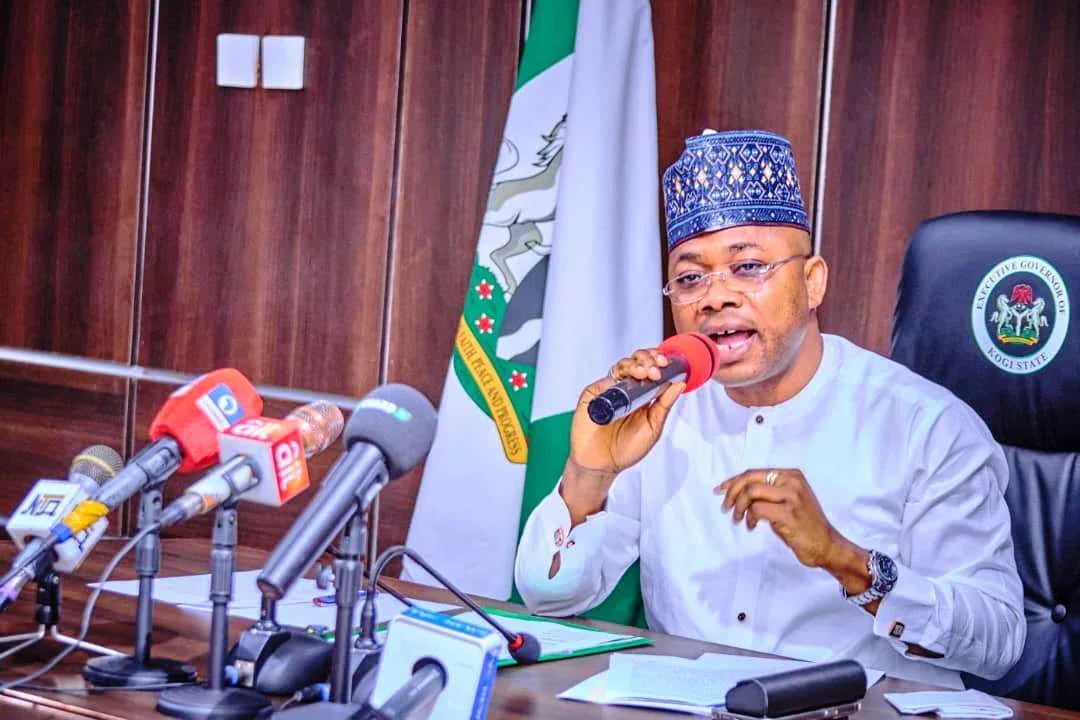
Kogi State is done with paper forms and guesswork. From June 24, every school in the state will get a 10-digit digital ID, and every child will receive a Learner Identification Number (LIN) that follows them all the way to WAEC and NECO.
The state Ministry of Education launched the 2025/2026 Annual School Census on Monday at a stakeholders' meeting in Lokoja. The exercise will run on the Federal Government's Digital Nigeria Education Management Information System (DNEMIS) portal — a shift from the old manual reporting that often left gaps in data.
Commissioner for Education Wemi Jones told the gathering that the census isn't just about counting heads. It gives the government the statistical evidence it needs to plan, make policy, and decide where money goes.
"Under DNEMIS, every school will receive a 10-digit ID, while each learner will be assigned a Learner Identification Number, linked to WAEC and NECO records," Jones said.
He stressed that every child must have a LIN to access government education incentives — things like exam fee payments and scholarships. Without the number, no benefits.
Jones also thanked Governor Ahmed Ododo for keeping education as a priority. Kogi allocates 30 per cent of its annual budget to education — a figure the commissioner insisted should never be cut. He said the state spends heavily every year on school renovations, exam fees, construction, and teachers' salaries.
But he warned: if schools don't upload their data, the state will be under-reported, and that hurts everyone.
Former Commissioner for Education Rosemary Osikoya backed the push for accurate records. She said many private schools hold back data because they're afraid of being taxed. And many managers of non-formal schools and skills centres don't keep proper records at all — even though Nigeria's laws require them to.
"If we really want money allocated to education, it has to be substantiated by data. When education data is accurate, planning becomes effective," Osikoya said.
She urged all schools to check the Kogi Education EMIS and make sure their records are up to date.
Amb. Idris Muraina of the Kogi NGO Network put it simply: "Data is the lifeline of any development."
DCC Ekigwe Raymond of the Nigeria Security and Civil Defence Corps promised collaboration with school heads to keep schools safe through community-based committees and security agencies.
Representatives from the National Association of Proprietors of Private Schools (NAPPS) and the All Nigeria Confederation of Principals of Secondary Schools (ANCOPSS) praised the ministry for including private schools in the planning.
Permanent Secretary Albert Alabi reinforced the message: the data must be qualitative and accurate.
Animoku Elizabeth, Director of Educational Planning, Research and Statistics, acknowledged the challenges. Incomplete data, resistance from schools that fear taxation, and low participation have all been problems in the past. She made it clear: the census is for planning, research, and policy — not for taxing anyone.
To prepare, the ministry will train school data officers, starting with Lokoja Local Government Area. Then zonal advocacy meetings will follow: Western Zone on June 19 in Kabba, Kogi Central on June 22 in Okene, and Kogi East on June 23 in Anyigba. The actual census begins June 24.