

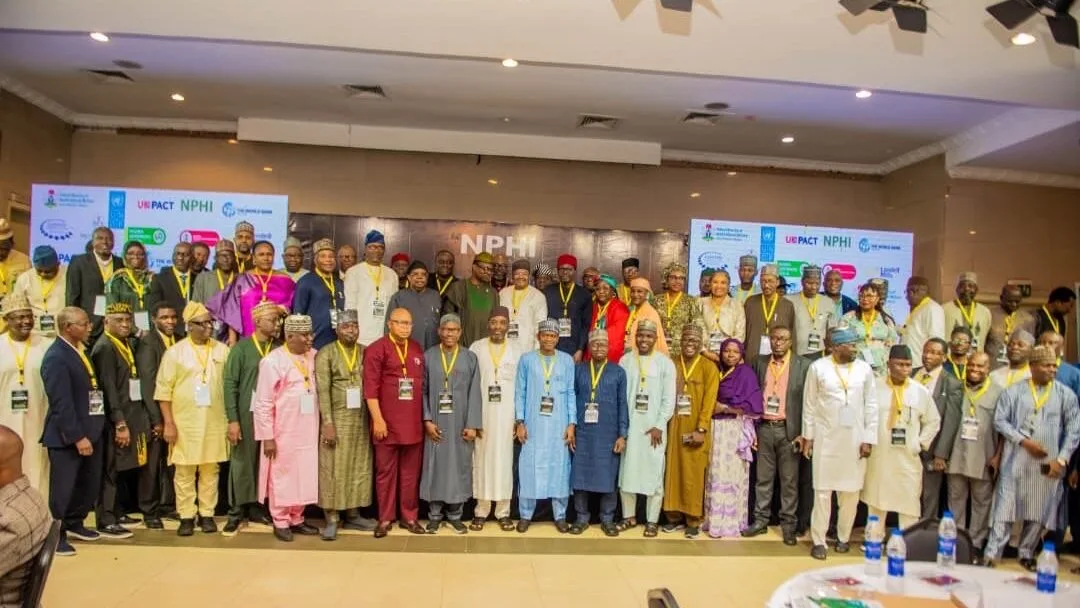
The federal government has launched a new push to get private companies to fix the electricity problem in Nigeria's hospitals.
On Monday, at the National Healthcare Electrification Investors Matchmaking Forum in Lagos, the government unveiled the Nigeria Power for Health Initiative (NPHI). The plan is to attract private capital to install and manage solar and other power systems in health facilities.
Minister of State for Health and Social Welfare, Iziaq Salako, said electricity isn't just a utility in a hospital — it powers life-saving equipment. "When electricity fails, healthcare delivery stagnates," he said.
The framework uses an Energy-as-a-Service (EaaS) model. Private energy companies will finance, install, operate, and maintain the power systems. They'll guarantee electricity supply. Hospitals will pay for the service, but they won't have to worry about maintaining generators or paying huge electricity bills.
The current phase will focus on federal tertiary health institutions. The plan is to later expand to primary and secondary health centres across the country.
The government is using blended financing — a mix of government money, development finance, climate finance, and private investment — to scale the project.
To make this work, the government has set up an Inter-Ministerial Steering Committee, a 24-member Inter-Agency Technical Committee, Facility Energy Management Teams, and a Project Secretariat inside the Federal Ministry of Health and Social Welfare.
The ministry has also started training directors of finance and accounts in federal hospitals on energy economics, project finance, and how to pitch to investors.
Salako said the government is creating conditions that make hospitals attractive to investors. He acknowledged the UK Partnership for Accelerating Climate Transitions (UK PACT) and Landell Mills International for helping develop the framework.
The move comes as public hospitals across Nigeria struggle with electricity. Many have been disconnected from the national grid for unpaid bills. Earlier this year, the University College Hospital (UCH) in Ibadan faced a months-long blackout after being cut off. The disruption affected surgeries, medical training, and triggered protests by students and health workers. Resident doctors cited the power crisis as one reason for industrial action.
Hospital authorities said the debt ran into billions of naira. During the blackout, departments relied heavily on generators and emergency power sources.
Last year, a teaching hospital in Akwa Ibom State disclosed that electricity bills ate up about 40% of its internally generated revenue.
According to the World Health Organisation, electricity is a fundamental requirement for safe healthcare. It powers lighting, communications, and critical medical equipment used in surgeries, diagnostics, vaccine storage, and emergency care.
The government hopes the new initiative will end these disruptions by shifting the burden of power infrastructure from cash-strapped hospitals to private companies.