

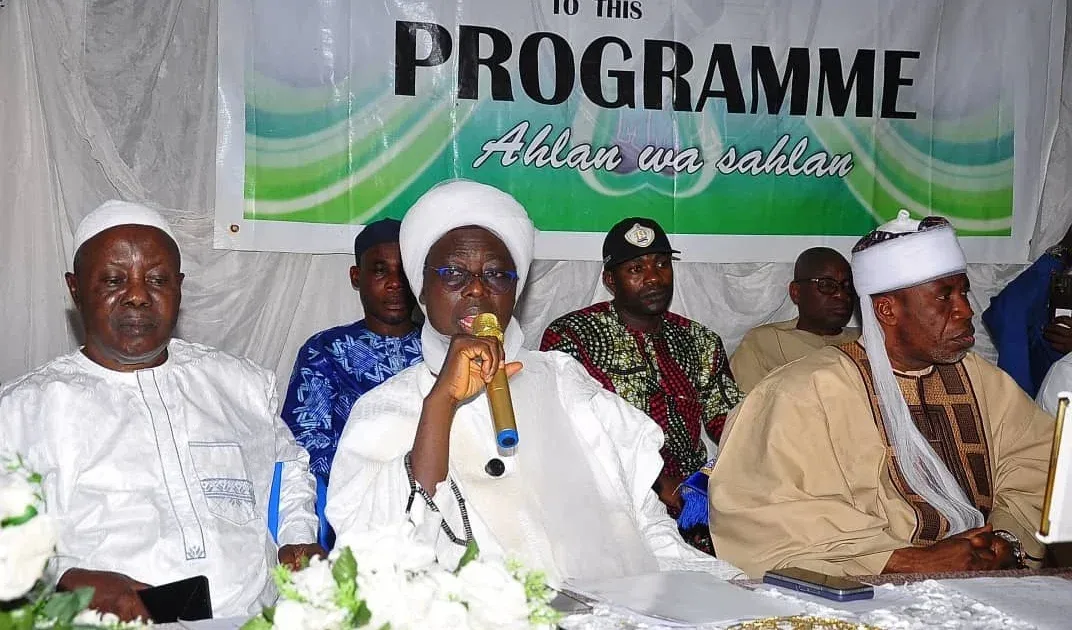
Sheikh AbdulRauf Lagbaji, a renowned Islamic cleric and founder of the At-Tanzil Foundation, recently made headlines by calling for the execution of convicted bandits and kidnappers. This demand was made during a lecture at the Ashura Day celebration organised by the Muslim Media Practitioners of Nigeria in Akure, Ondo State.
### Key Facts
- Sheikh AbdulRauf Lagbaji called for the death penalty for people convicted of banditry and kidnapping.
- The cleric believes that reintegrating convicted criminals into society exposes innocent citizens to further danger.
- Lagbaji specifically urged Governor Lucky Aiyedatiwa to ensure the execution of those convicted over the 2022 attack on St. Francis Catholic Church in Owo.
- The cleric also appealed to lawyers not to represent or serve as defence counsel for individuals accused of banditry or kidnapping.
- A constitutional amendment is being sought to ensure that anyone found guilty of such offences is promptly executed.
Sheikh AbdulRauf Lagbaji's call for the death penalty has sparked significant debate in Nigeria, with many questioning the efficacy of such a measure. Some argue that it may serve as a deterrent, while others believe it could lead to more violence. Lagbaji, however, remains steadfast in his stance, citing Islamic teachings as justification.
The cleric's demand comes at a time when Nigeria is grappling with rising insecurity. Banditry and kidnapping have become widespread, with many communities affected. The government has been accused of not doing enough to address the situation.
### The Background
Sheikh AbdulRauf Lagbaji is a well-known Islamic scholar in Nigeria. He has written extensively on Islamic law and its application in modern society. His foundation, the At-Tanzil Foundation, has implemented various initiatives aimed at promoting peace and justice.
The Ashura Day celebration, where Lagbaji made his demand, is an important event in the Islamic calendar. It marks the martyrdom of Imam Hussein, a grandson of the Prophet Muhammad. The day is observed with fasting, prayer, and other acts of devotion.
### The Specifics
Lagbaji specifically mentioned the 2022 attack on St. Francis Catholic Church in Owo, Ondo State. The attack resulted in the deaths of several people, with many more injured. The cleric urged the governor to ensure that those convicted of the crime are executed.
The demand for the death penalty has also been met with resistance from some quarters. Some argue that it may be unconstitutional, while others believe it may lead to more violence. Lagbaji, however, remains committed to his stance, citing Islamic teachings as justification.
### The Future
The future of Lagbaji's demand is uncertain. The government has yet to respond to his call. However, his stance has sparked significant debate in Nigeria, with many questioning the efficacy of the death penalty as a deterrent. Only time will tell if Lagbaji's demand will be taken up or rejected.
A Grand Imam of Akure Kingdom, Alhaji AbdulHakeem Yayi-Akorede, commended Sheikh AbdulRauf Lagbaji for his courage in speaking out against crime. He, however, urged Muslims to participate more actively in politics to secure greater representation in governance.
In his remarks, the Chairman of the Nigeria Union of Journalists, Ondo State Council, Prince Leke Adegbite, expressed concern over what he described as the marginalisation of Muslims in political appointments in the state.
### The Nigerian Context
The security situation in Nigeria has been a major concern for many. With rising cases of banditry and kidnapping, the country is grappling with finding a solution. Sheikh AbdulRauf Lagbaji's call for the death penalty has added to the debate, with many questioning its efficacy.
"It is time for our government to execute any bandit or kidnapper found guilty because the Qur'an makes it clear that whoever knowingly kills another person should also be put to death."
— Sheikh AbdulRauf Lagbaji
The Ashura Day celebration, where Lagbaji made his demand, is an important event in the Islamic calendar. It marks the martyrdom of Imam Hussein, a grandson of the Prophet Muhammad. The day is observed with fasting, prayer, and other acts of devotion.
Nigerians are divided on the issue of the death penalty. While some see it as a necessary deterrent, others believe it may lead to more violence. The debate continues, with Sheikh AbdulRauf Lagbaji's call for the death penalty adding fuel to the fire.
"The government needs to enforce the death penalty on those involved in the Owo church attack that occurred four years ago. In Islam, Diya (blood money) for a person killed is equivalent to 100 camels, which is about N200 million per person. Therefore, our religion does not permit the pampering of anyone who kills."
— Sheikh AbdulRauf Lagbaji
In his appeal, Sheikh AbdulRauf Lagbaji also urged Muslims and other Nigerians to work towards peaceful coexistence, noting that the essence of Ashura is to remain devoted to Allah and maintain good intentions towards others.